Street Food ·
Banh Mi
A
 Hover · tap
- Sweet
- 0/5
- Spice
- 2/5
- Era
- 20th century
- Format
- Shareable
Themust shatter. The filling must lean. crust
Origin
The banh mi is
After
 Hover · tap
 What it is
The bread is the half-Vietnamese half. A Saigon banh mi loaf is
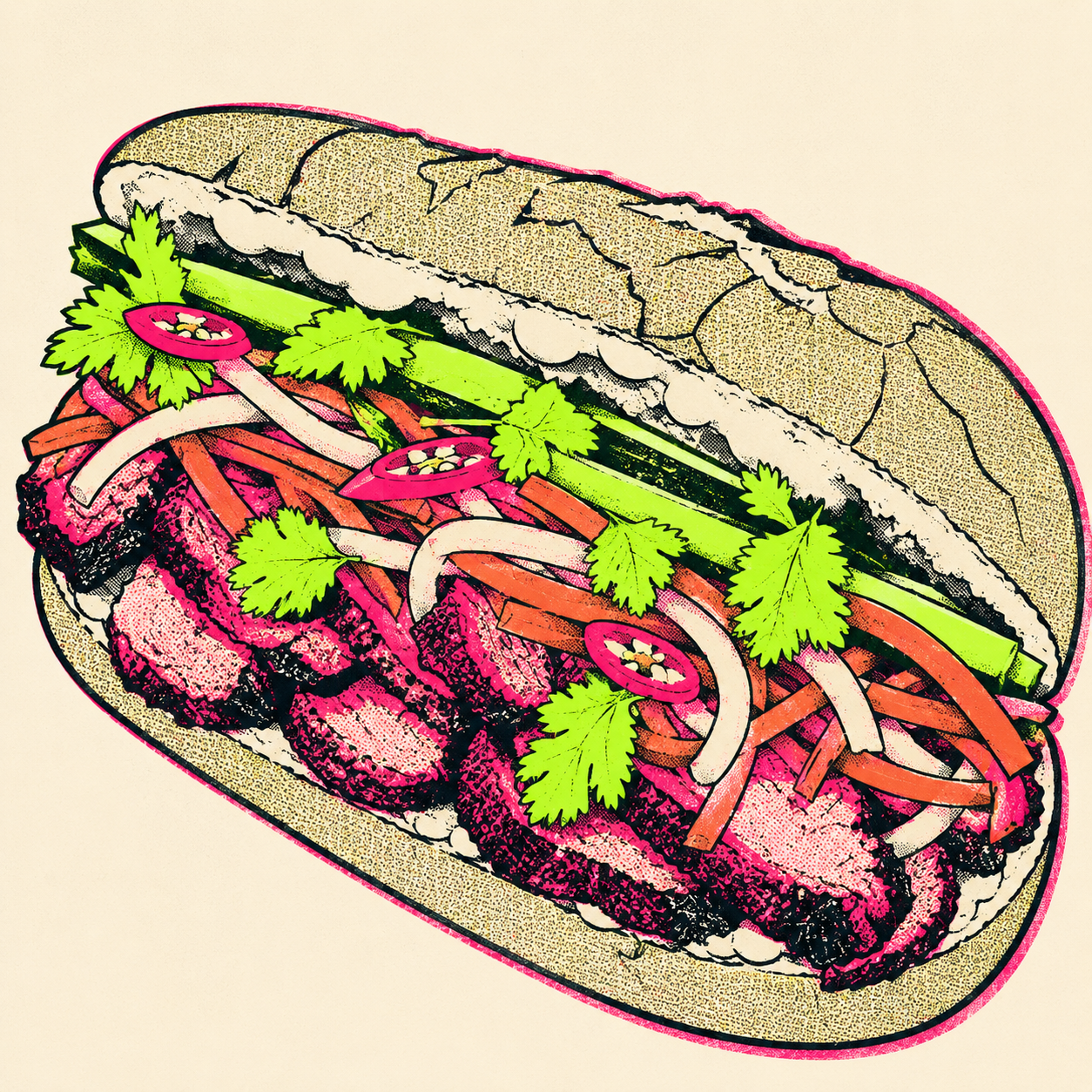
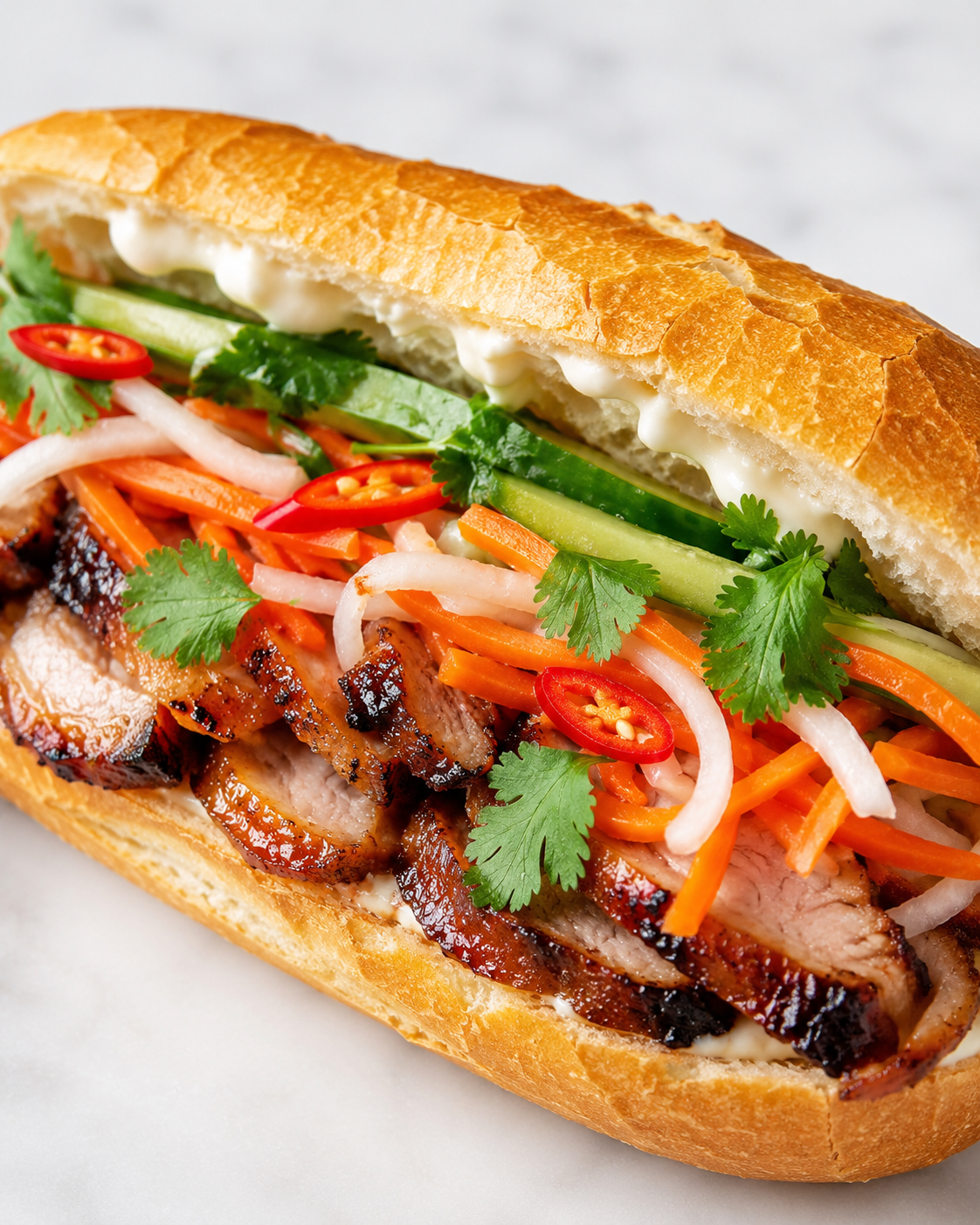
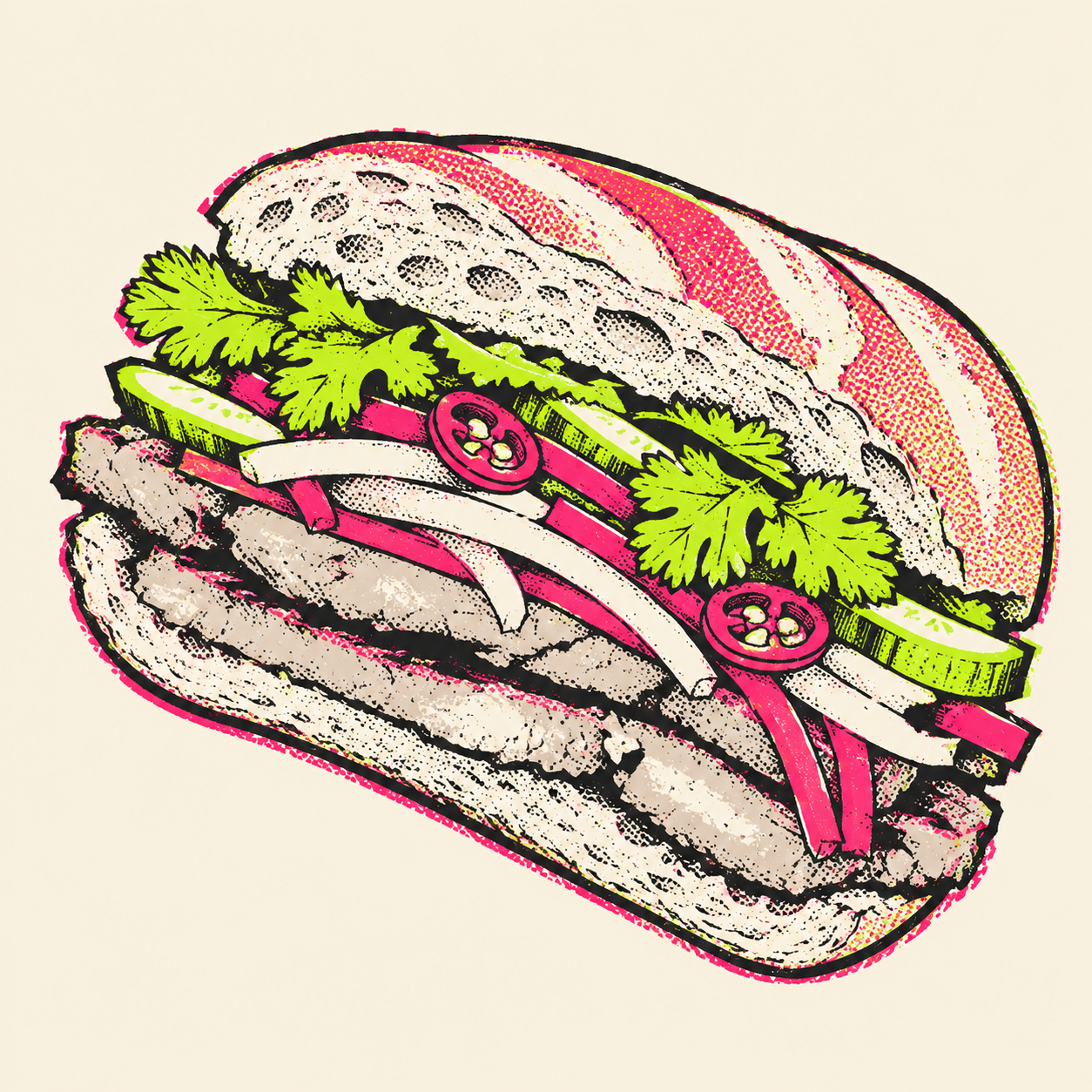
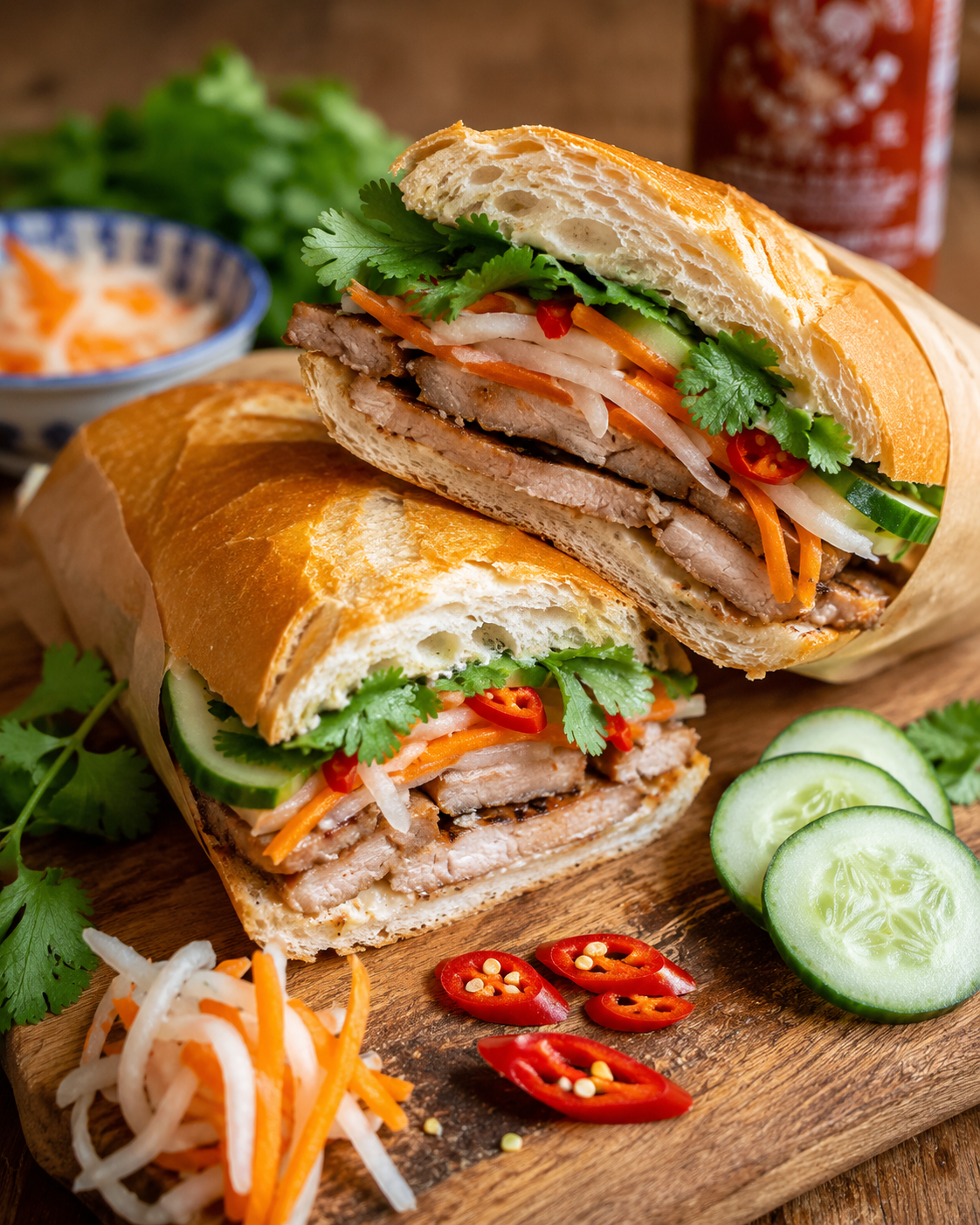
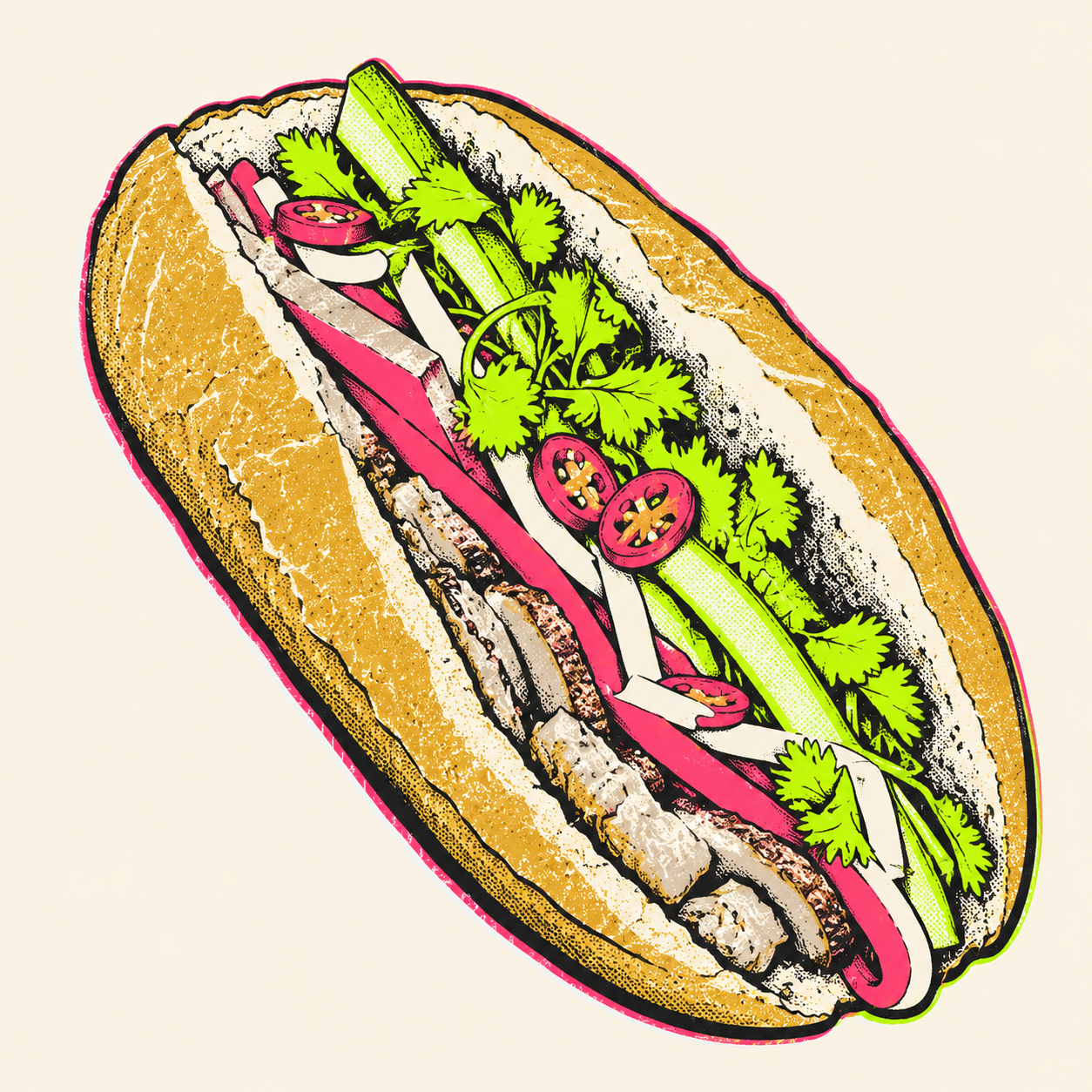
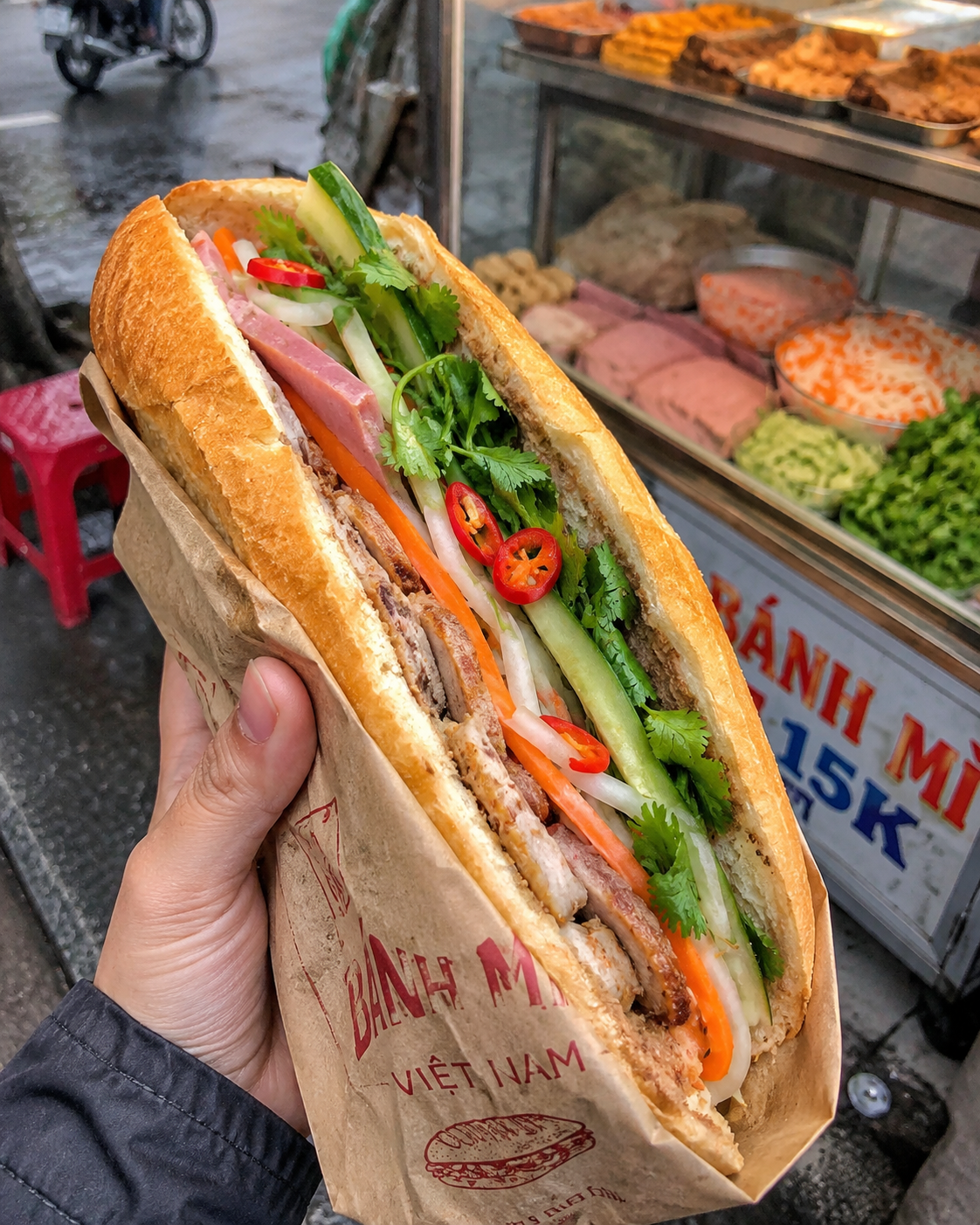
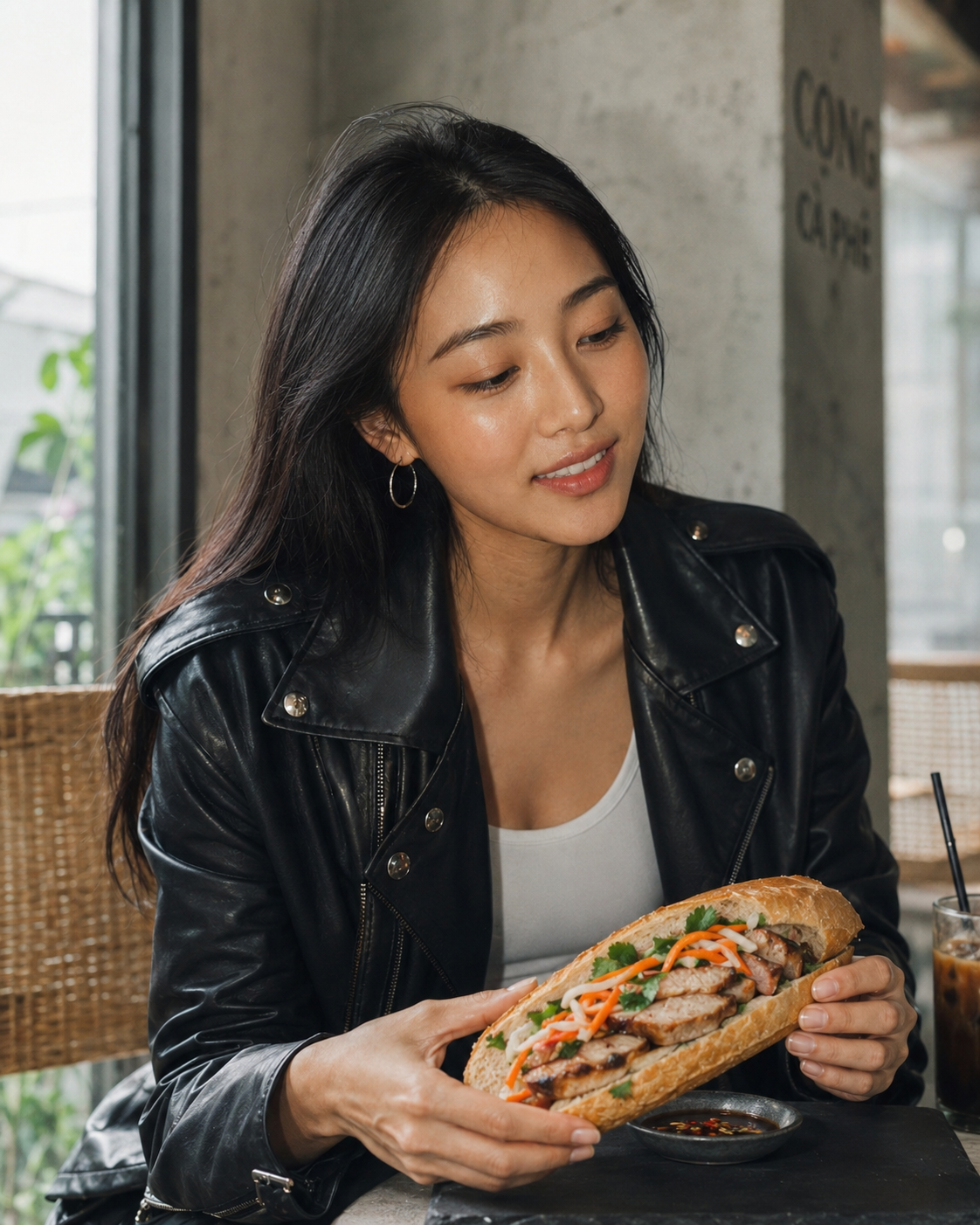
The fillings are layered with intent. A typical banh mi thịt — the most common form — carries pâté smeared on the lid, mayonnaise on the base, slices of cold-cut pork or roast pork belly, julienned đồ chua (sweet-sour cured daikon and carrot), cucumber matchsticks, sprigs of cilantro, sliced chili, and a few drops of Maggi seasoning. The flavour pyramid is
 Hover · tap
 Cultural context
In Vietnam the banh mi is breakfast and street food first, and a sit-down meal almost never. It is sold from glass-fronted vendor carts outside markets, schools, and bus stations
Outside Vietnam, the banh mi rode the post-1975 diaspora to Paris, Sydney, Houston, San Jose, and Toronto, where it became one of the most-recognised Vietnamese exports alongside phở. The Saigon-style sandwich is now standard in any large diasporic community.
 Hover · tap
 Variations
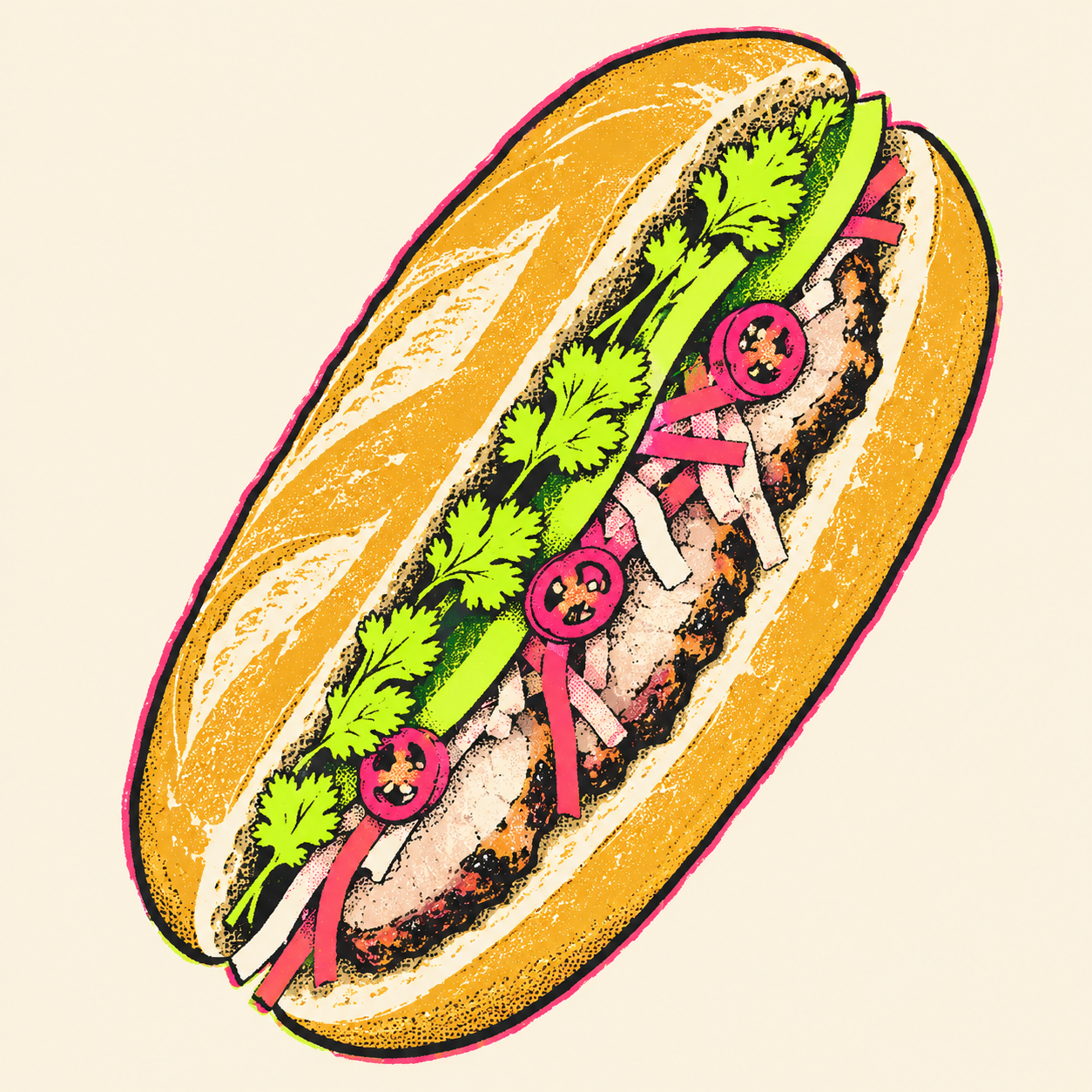
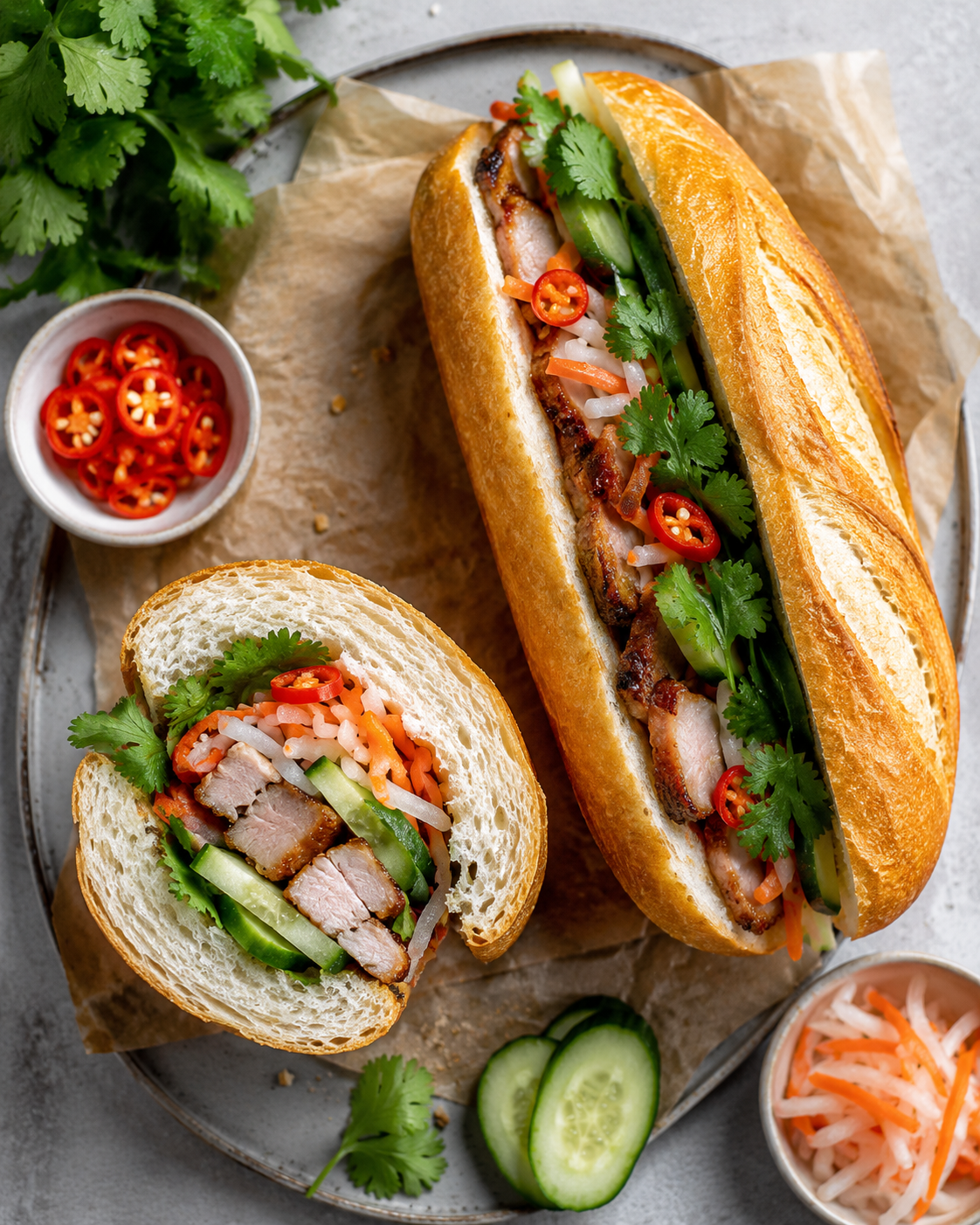
Regional Vietnamese variants drift in fillings and bread. Hội An–style banh mi (popularised internationally by Madame Phượng’s stall, which Anthony Bourdain filmed in 2009) uses a slightly denser loaf and a rich house-made pâté. Nha Trang versions favour fish-paste fillings — chả cá — reflecting the central-coast fishing economy. Saigon itself is a city of substyles: a bánh mì xíu mại with steamed pork meatballs in tomato sauce; a bánh mì op la with a fried egg laid into the bread; a late-night bánh mì thập cẩm (“everything”) with three or four cured meats stacked.
The Western diasporic banh mi has its own evolutions — denser breads, mayonnaise-heavier dressings, the addition of soured jalapeños in the United States — but the irreducible four are still bread, pâté, đồ chua, and cilantro.
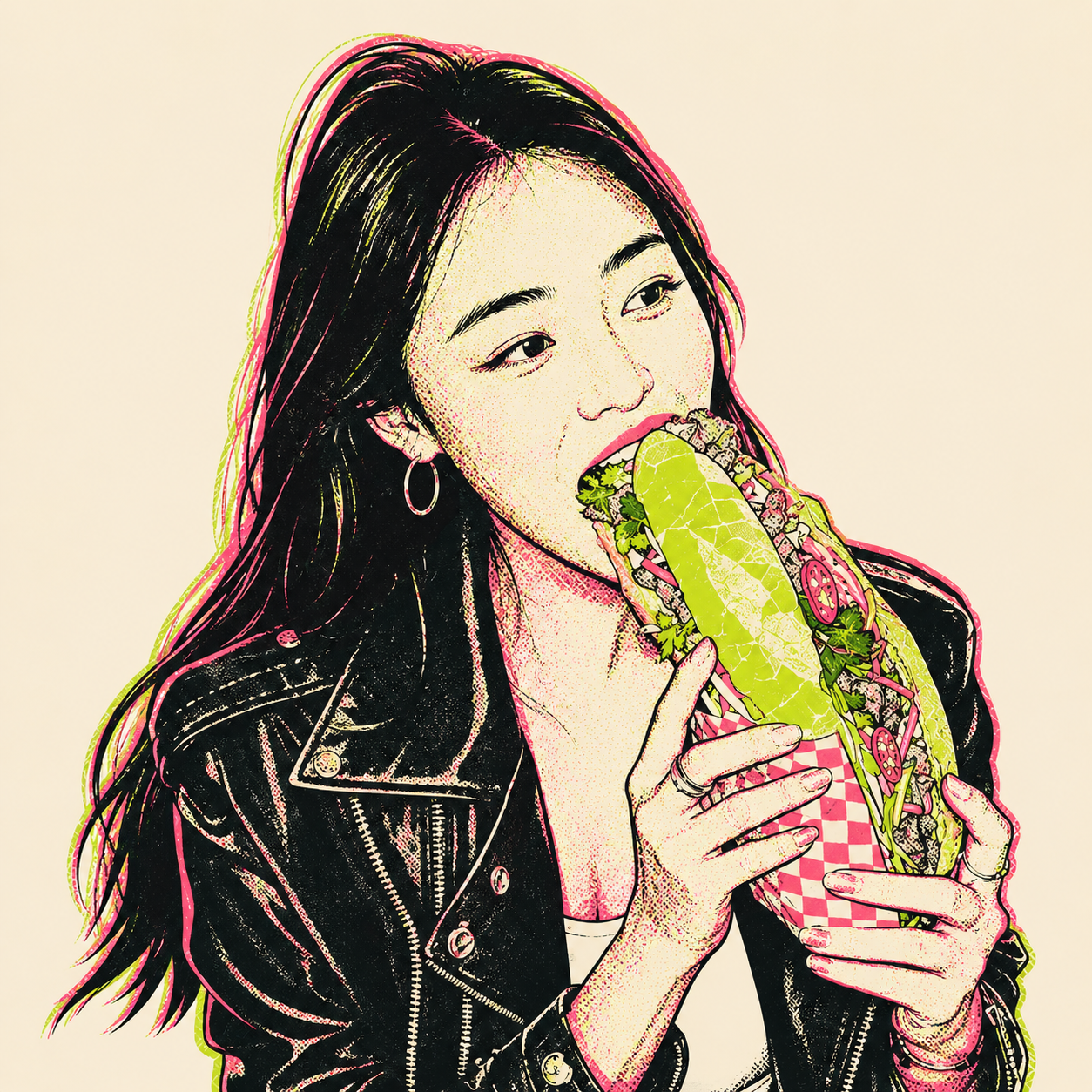
 Hover · tap
 How it’s made
A working Saigon vendor’s morning: bread arrives by motorbike from a wholesale baker
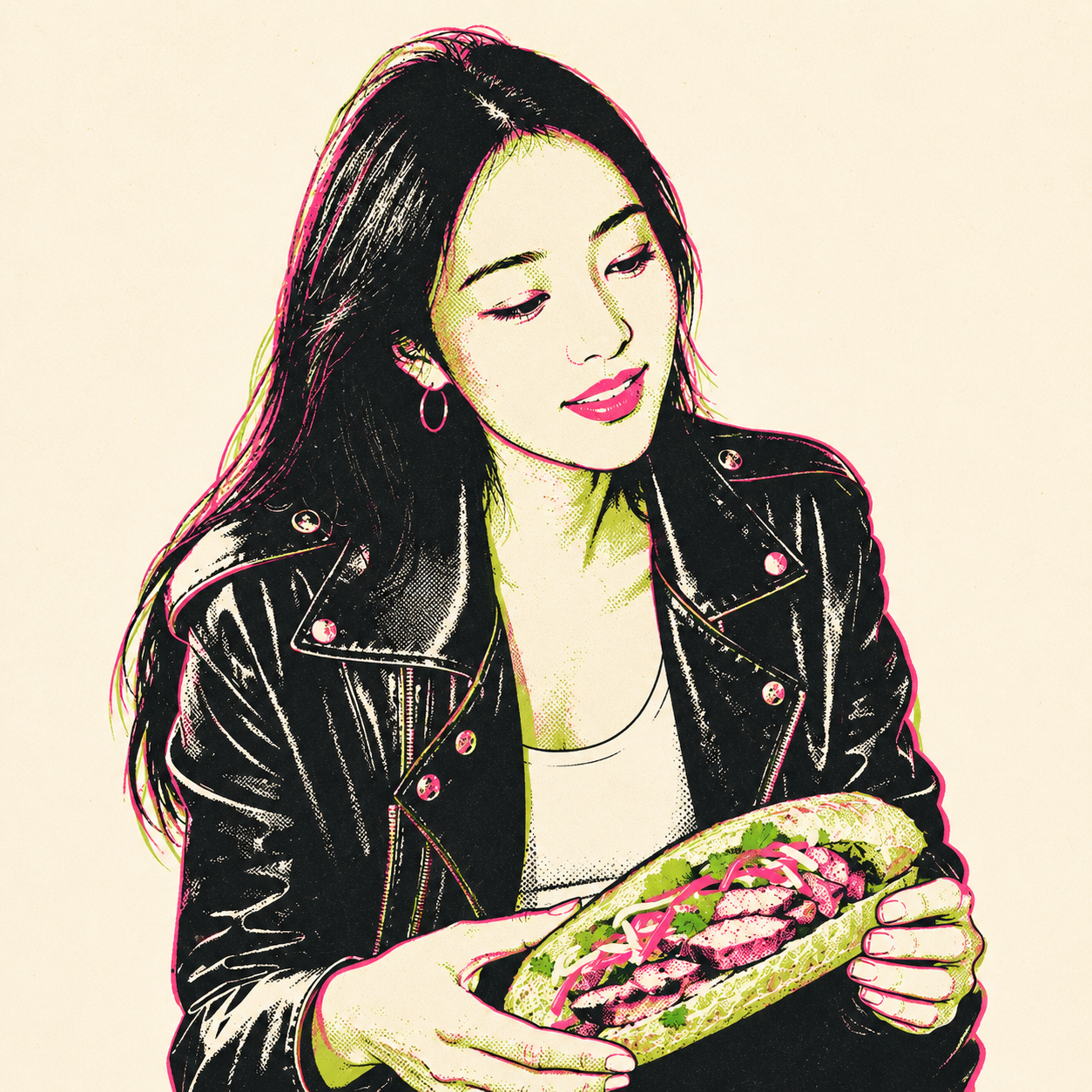
The build is choreographed: split the loaf horizontally without separating, spread mayo on one side and pâté on the other, lay in cured meats, tuck in đồ chua and cucumber, fan in cilantro and chili, finish with two drops of Maggi, fold closed, wrap in newspaper or a thin paper sleeve. Total time per sandwich at a busy stall:
 Hover · tap
 References
The colonial-baguette-to-banh-mi transition is documented in
Related
Where to eat it
Banh Mi on the globe
travel wishlist
my next bites · 0
view full page →Tap a marker, then + WISHLIST to add.