Street Food ·
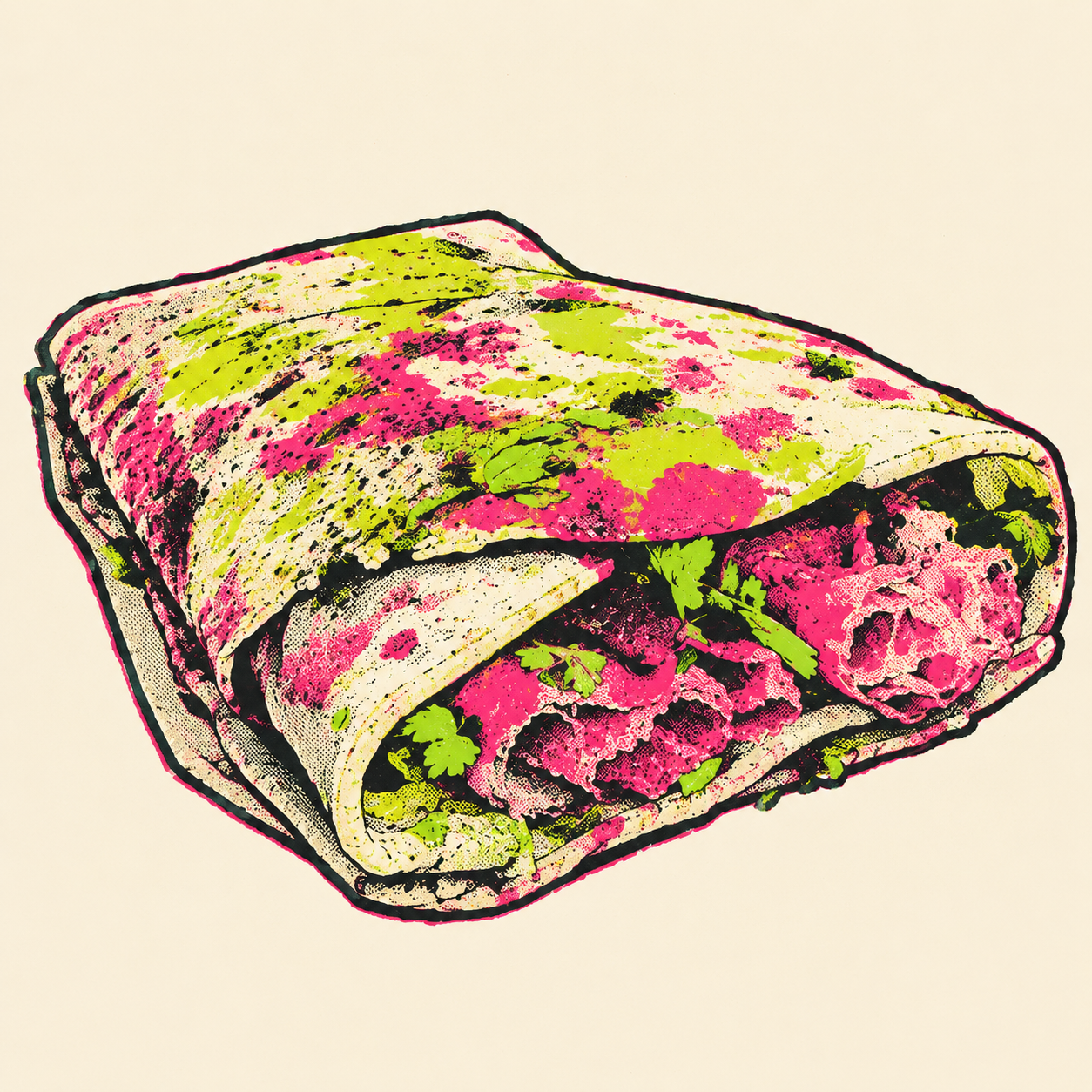
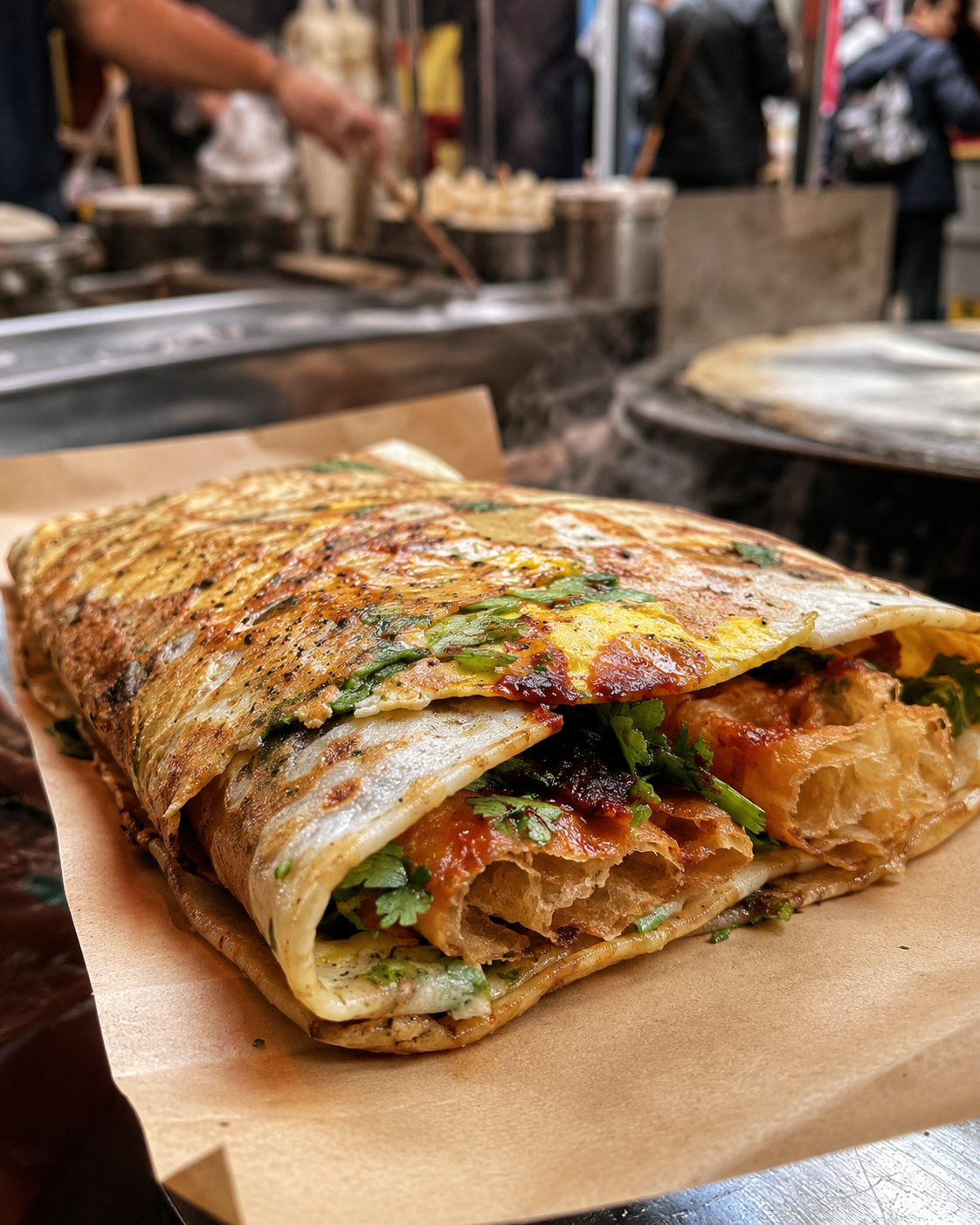
Jianbing
A 19th-
 Hover · tap
- Sweet
- 0/5
- Spice
- 2/5
- Era
- 19th century
- Format
- Single serve
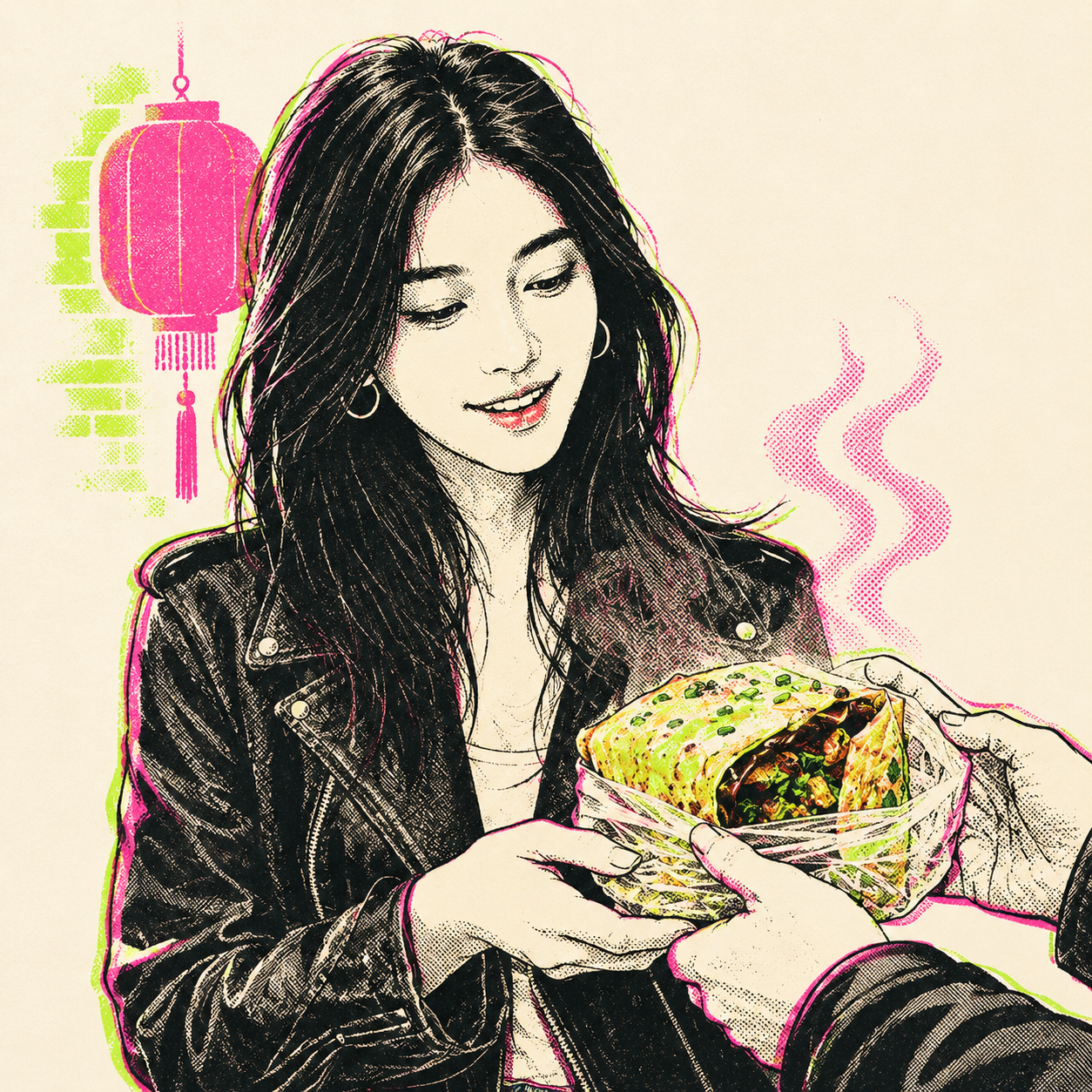
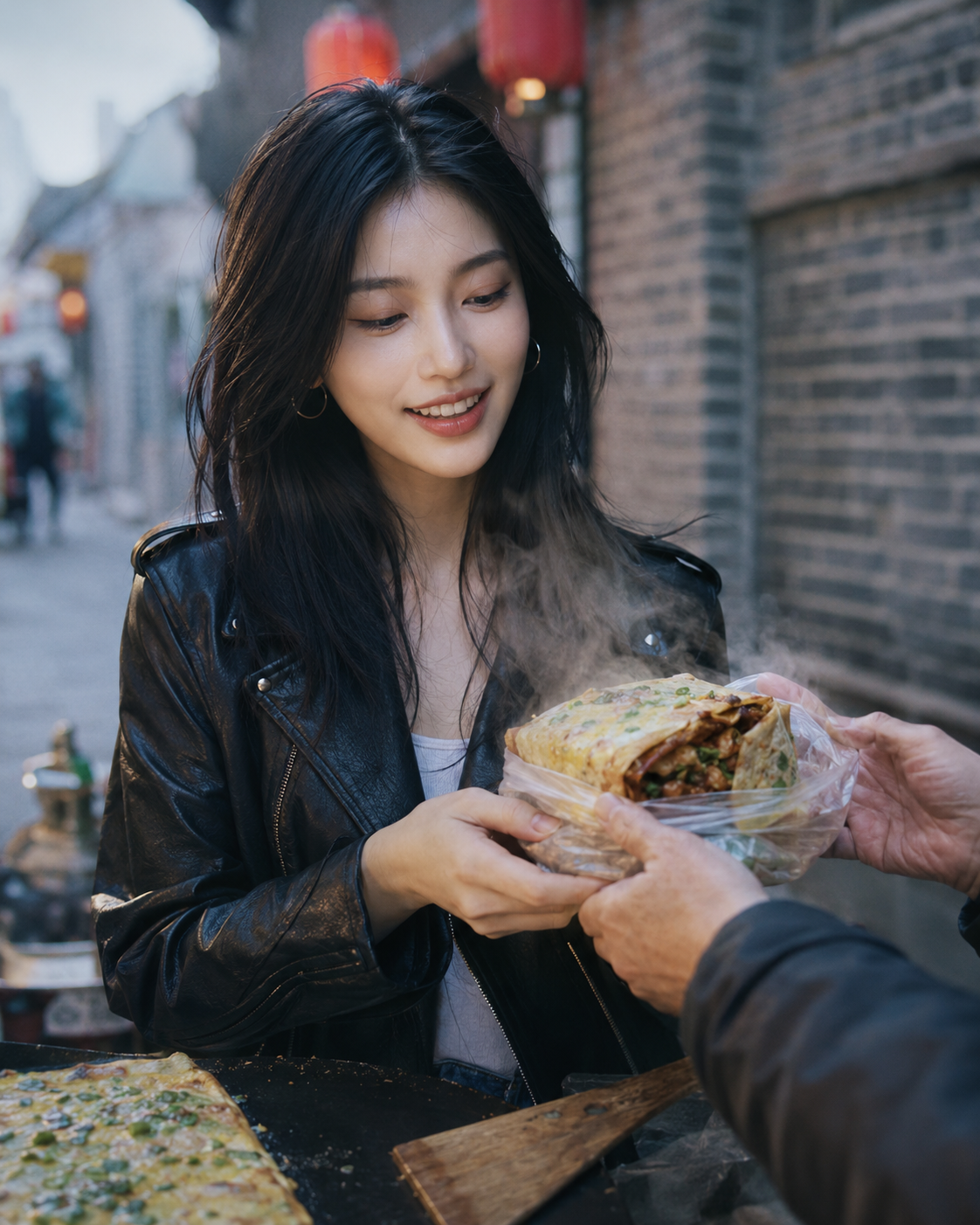
The egg isonto the wet side. The crisp goes inside. That is the whole grammar. cracked
Origin
Jianbing has a credible
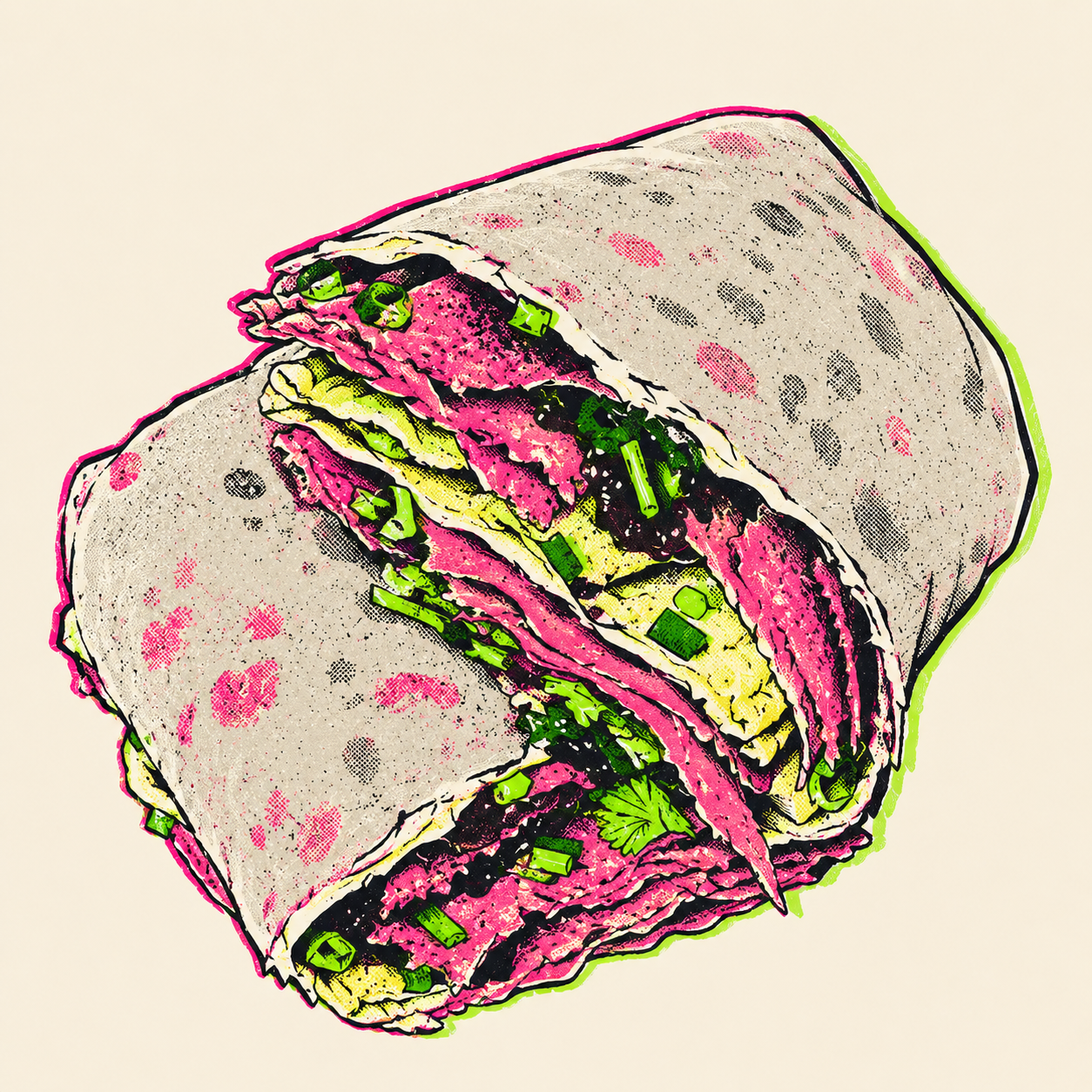
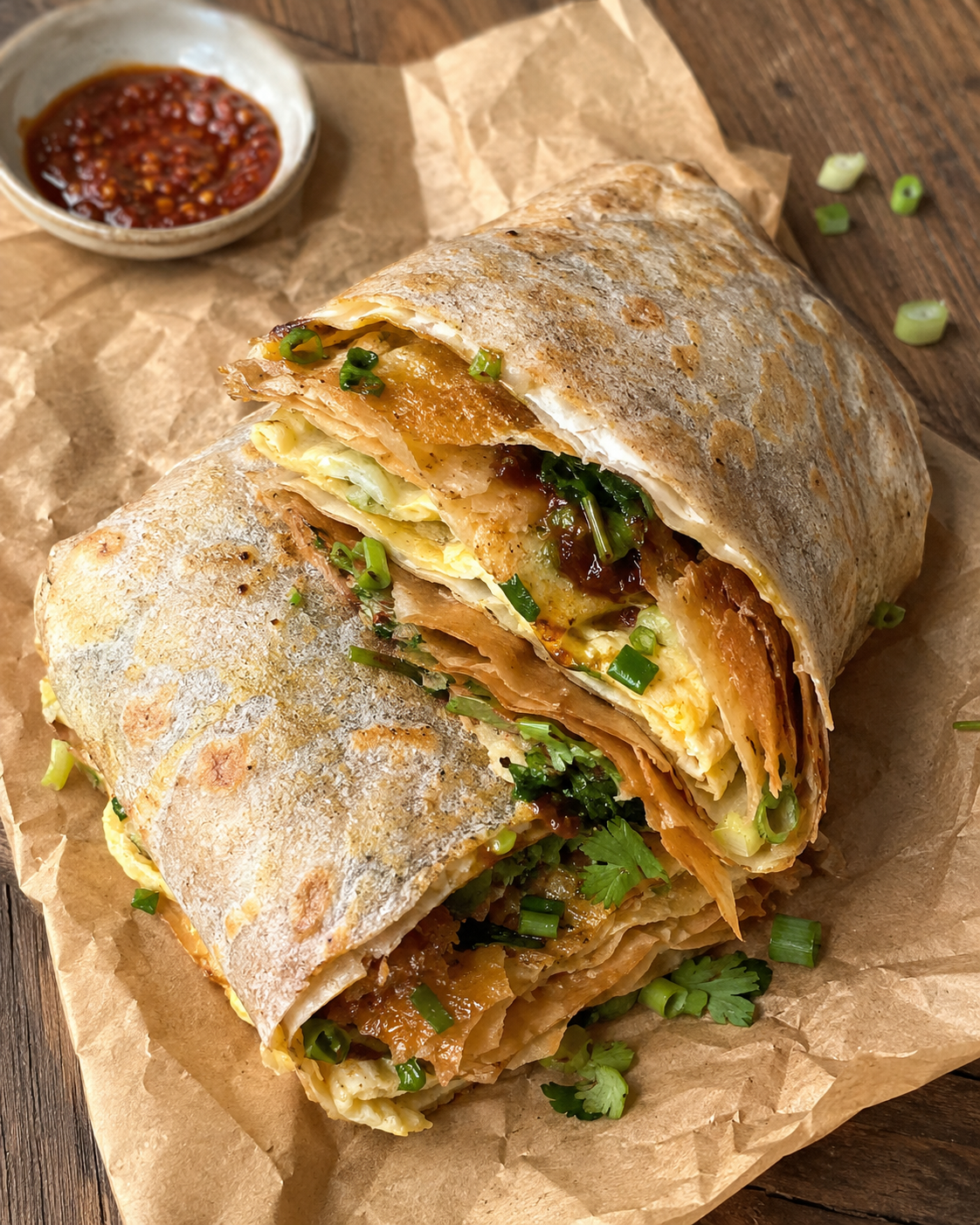
The Beijing-style modern jianbing — the one filmed in food documentaries — is
 Hover · tap
 What it is
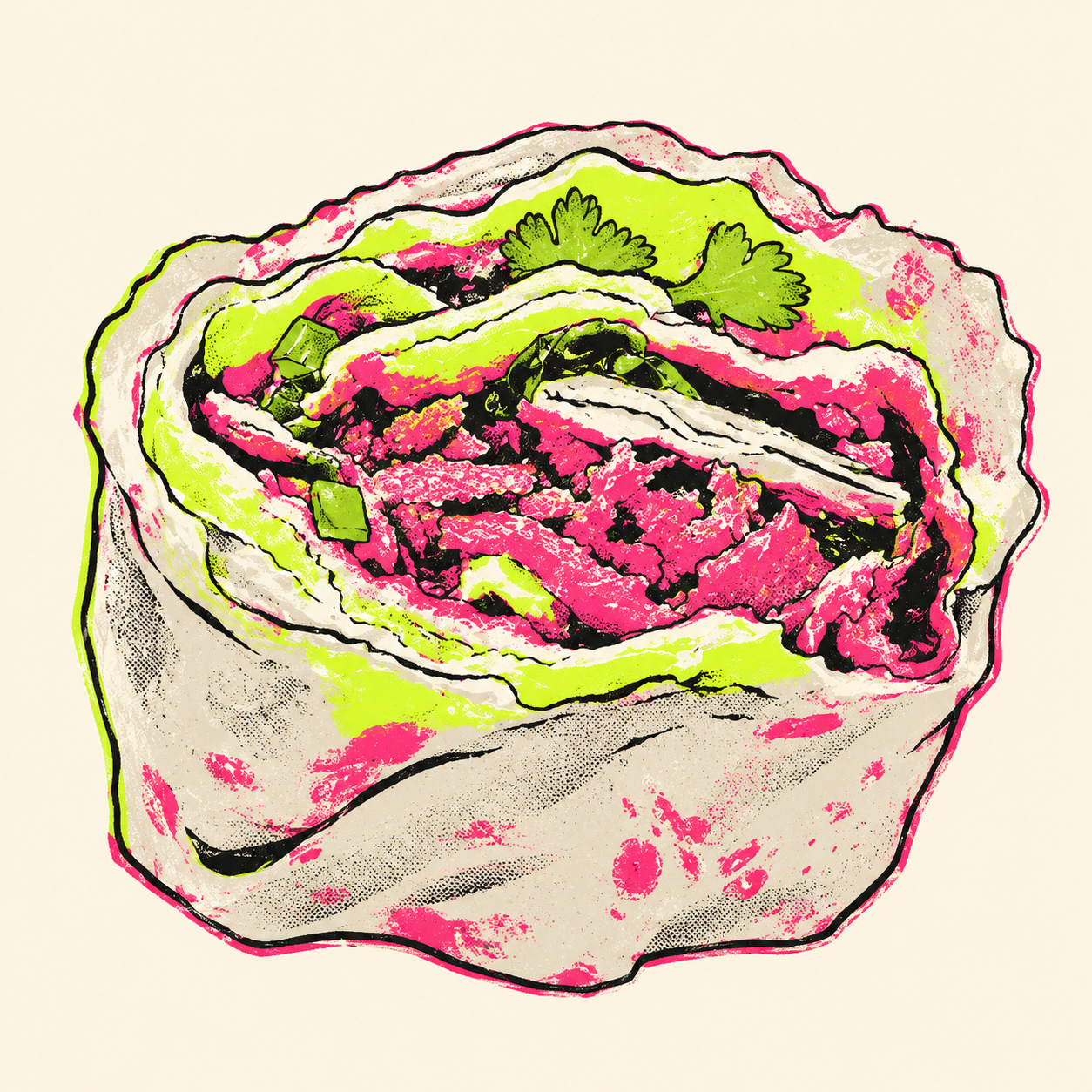
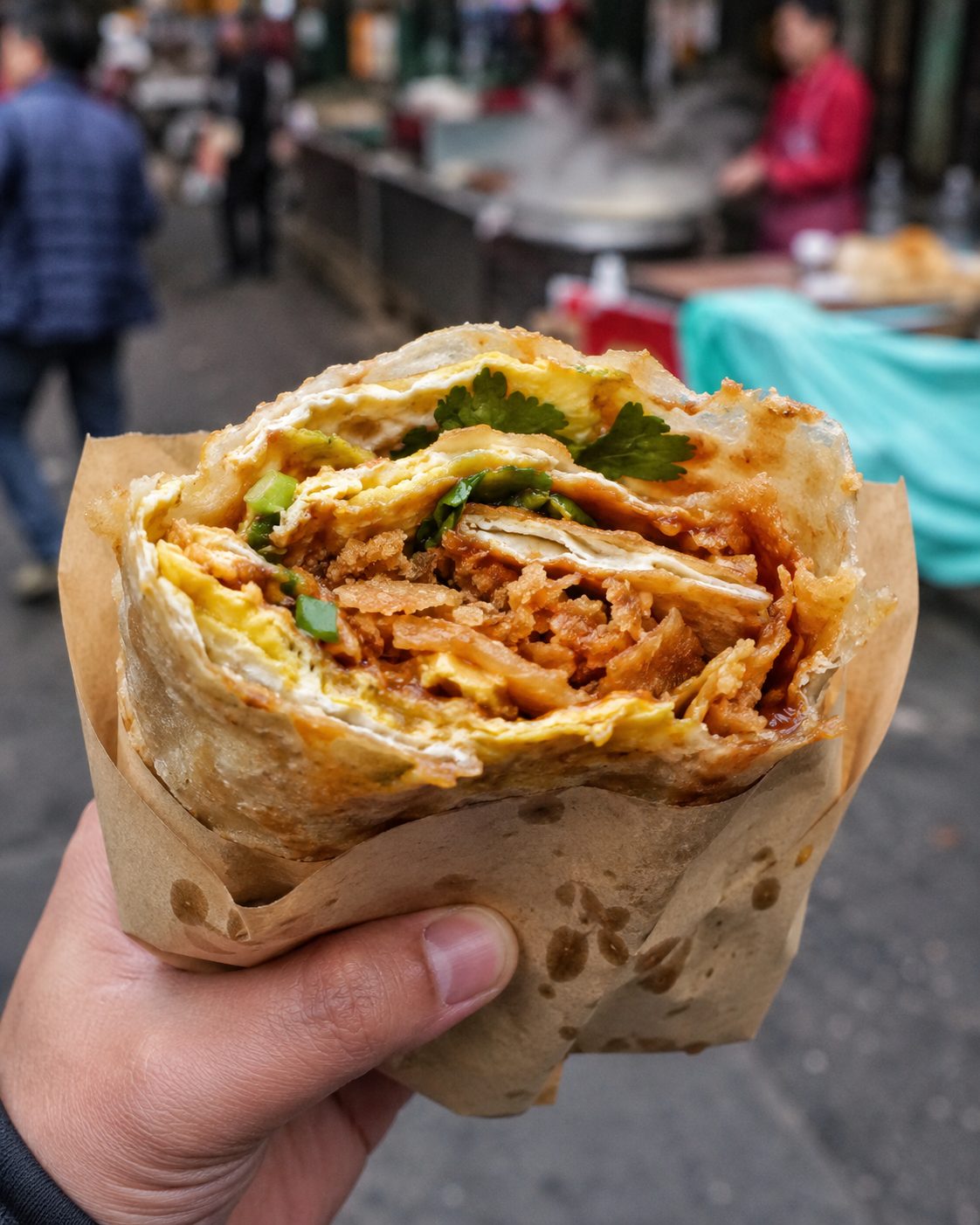
A jianbing is, by structure:
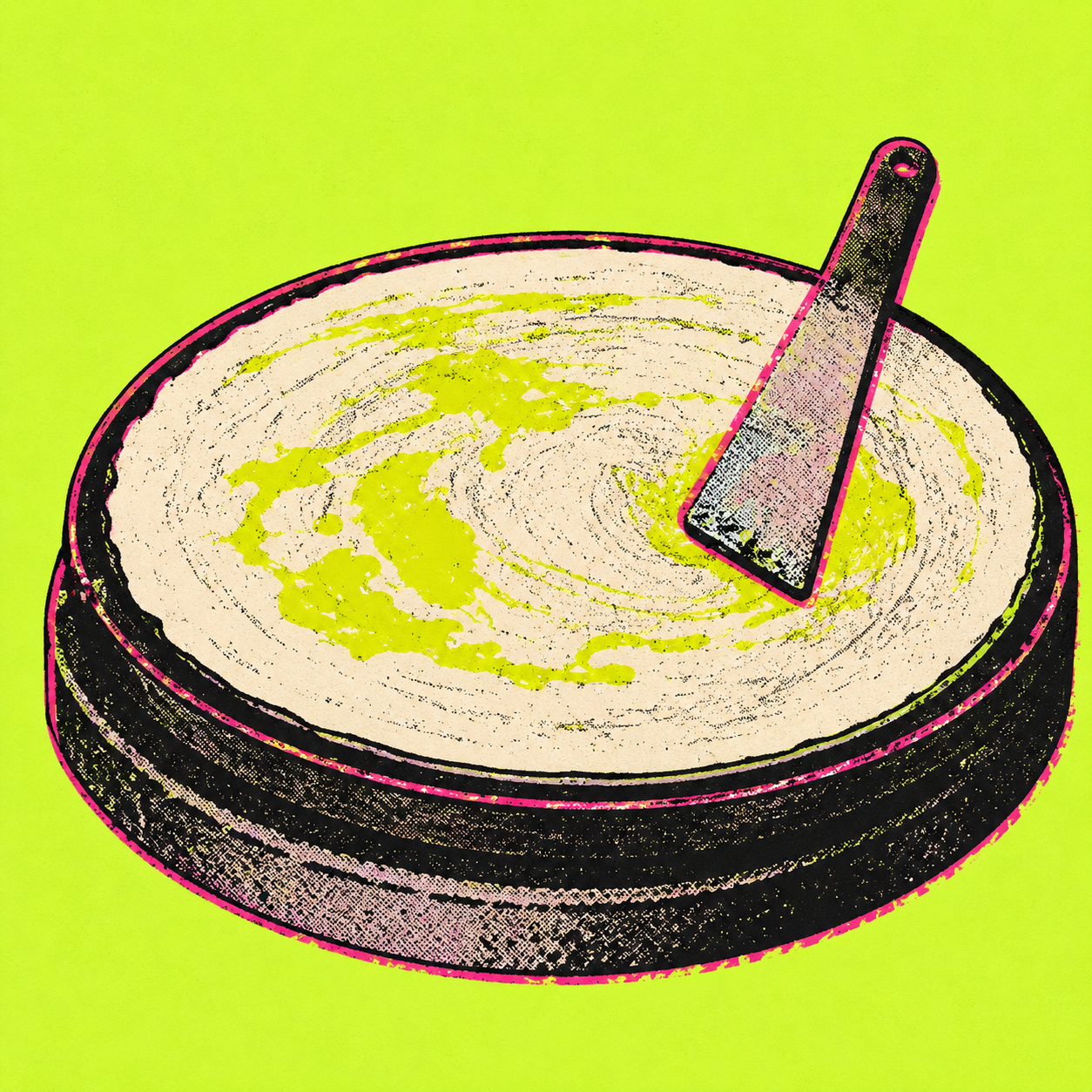
The batter is the first signal of regional style. The Shandong-Tianjin tradition uses mung-bean flour for a slightly bitter, golden-green pancake; the Beijing simplification uses millet flour for a paler, milder pancake; modern chain stalls increasingly use plain wheat flour, which the purists consider a regression. Sauces are tian mian jiang (sweet wheat-fermented sauce) and la jiao jiang (chilli paste) painted across the surface; toppings are scallion, cilantro, and salted mustard root.
 Hover · tap
 Cultural context
In Beijing and Tianjin, jianbing is
Outside China, jianbing has had a curious second life. Brooklyn’s Mr Bing (2015) and San Francisco’s Endangered Species (2017) introduced jianbing to the American food-cart circuit, where it was framed as an “Asian crêpe” and adapted to American expectations — different sauces, different proteins, often heavier batters. The diasporic jianbing now exists in Paris, London, Berlin, Sydney, and most major Asian metropolises outside the mainland; the Beijing original remains the standard against which others are measured.
 Hover · tap
 Variations
Within China the variation is mostly regional. Tianjin jianbing guozi uses two eggs and a deep-fried guozi the size of a forearm, with a stricter prescription of sauces. Shandong-style uses the original mung-bean batter and is eaten without sauce in some rural areas — closer to a thin pancake than to a sandwich. Sichuan jianbing (less famous) replaces the sweet sauce with Sichuan chilli oil and adds zha cai (preserved mustard tuber). Hebei and Henan versions tend toward heavier, breadier batter and meatier fillings — sometimes more like a wrap than a crêpe.
Diasporic versions tend to compromise on batter and double down on filling: chicken tikka jianbing in Brooklyn, kimchi jianbing in Seoul, halloumi jianbing in London. The form is durable; the filling negotiable.
 Hover · tap
 How it’s made
A working Beijing cart has
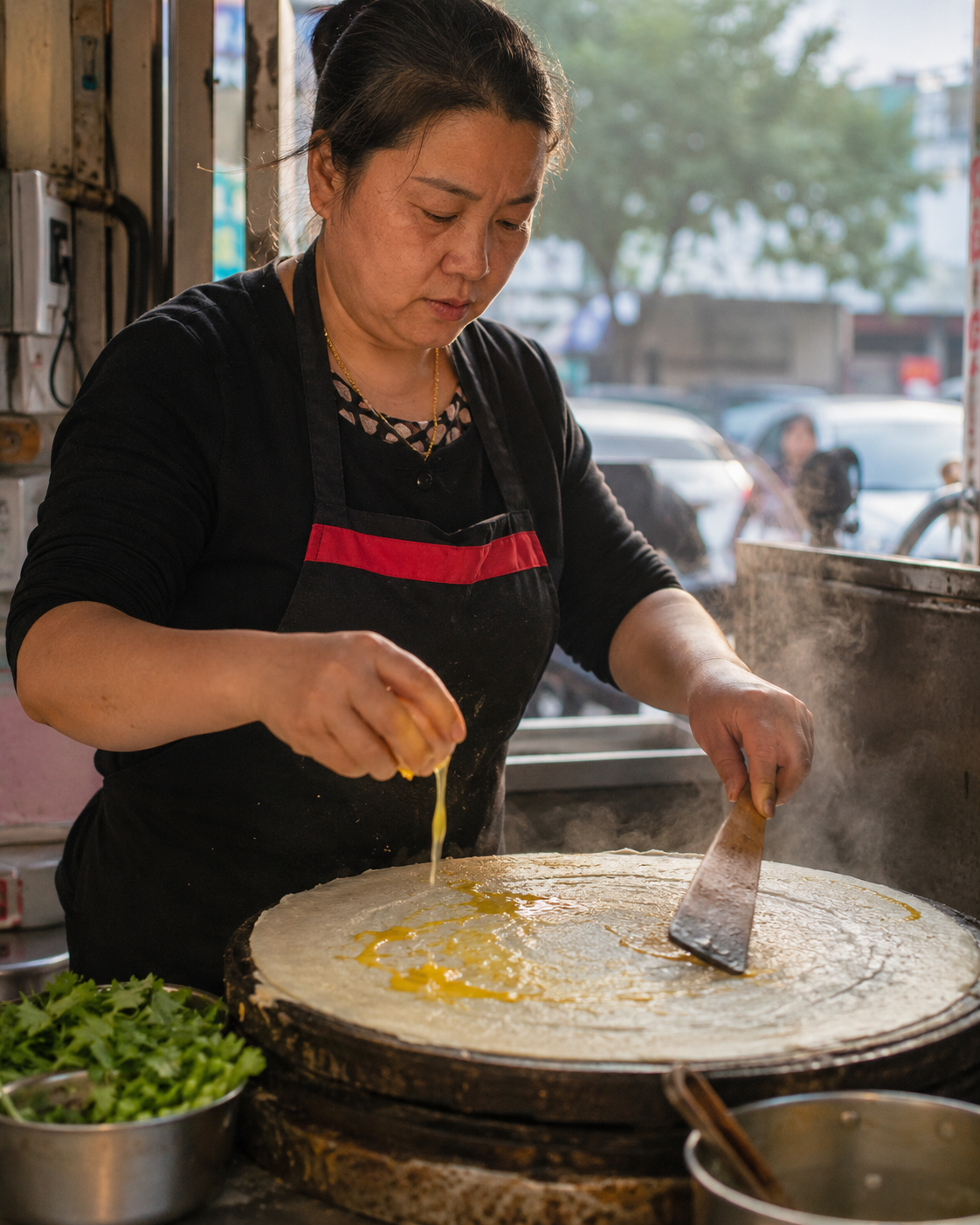
While the batter is still wet on top, the vendor cracks an egg, breaks the yolk, and spreads it across the surface with the T-tool — sealing the egg into the pancake. Scallion and cilantro are scattered on while the egg sets. After about 90 seconds the pancake is firm enough to flip with a long flat spatula; on the now-upper cooked side, the sauces are painted on, the guozi is laid down the centre line, and the pancake is folded in halves and quarters around it. Total time:
References
The Shandong campfire origin is summarised in
Related
Where to eat it
Jianbing on the globe
travel wishlist
my next bites · 0
view full page →Tap a marker, then + WISHLIST to add.