W
Issue 01 ·

Street Food · Japan

Takoyaki

たこ焼き

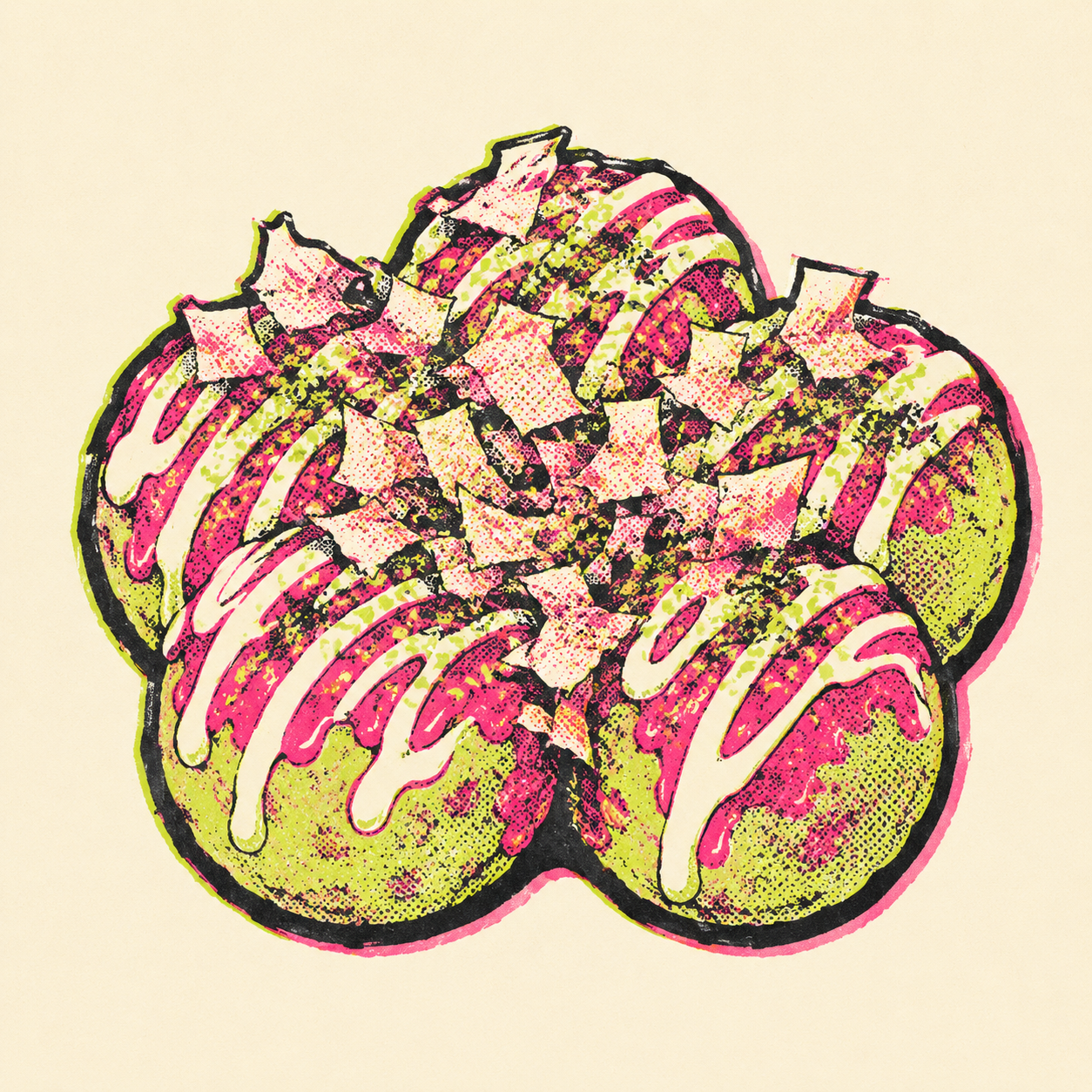
A 1935 Osaka invention — dashi-thinned batter, a cube of octopus, and a copper-domed pan that flips a sphere out of a puddle.

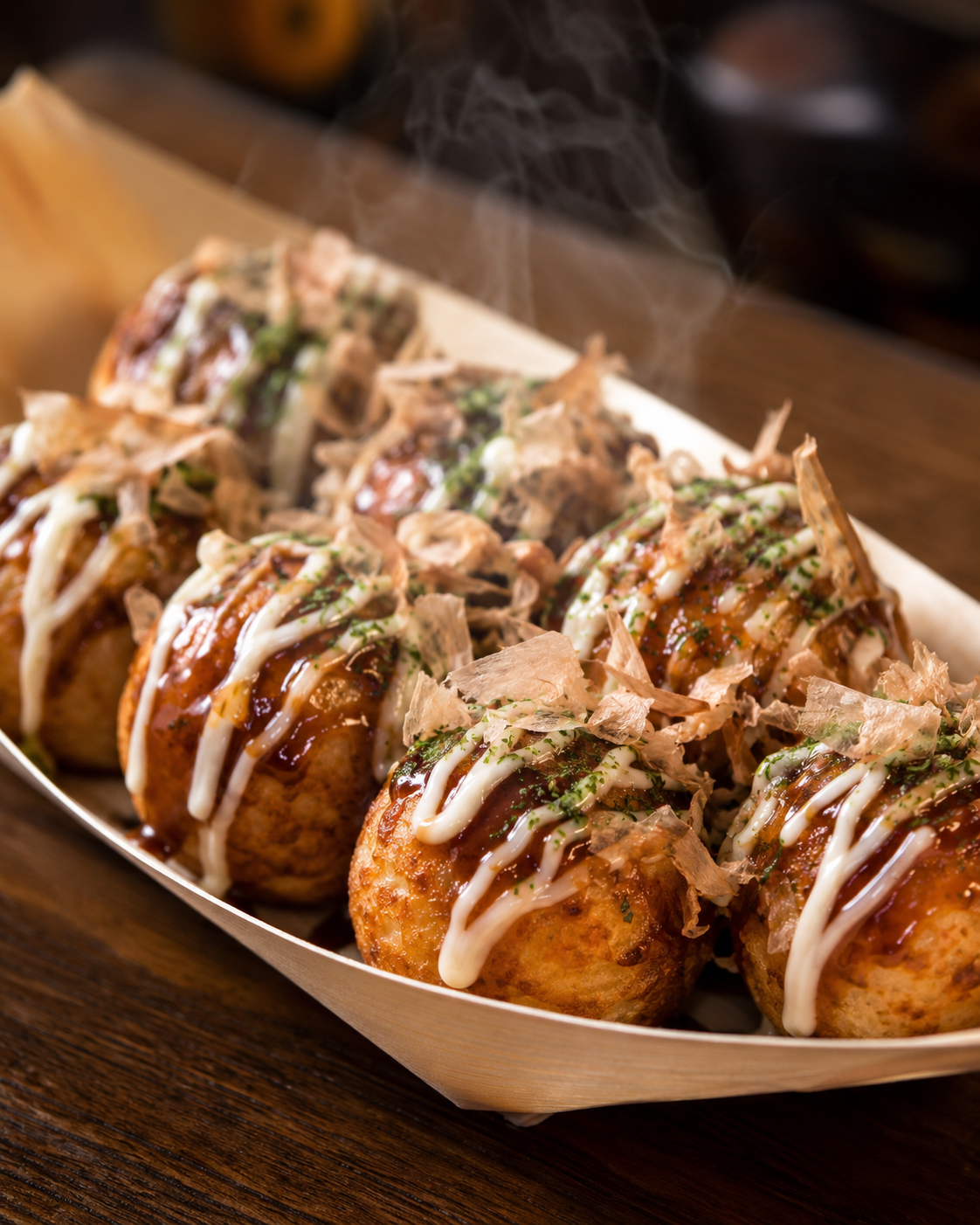
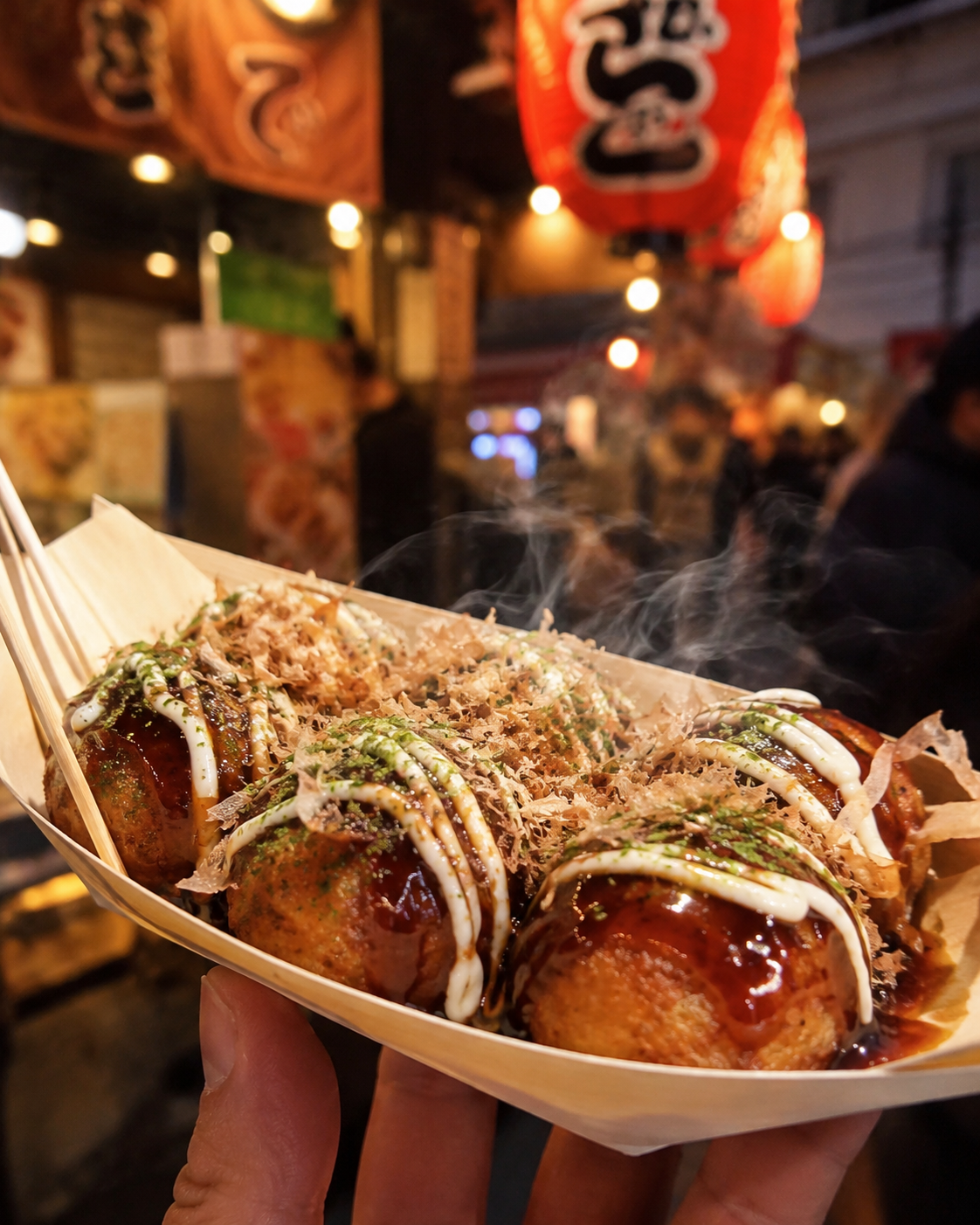
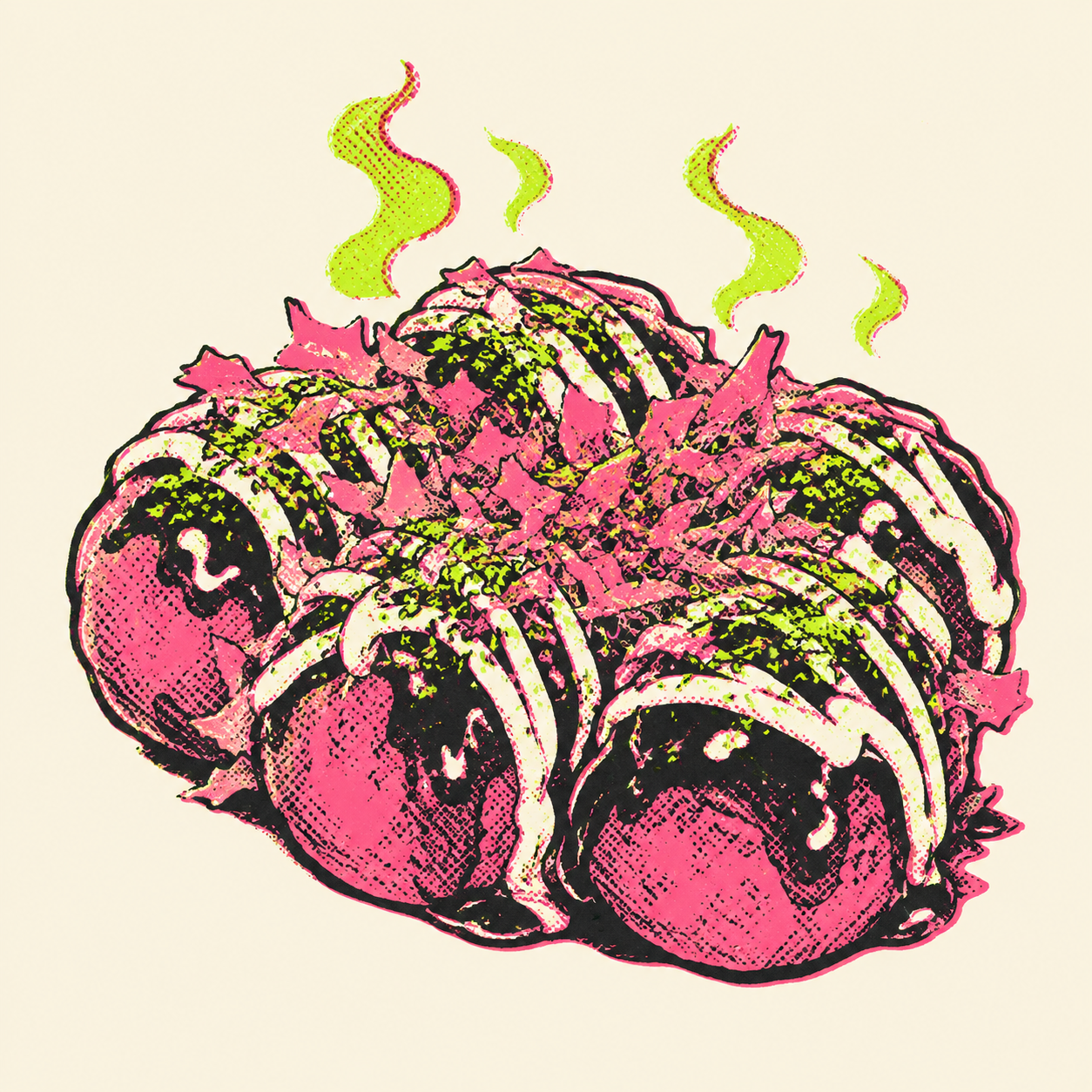
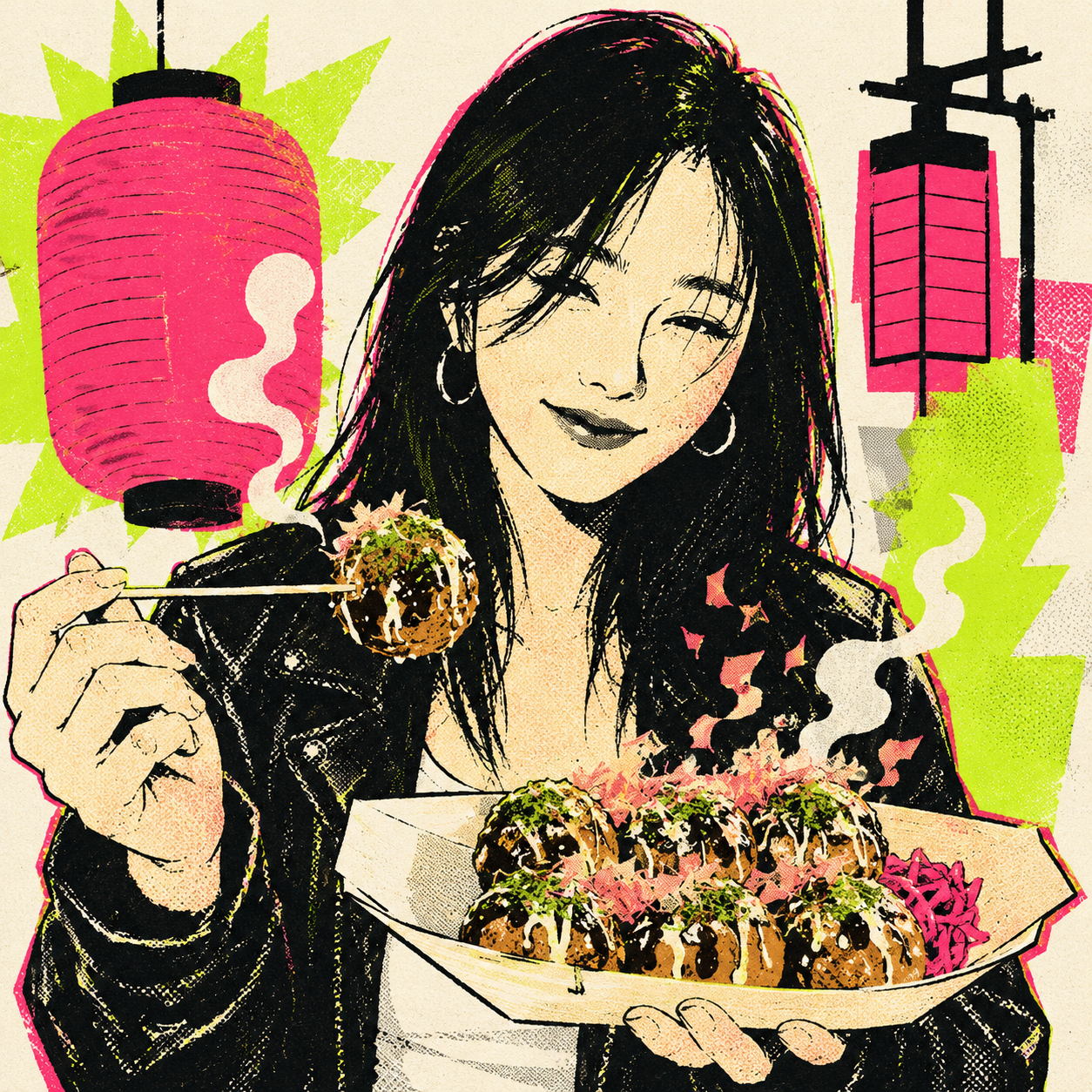
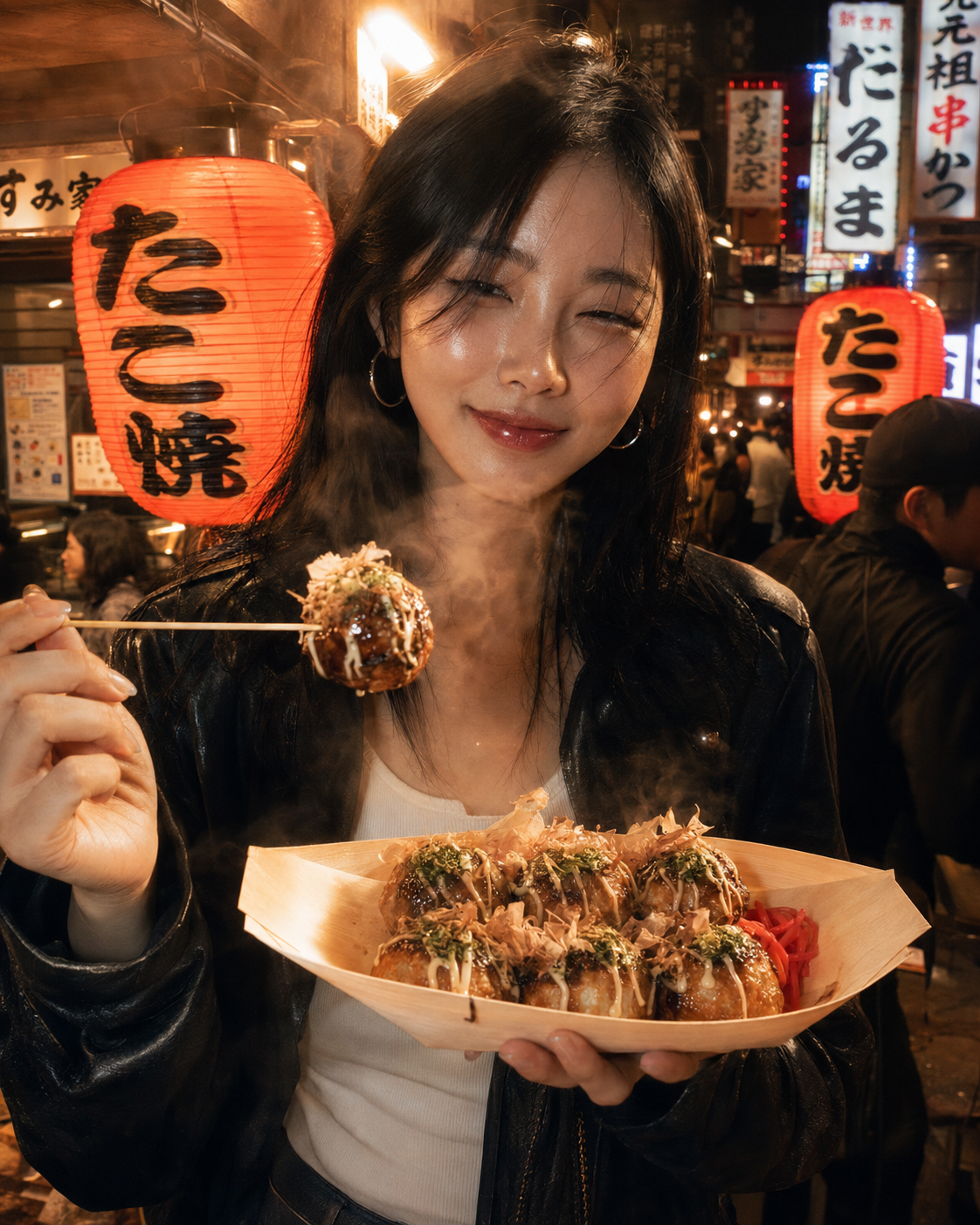
A tray of takoyaki balls topped with sauce, mayo, and bonito flakes A tray of takoyaki balls topped with sauce, mayo, and bonito flakes Hover · tap
Japan Griddled
Sweet
0/5
Spice
1/5
Era
20th century
Format
Bite
The point of a takoyaki is to be too hot to eat. You bite anyway, and that is the dish.

Origin

Takoyaki is precisely dated. In 1935 , Tomekichi Endo , a street vendor in Osaka’s Nishinari ward, began experimenting with a domed cast-iron pan he had been using to make radio-yaki — a savoury dumpling of beef, konjac, and red ginger named for its resemblance to the round dials on early radios. Drawing on a friend’s account of akashiyaki, an egg-rich octopus dumpling from nearby Akashi, Endo swapped the beef for diced octopus. The result, sold from his stall Aizuya, became the first takoyaki.

Aizuya still operates in Osaka under Endo’s descendants, and the city has since claimed takoyaki the way Naples claims pizza — most Osakan households own a takoyaki griddle (takoyaki-ki), and home parties around it are a recognised social ritual.

Hover · tap
FIG. 01

What it is

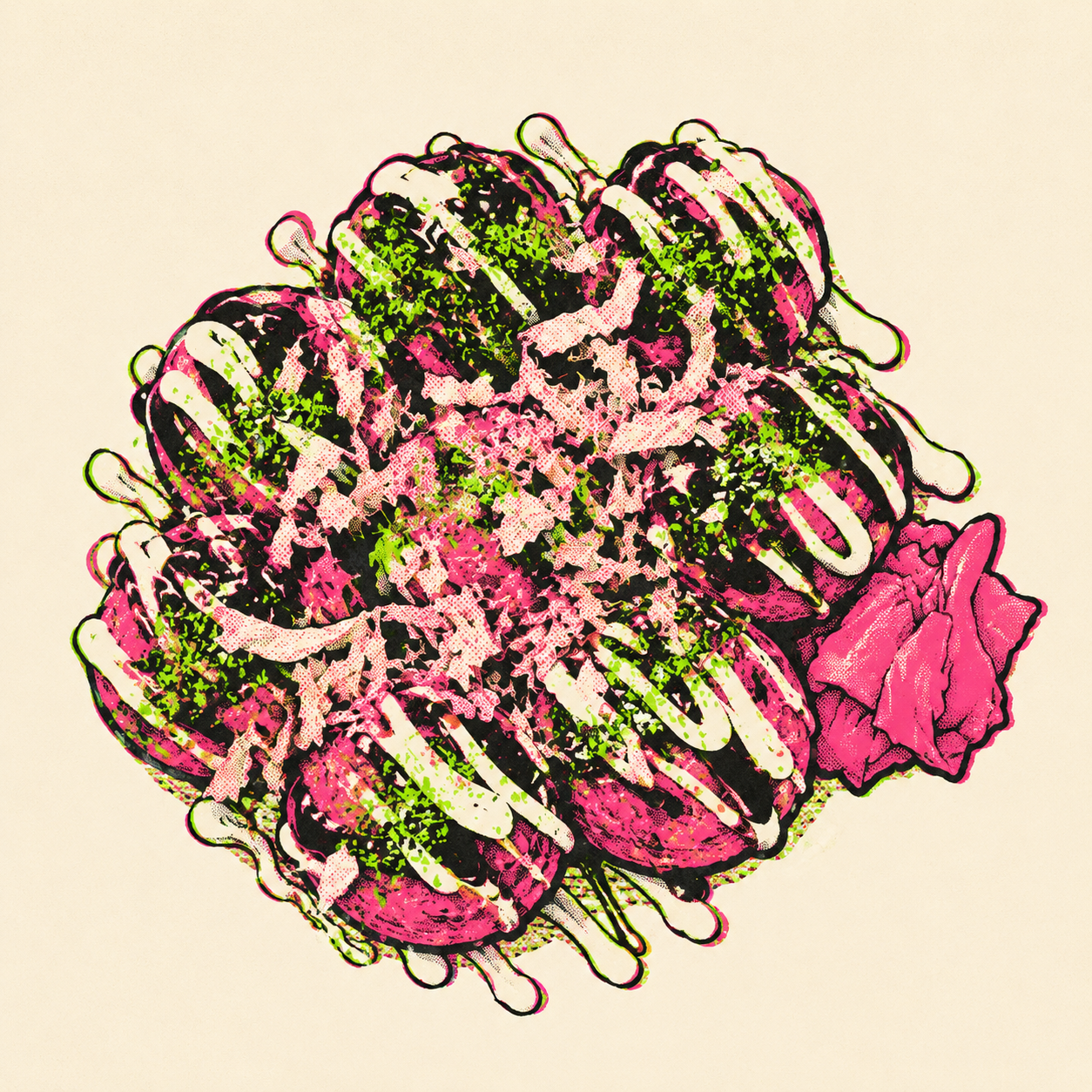
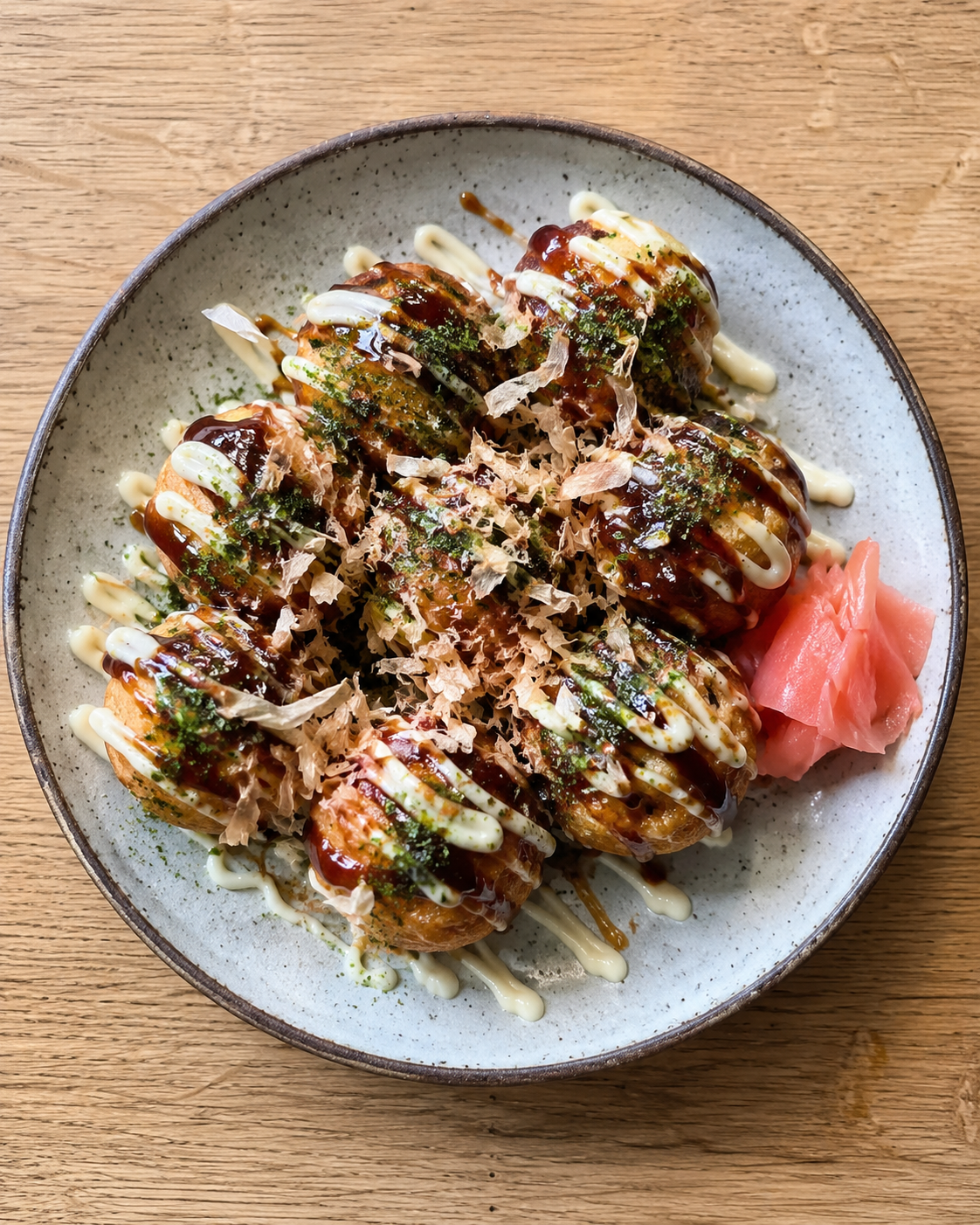
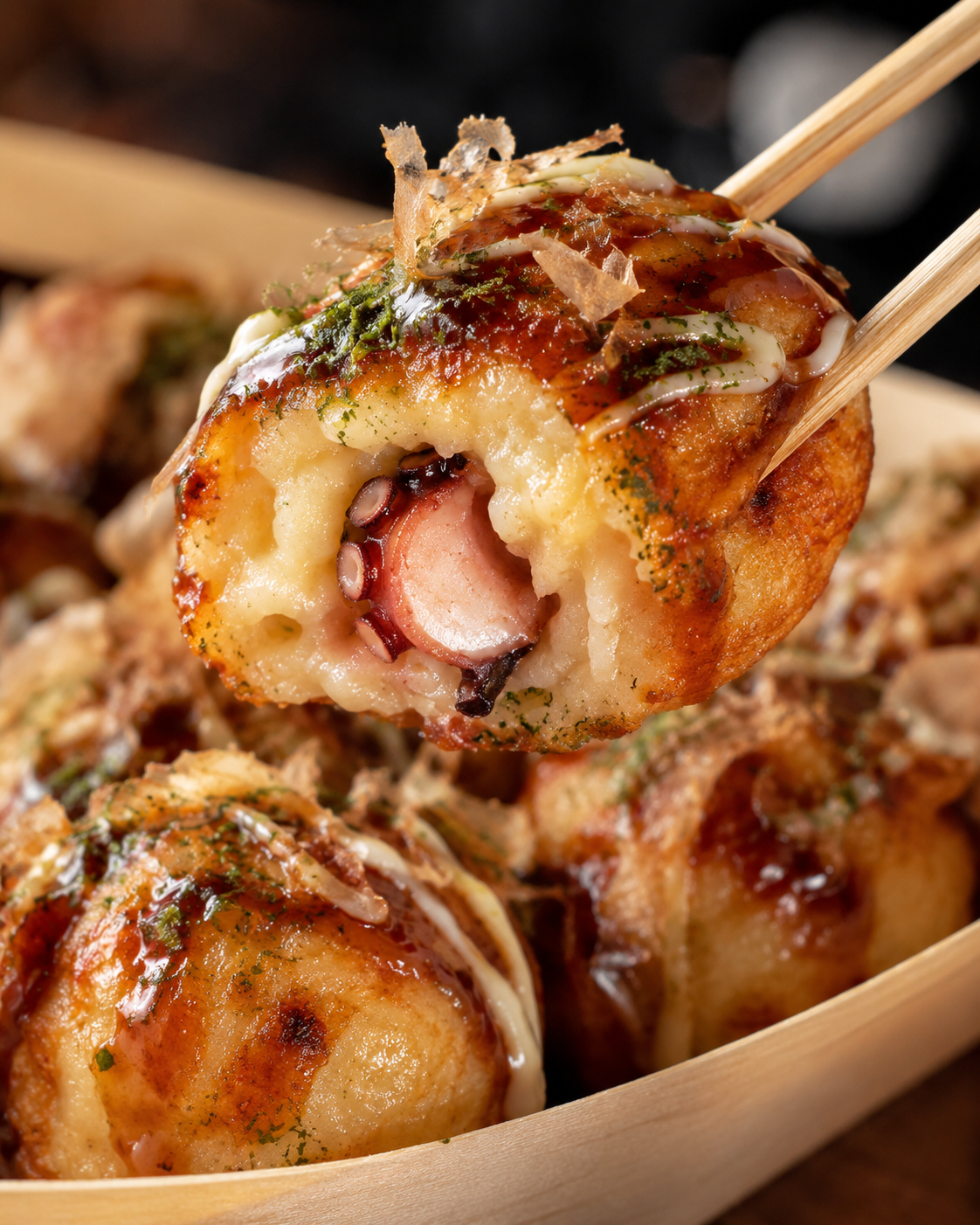
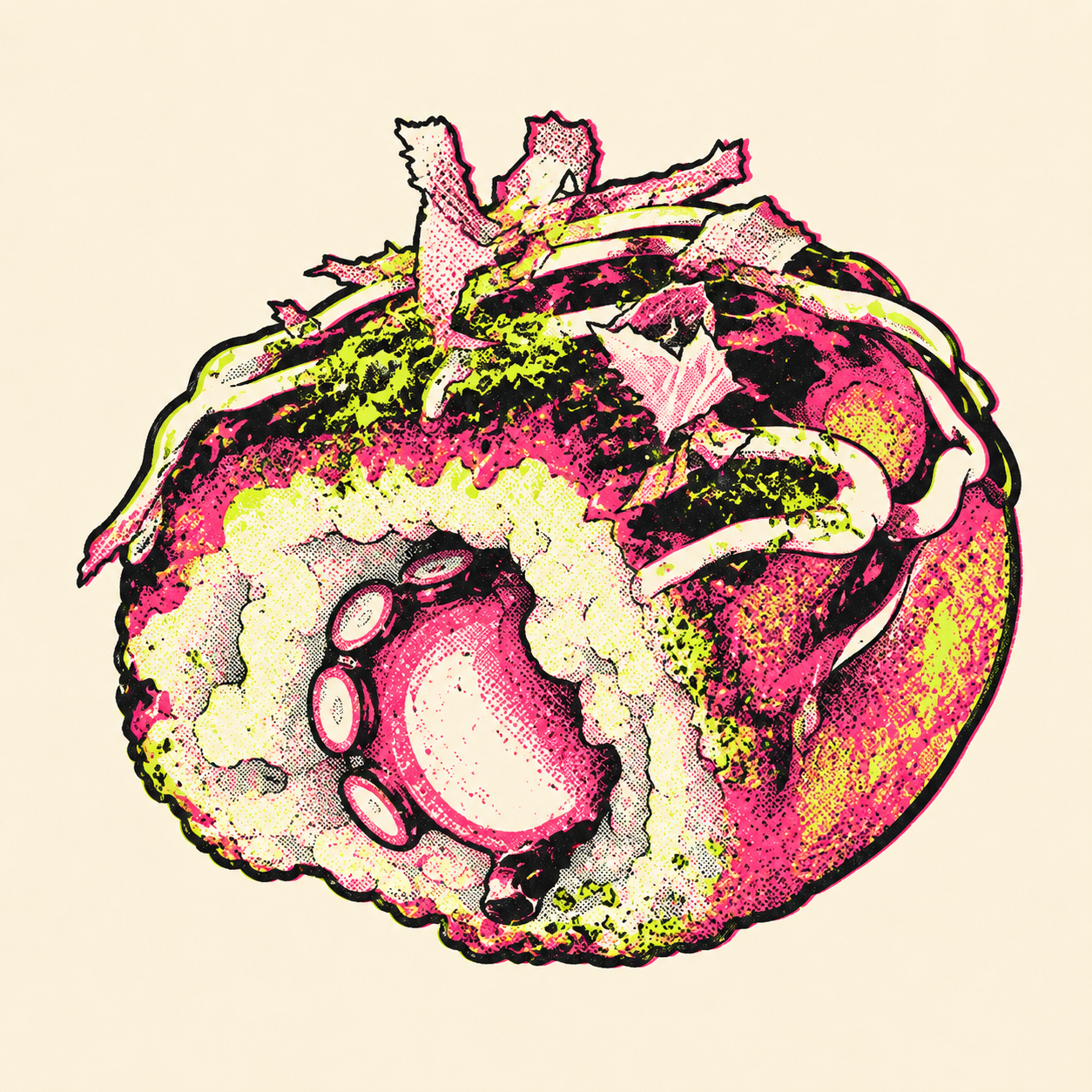
Takoyaki is a sphere — roughly 3 to 4 cm across — of soft, almost liquid batter wrapped around a cube of poached octopus tentacle. The batter is wheat flour thinned with dashi (kombu and bonito stock), egg, and a touch of soy sauce, so the eating texture is closer to a savoury custard than to bread. Tucked alongside the octopus go scraps of tenkasu (deep-fry crumbs), thin slivers of red ginger (beni shōga), and chopped scallion.

A finished takoyaki is dressed standing up: brushed with thick takoyaki sauce (a sweetened soy-Worcestershire blend), drizzled with Japanese mayonnaise, dusted with aonori (powdered green seaweed) and katsuobushi (bonito flakes that wave in the rising steam). The first bite is a problem. The interior is at boiling temperature; the only solution is to pant.
Hover · tap
FIG. 02

Cultural context

Takoyaki is the signature street food of Osaka and, by extension, the Kansai region. The Dotonbori arcade in Osaka has takoyaki stalls every twenty metres, each with its own queue and its own sauce ratio. The dish is closely associated with festival nights (matsuri) — yatai stalls selling takoyaki, yakisoba, and shaved ice are the constant trio of summer-shrine festivals across Japan.

The home version is its own institution. The takoyaki party — set up the cast-iron pan on a table-top burner, fill it with batter, and let guests turn their own spheres with bamboo skewers — is to Osakan domestic life roughly what a barbecue is to suburban America. Children learn the wrist motion before they can read.
Hover · tap
FIG. 03

Variations

The closest cousin is akashiyaki (also called tamago-yaki in Akashi) — softer, eggier, no sauce, dipped instead in warm dashi broth. Tokyo’s monjayaki shares the dashi-batter base but is griddled flat and scraped from the pan with a spatula. Outside Japan, takoyaki has spread through East Asian convenience-store freezers and Asian-supermarket food courts; Taiwan’s night markets sell a takoyaki built around a smaller octopus piece, and South Korean pojangmacha versions sometimes substitute squid.

A small but stubborn alternative is negiyaki — the same domed pan, but filled with a scallion-heavy batter without octopus, served with ponzu rather than thick sauce.
Hover · tap
FIG. 04

How it’s made

A working takoyaki stall has a multi-well cast-iron pan over a strong flame — usually 24 to 32 wells per griddle . The vendor oils the wells generously, fills each one with batter that overflows the rims so the surface is one connected pool, and immediately drops in a cube of octopus, a pinch of tenkasu, ginger, and scallion to each well.

After about 90 seconds, the bottom of each well has set. The vendor uses two long thin steel or bamboo picks to slice the connecting batter, fold the overflow into the wells, and rotate each ball ninety degrees. Another minute, another quarter-turn. By the third or fourth turn the spheres are golden and crisp on the outside, molten inside . They are tipped onto a paper boat, dressed, and eaten standing up at the corner of the stall.

References

The Aizuya-Endo origin story is documented in the Osaka City Museum’s takoyaki exhibit (2017) and in Naomichi Ishige ’s History and Culture of Japanese Food (Kegan Paul, 2001). The radio-yaki lineage and Akashi connection are detailed in Hiroshi Ono’s Takoyaki no Bunka-shi (Kawade Shobō Shinsha, 2018, Japanese-language). The Dotonbori stall economy and modern takoyaki sauce blends are surveyed in Lucky Peach issue 16 (2015).

Related

Where to eat it

Takoyaki on the globe

travel wishlist

my next bites · 0

view full page →

Tap a marker, then + WISHLIST to add.