Street Food ·
Kebab
An
 Hover · tap
- Sweet
- 0/5
- Spice
- 2/5
- Era
- Pre-modern
- Format
- Single serve
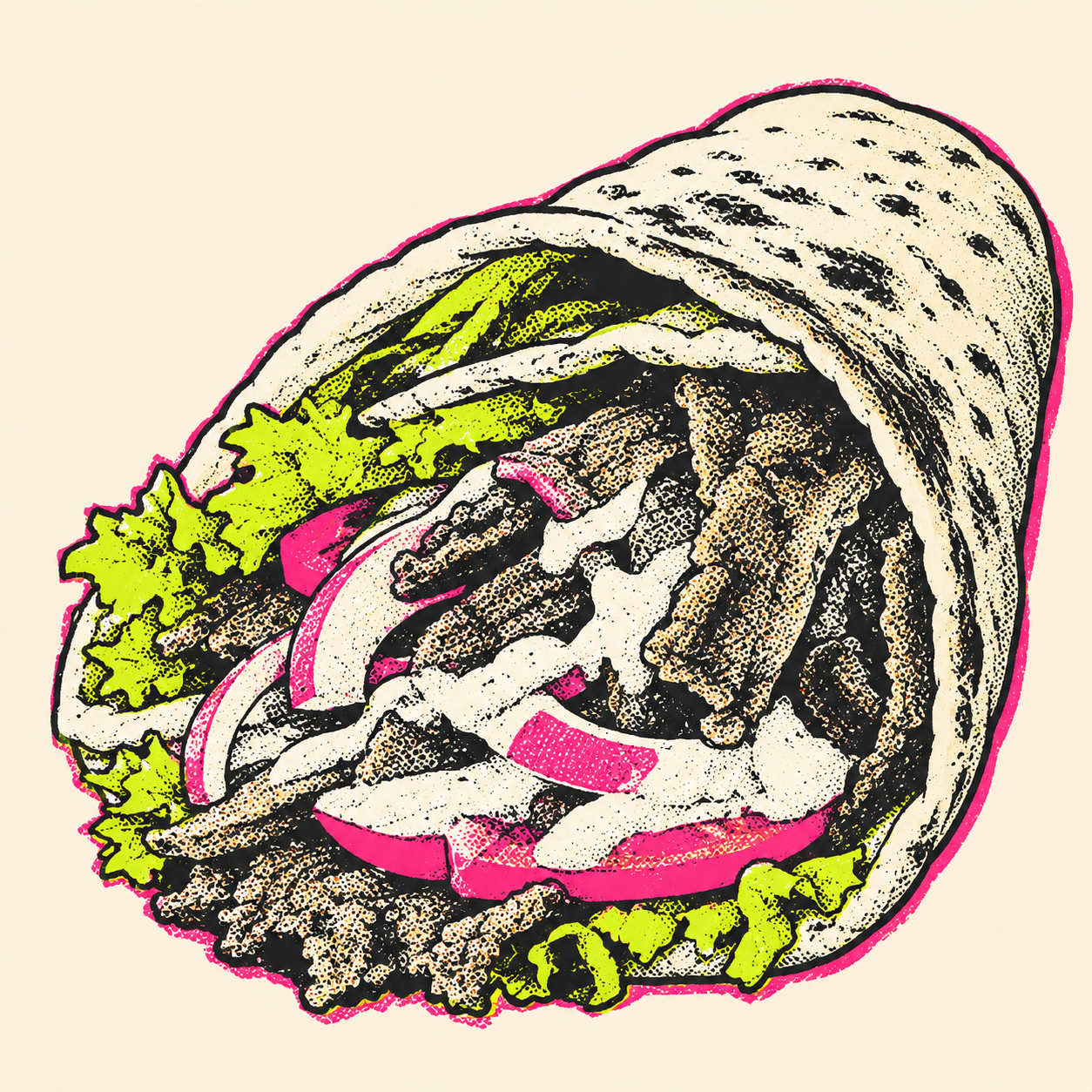
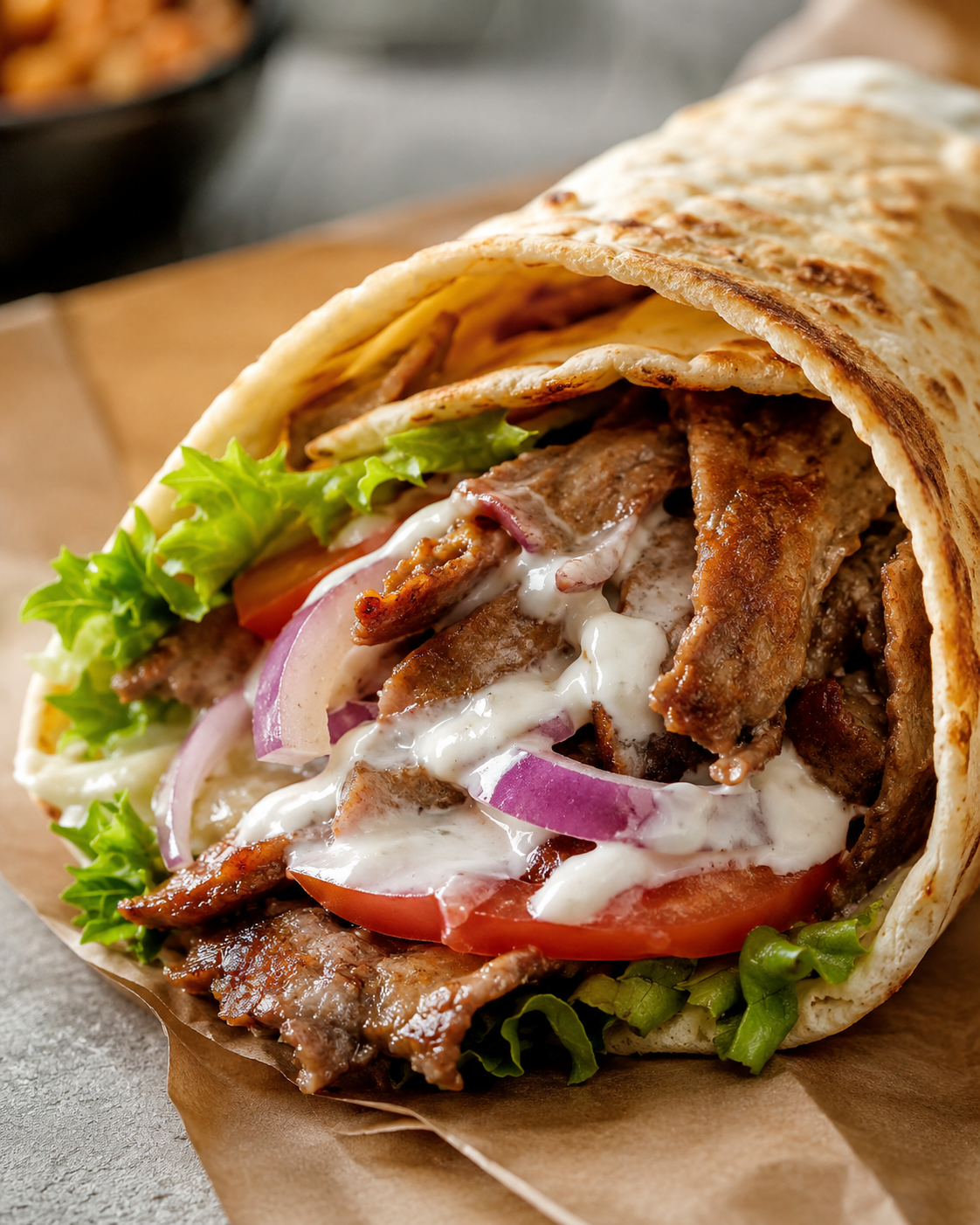
Thespit was Bursa's idea. Berlin made it a sandwich. vertical
Origin
The vertical spit — döner kebap, “turning kebab” — is a 19th-century innovation, conventionally credited to
The street-wrap version is much younger. Dürüm — kebab rolled in yufka or lavaş flatbread — was systematised
 Hover · tap
 What it is
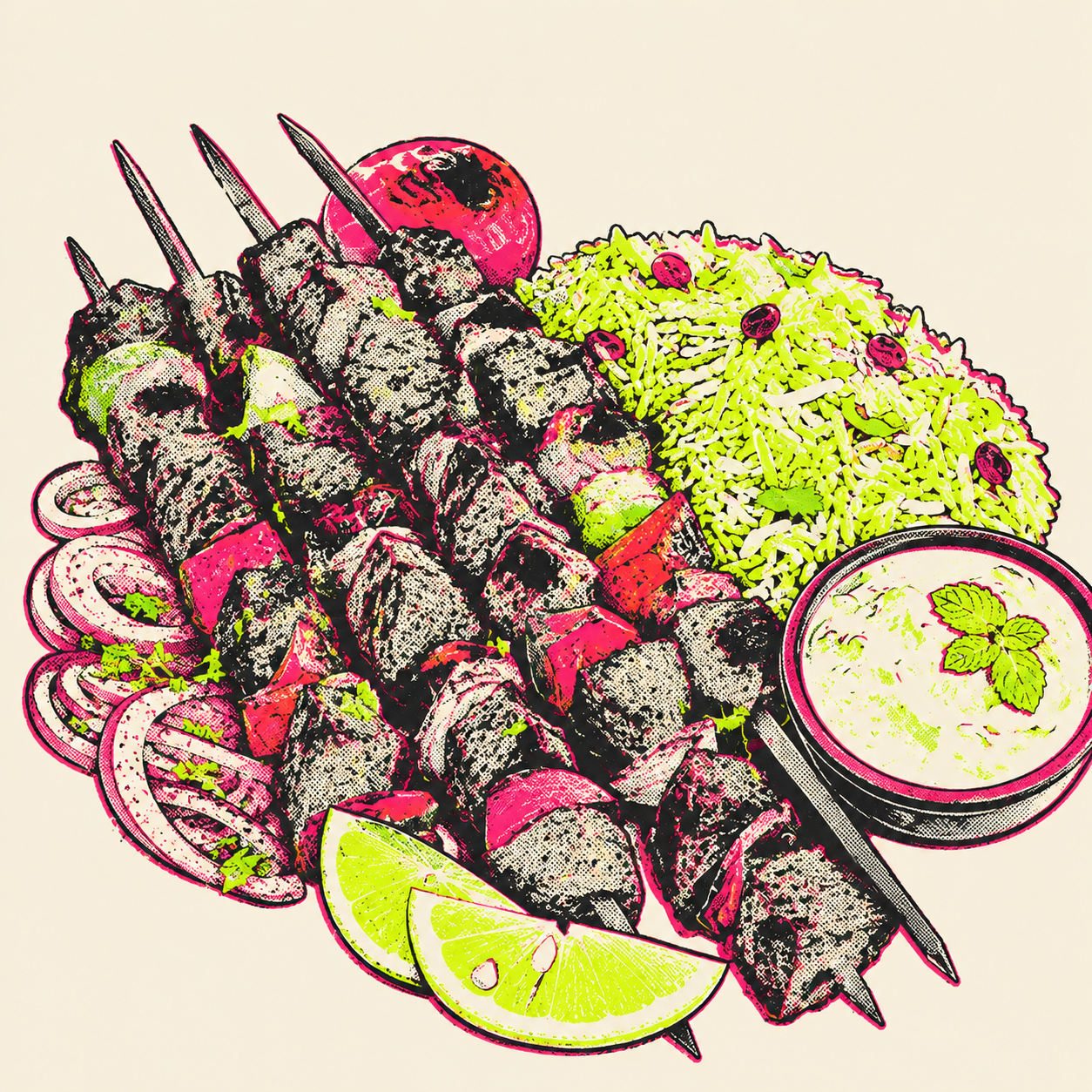
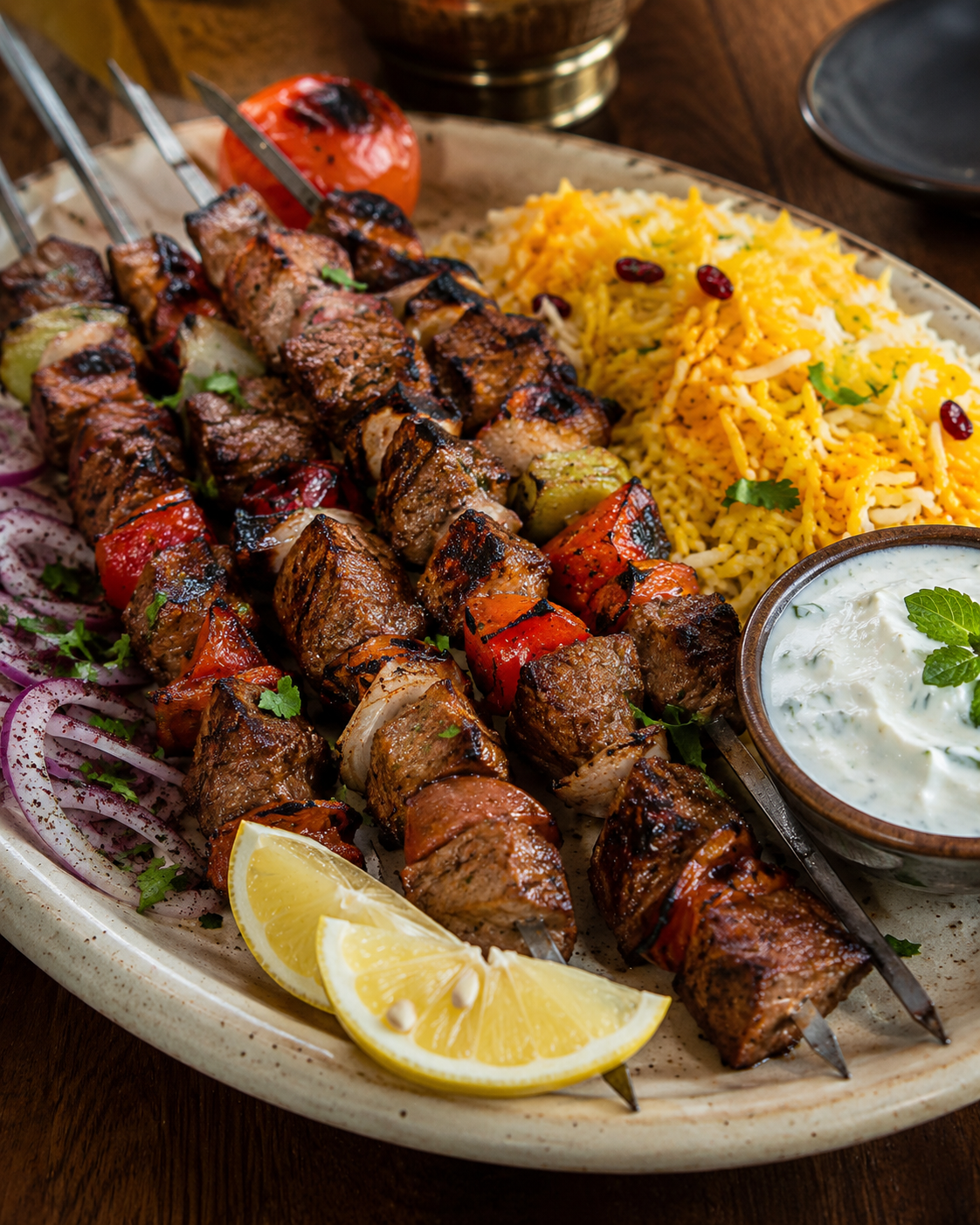
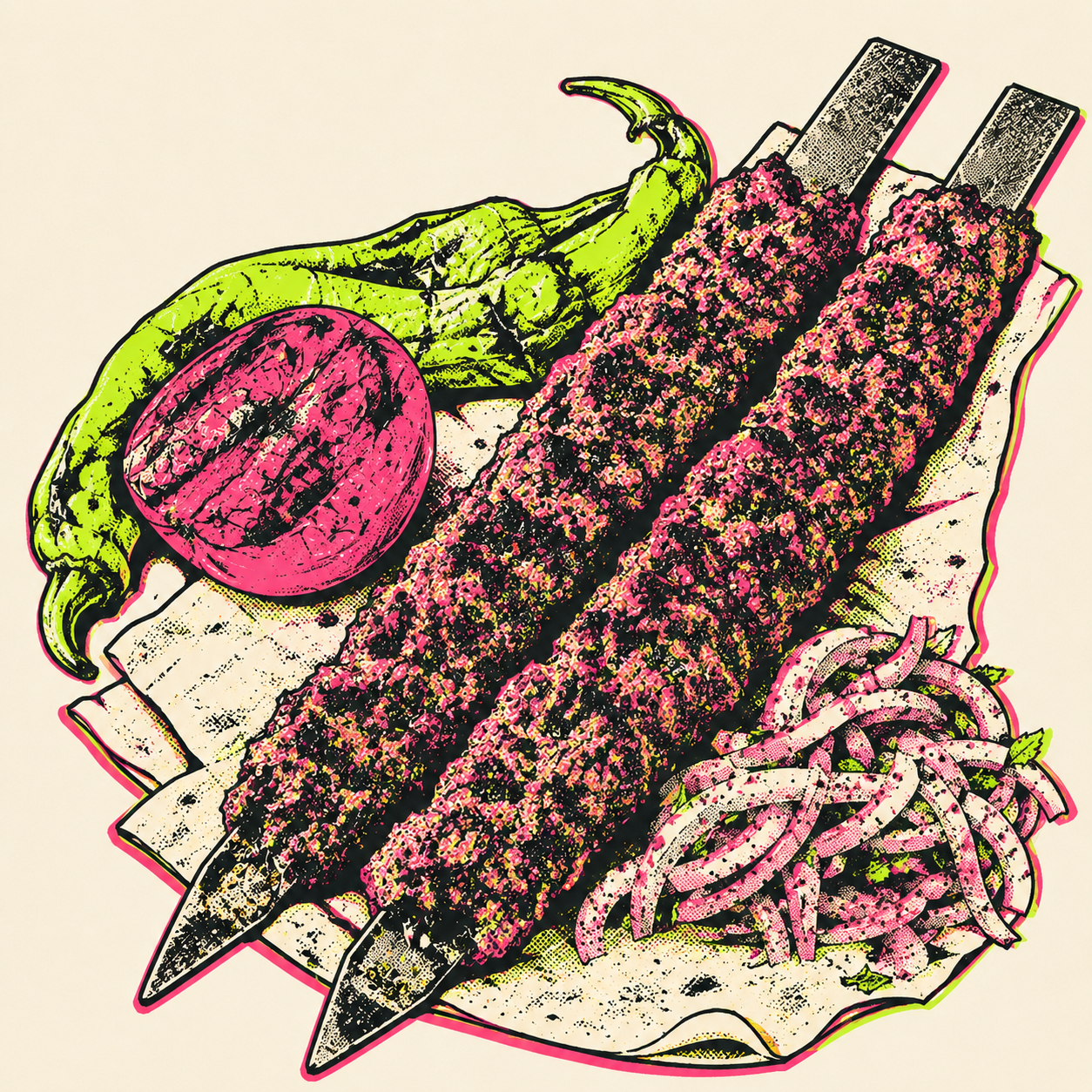
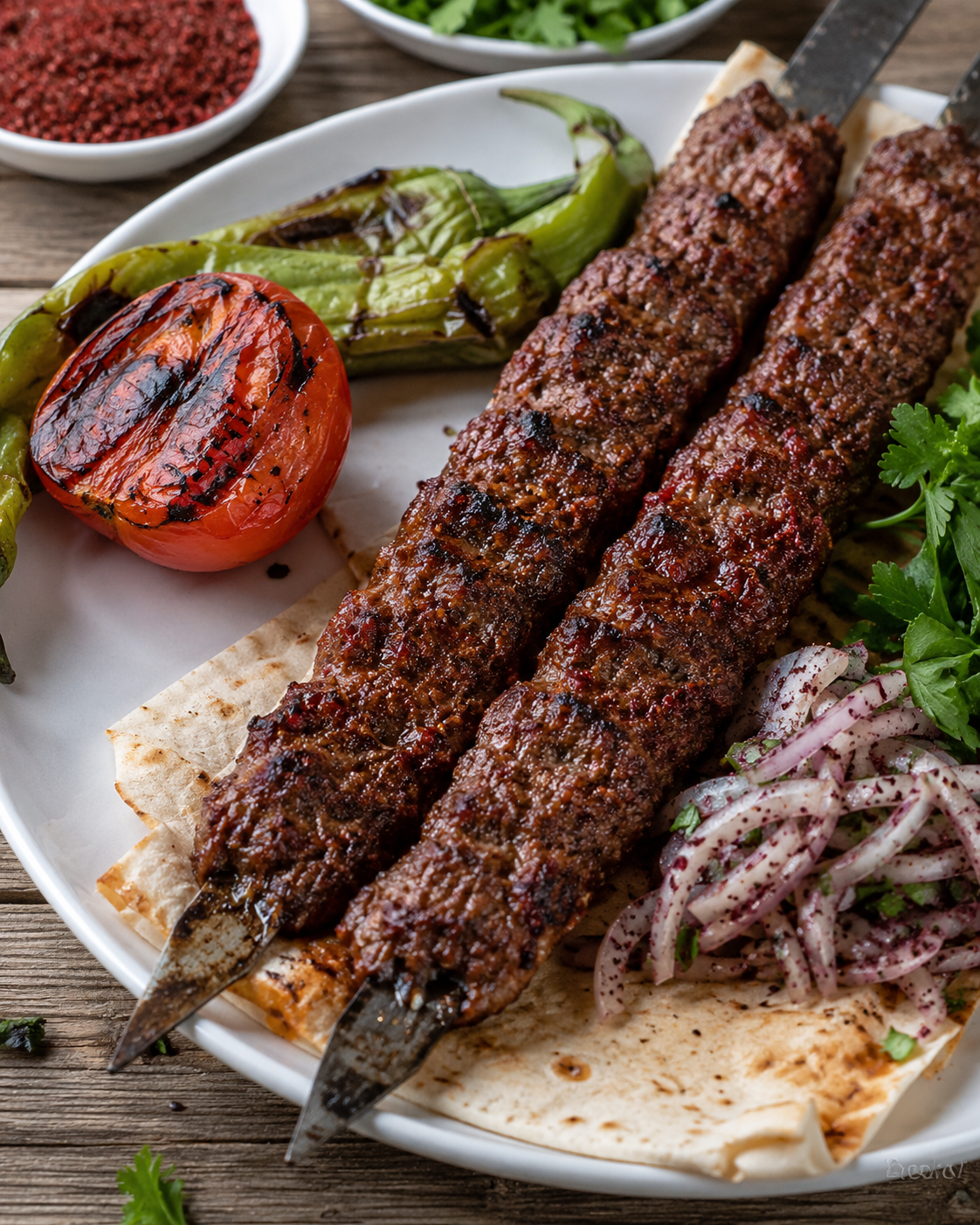
Marinades are yoghurt-based for tenderising, and seasoning leans on onion, garlic, sumac, isot pepper (Urfa), and Aleppo pepper. The dish is typically served with bread (flatbread or pide), a cooling salad of onion-sumac and parsley, and either ayran (salted yoghurt drink) or black tea. Hot pepper paste, biber salçası, brings the heat — usually moderate but unmistakable.
 Hover · tap
 Cultural context
In Turkey kebab is everywhere — daily food, restaurant food, family-celebration food. Ramadan iftars commonly centre on şiş or Adana kebap; weddings and circumcision feasts are sometimes built around a whole roasted lamb. The kebapçı — a kebab restaurant — exists at every income tier, from neighbourhood corners to Istanbul fine-dining establishments like Hamdi or Develi.
Outside Turkey, kebab is the emblem of the Turkish diaspora and, particularly in Germany, a defining strand of late-20th-century urban food culture.
 Hover · tap
 Variations
The Turkish kebab atlas is vast. Adana kebap, from southeastern Turkey, is hand-minced lamb with Aleppo pepper pressed onto a flat skewer; Urfa kebap is the same idea but milder and unspiced. Iskender kebap is the Bursa sit-down vertical-spit dish on flatbread with tomato sauce and melted butter. Çiğ köfte, originally raw bulgur and meat, is now usually served as a vegetarian street wrap. Cağ kebabı from Erzurum cooks lamb on a horizontal spit at angle, slicing into short skewers. Tantuni from Mersin is finely diced beef cooked on a flat-iron sac with cumin and chilli, rolled in lavaş.
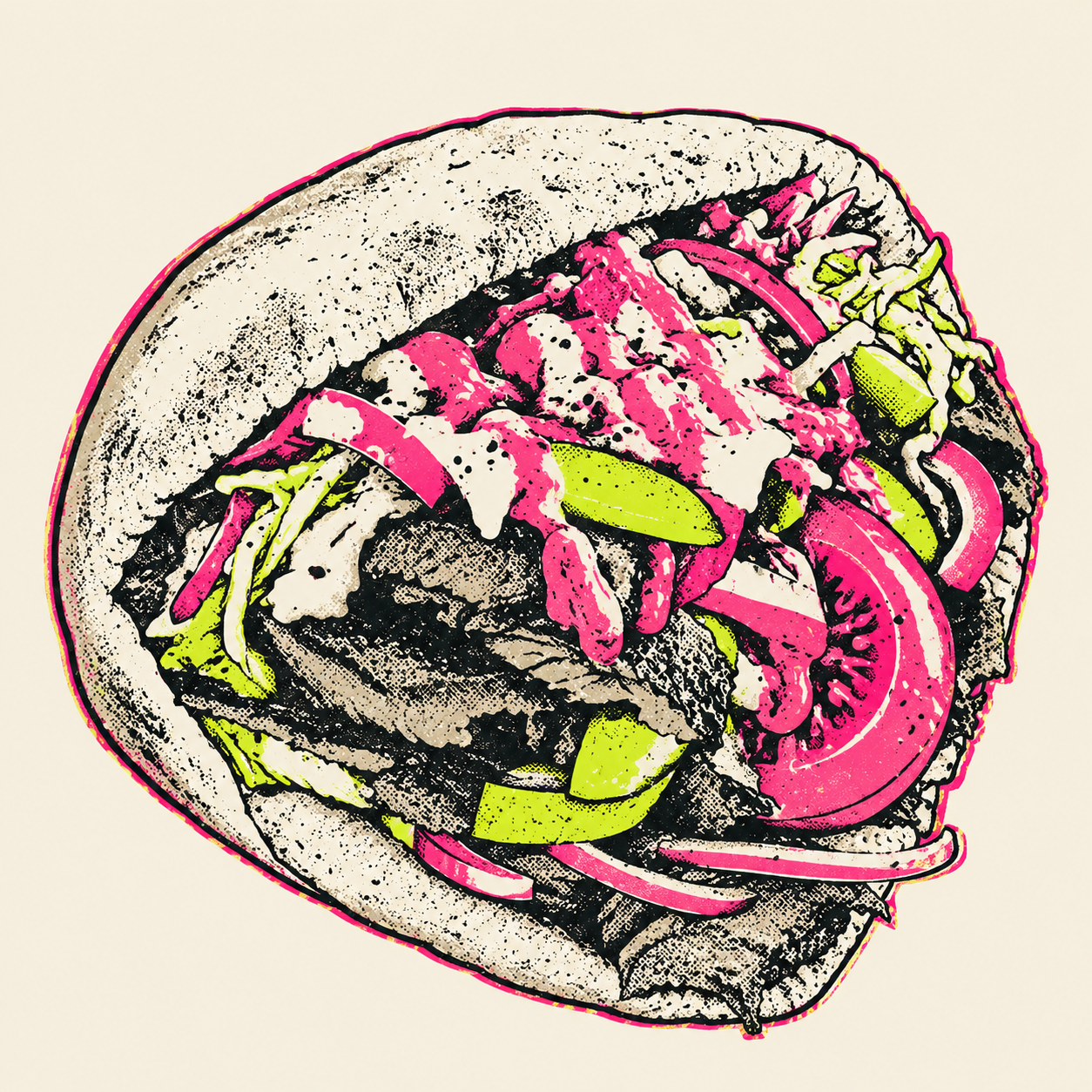
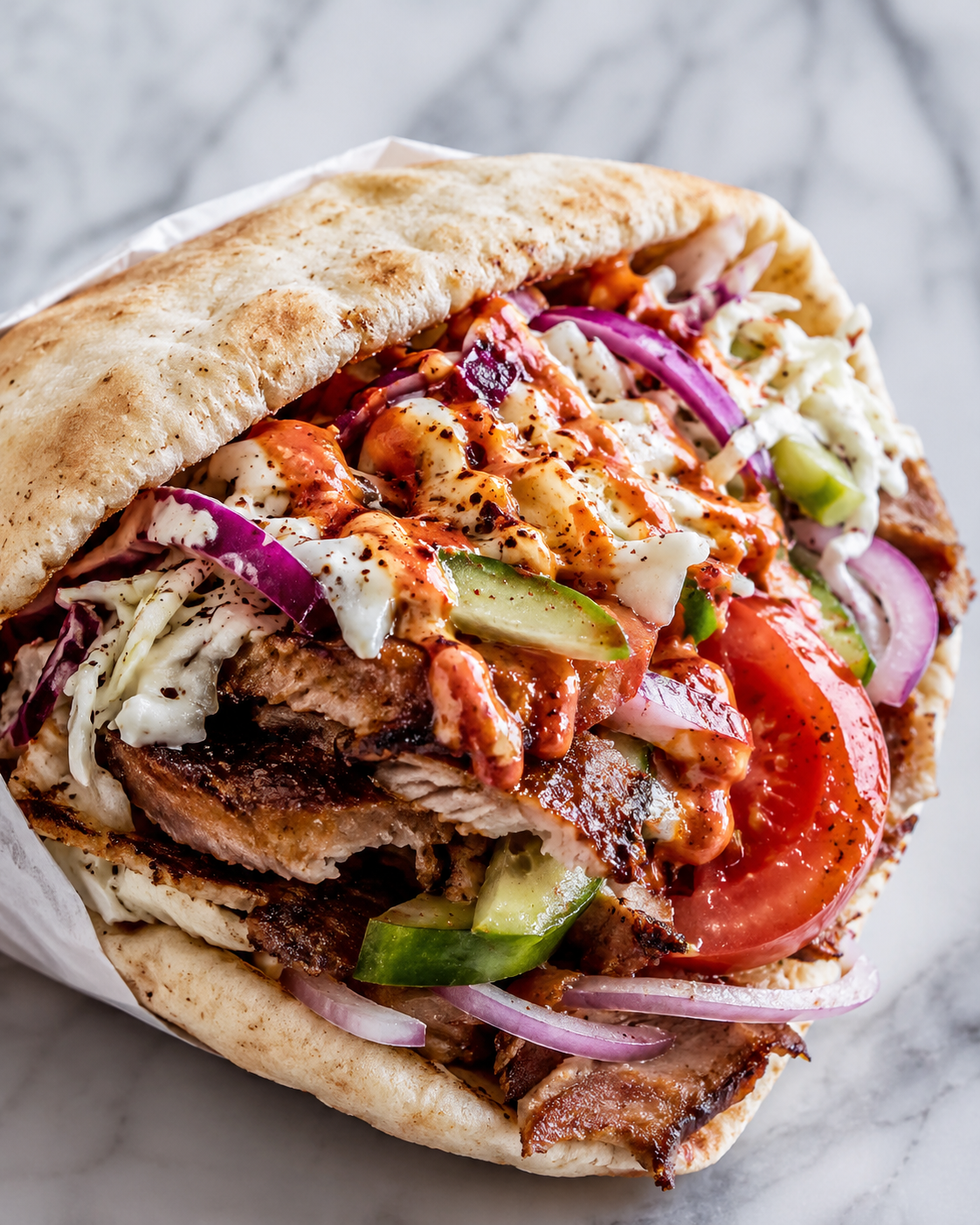
Outside Turkey the wrap dominates. The Berlin-style döner is large, vegetable-heavy (cabbage, tomato, cucumber), and dressed with garlic-yoghurt or hot sauce. London döner tends to be smaller and lamb-heavier; Brussels and Paris have their own creep toward fries-stuffed wraps; the Greek gyros and the Levantine shawarma are sister dishes that share the vertical-spit technique but have their own seasoning palettes.

 Hover · tap
 How it’s made
A working döner shop runs two shifts on the spit. Marinated meat — minced lamb-and-beef pressed into a tall column, or thin slabs layered into a stack — is mounted on the vertical rotisserie at opening time, with the gas or charcoal flame on one side and the spit rotating slowly. Cooking is continuous: the outer 5–10 mm cooks, gets shaved off into a tray or directly into bread, and the next layer underneath becomes the new outside. A
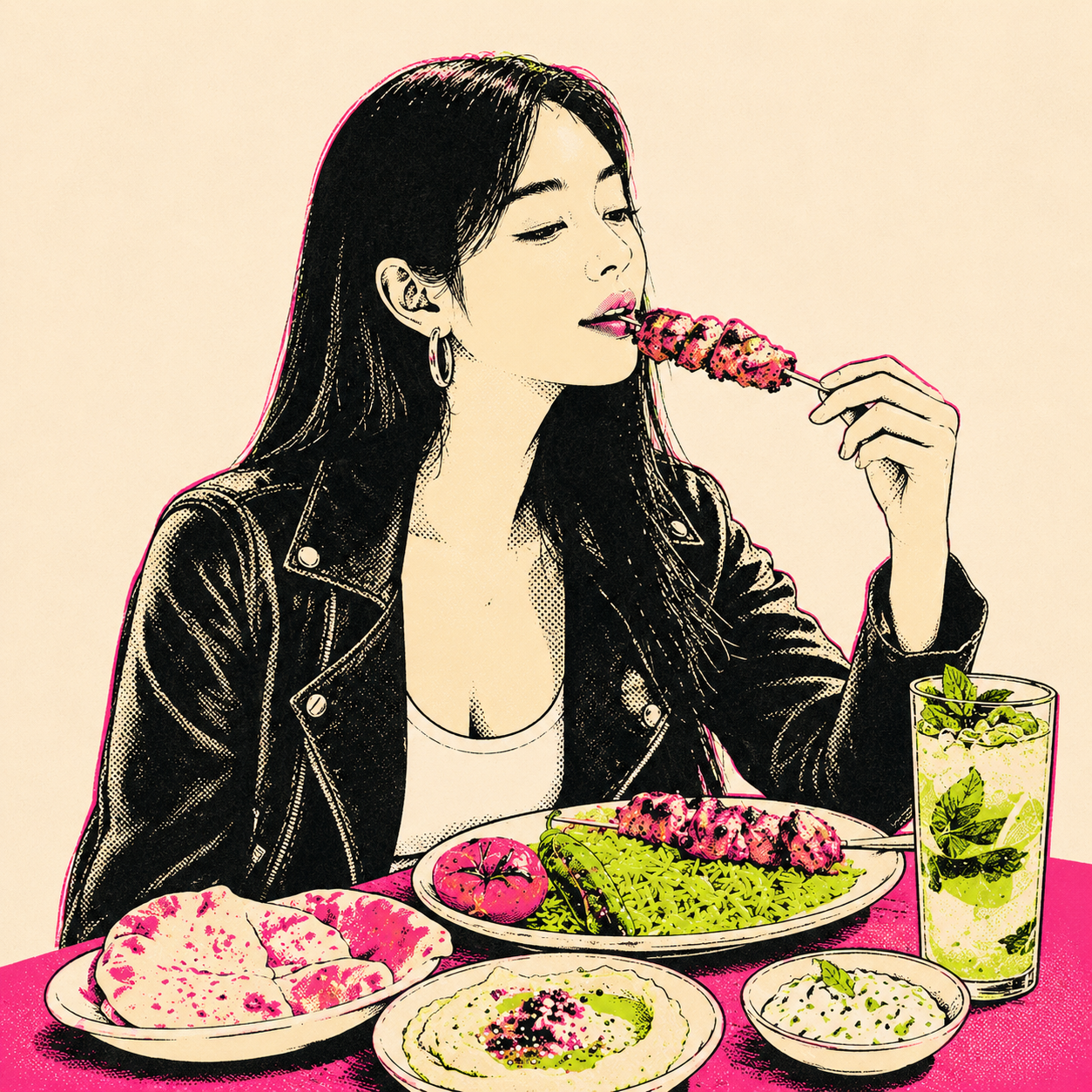
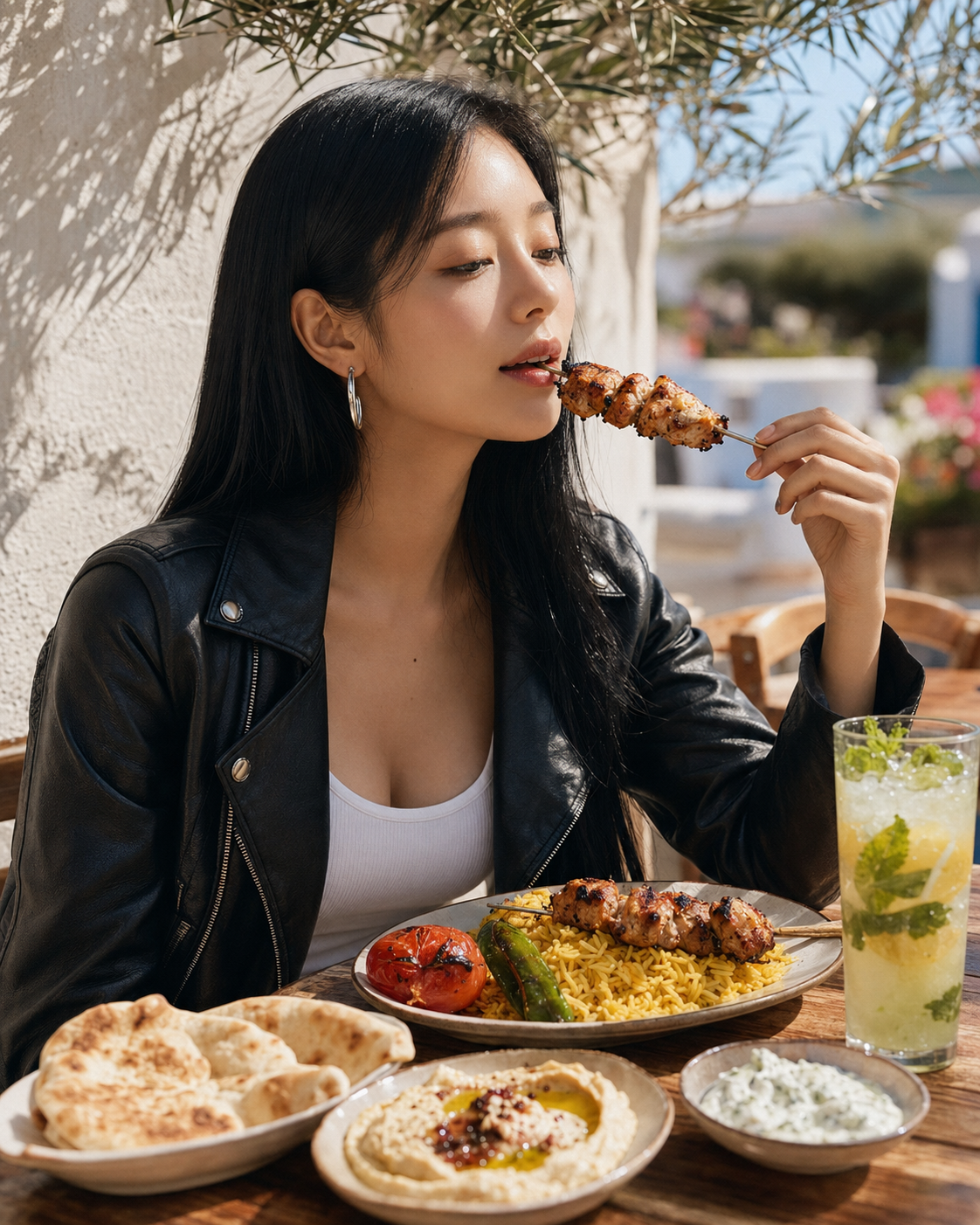
For şiş, the meat is cut into 2 cm cubes, marinated overnight in yoghurt, lemon, and onion juice, threaded onto flat-bladed skewers (the flat blade prevents rotation), and grilled over hot coals — turning every 30 seconds for the first three minutes, then less frequently. Service is on flatbread with grilled tomato and pepper, raw onion with sumac, and parsley.
 Hover · tap
 References
The Iskender origin story is documented in
Related
Where to eat it
Kebab on the globe
travel wishlist
my next bites · 0
view full page →Tap a marker, then + WISHLIST to add.