Desserts ·
Daifuku
A
- Sweet
- 4/5
- Spice
- 0/5
- Era
- Pre-modern
- Format
- Bite
Edo street snack to the 1985 strawberry that opened the modern *wagashi* avant-garde. From
Origin
Daifuku —
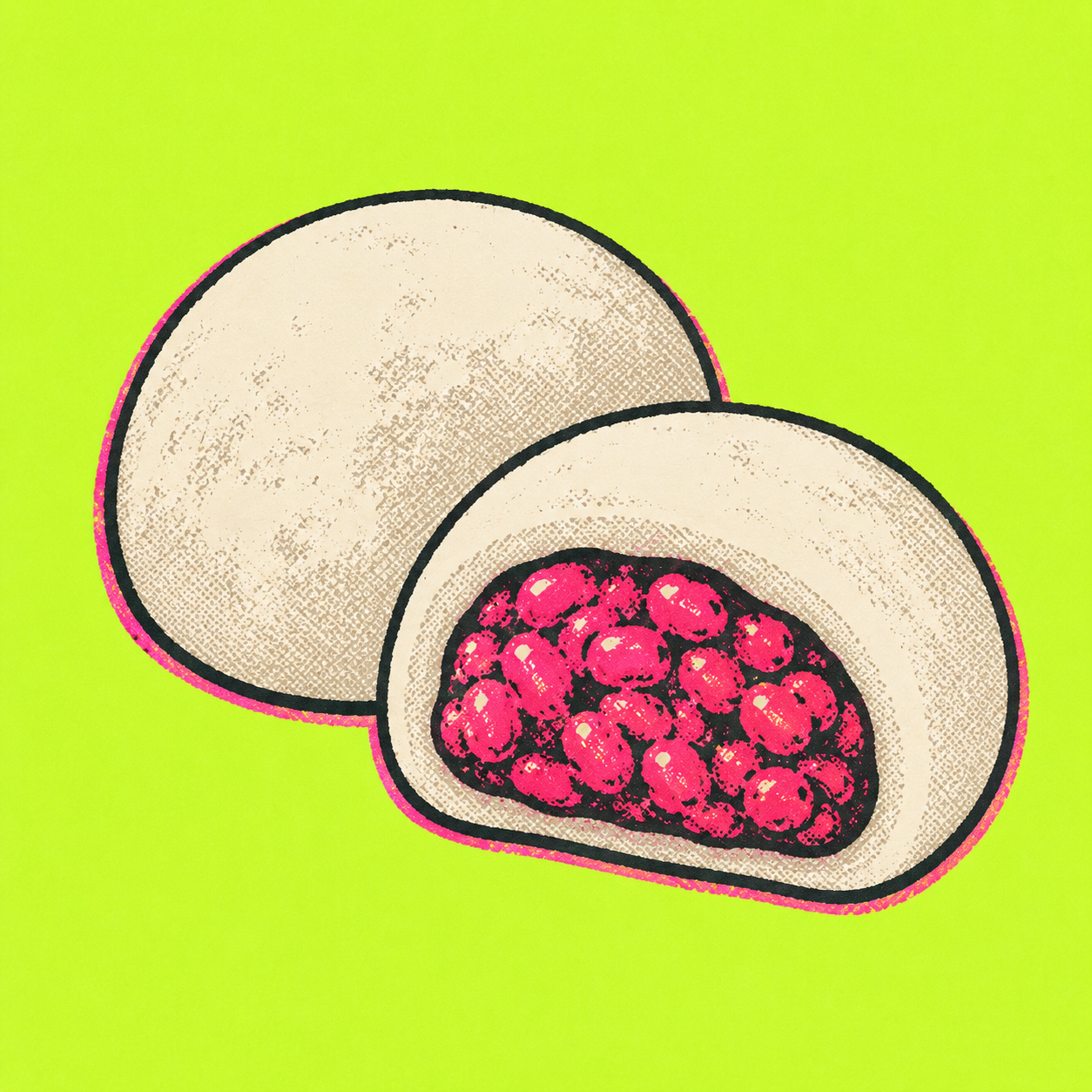
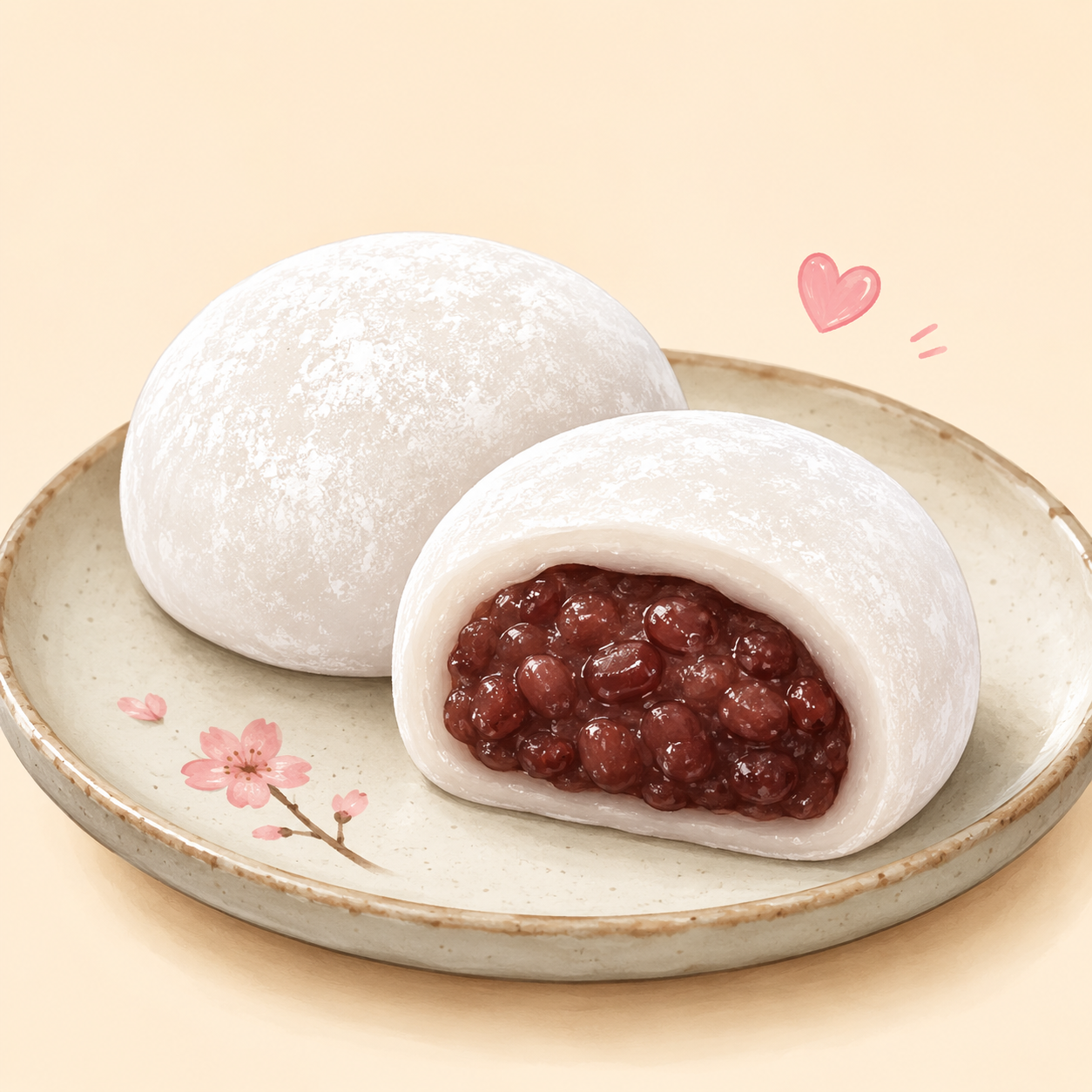
The modern wagashi pantheon includes daifuku as one of the foundational mochi-based confections. By the Meiji era (1868–1912) it had stabilised into the form recognisable today: a pounded glutinous-rice skin around sweet red-bean paste, finished with potato or corn starch dusting to prevent sticking.
image pending
What it is
A ball of mochi — pounded glutinous rice — flattened into a thin disc by hand, pressed around a centre of anko (sweet red-bean paste), and pinched closed at the bottom.
Two ankos dominate. Tsubu-an leaves the red beans partly intact for texture; koshi-an sieves them into a smooth paste. The starch dust is functional — not decorative — and absorbs moisture from the mochi surface so the daifuku stays handleable for several hours.
image pending
Cultural context
Daifuku is everyday confection rather than ceremonial.
The historical turning point came in
image pending
Variations
Beyond the canonical red-bean and ichigo-daifuku, modern wagashi shops produce a steady seasonal rotation: kuri-daifuku (chestnut, autumn), mame-daifuku (whole soaked beans embedded in the skin, year-round), yomogi-daifuku (mugwort-tinted green skin, spring), cream-daifuku (whipped cream substituted for some of the anko, contemporary), and the polarising
The most experimental modern Tokyo shops — Toraya’s flagship, Suetomi, Suzukake — produce limited-run daifuku built around imported fruit (Yamanashi peach, Tochigi melon), single-origin chocolate ganache, and yuzu marmalade.
image pending
How it’s made
The mochi is pounded from steamed mochigome in a small stone mortar (usu), then divided into 20 g portions while still warm and pliable. Each portion is flattened, has a 25 g ball of anko placed in the centre, and is closed by stretching the mochi up over the filling and pinching the seam shut.
For ichigo daifuku, the strawberry is wrapped first in white-bean paste to create a smooth sphere, then encased in mochi. The cut cross-section is the entire visual logic: pink fruit, white paste, white skin. The sequence is fixed; reversing it produces visible bleed and breaks the aesthetic.
References
The Edo-era harabuto-mochi origin and Meiji-era stabilisation are documented in
Related
Where to eat it
Daifuku on the globe
travel wishlist
my next bites · 0
view full page →Tap a marker, then + WISHLIST to add.