Desserts ·
Mochi
 Hover · tap
- Sweet
- 3/5
- Spice
- 0/5
- Era
- Pre-modern
- Format
- Bite
Mochi is older than's written language — pounded rice has been ritual food on this archipelago since the Yayoi period. Japan
Origin
The first textual mention of mochi in something close to its modern sense comes in the
 Hover · tap
 What it is
Mochi is
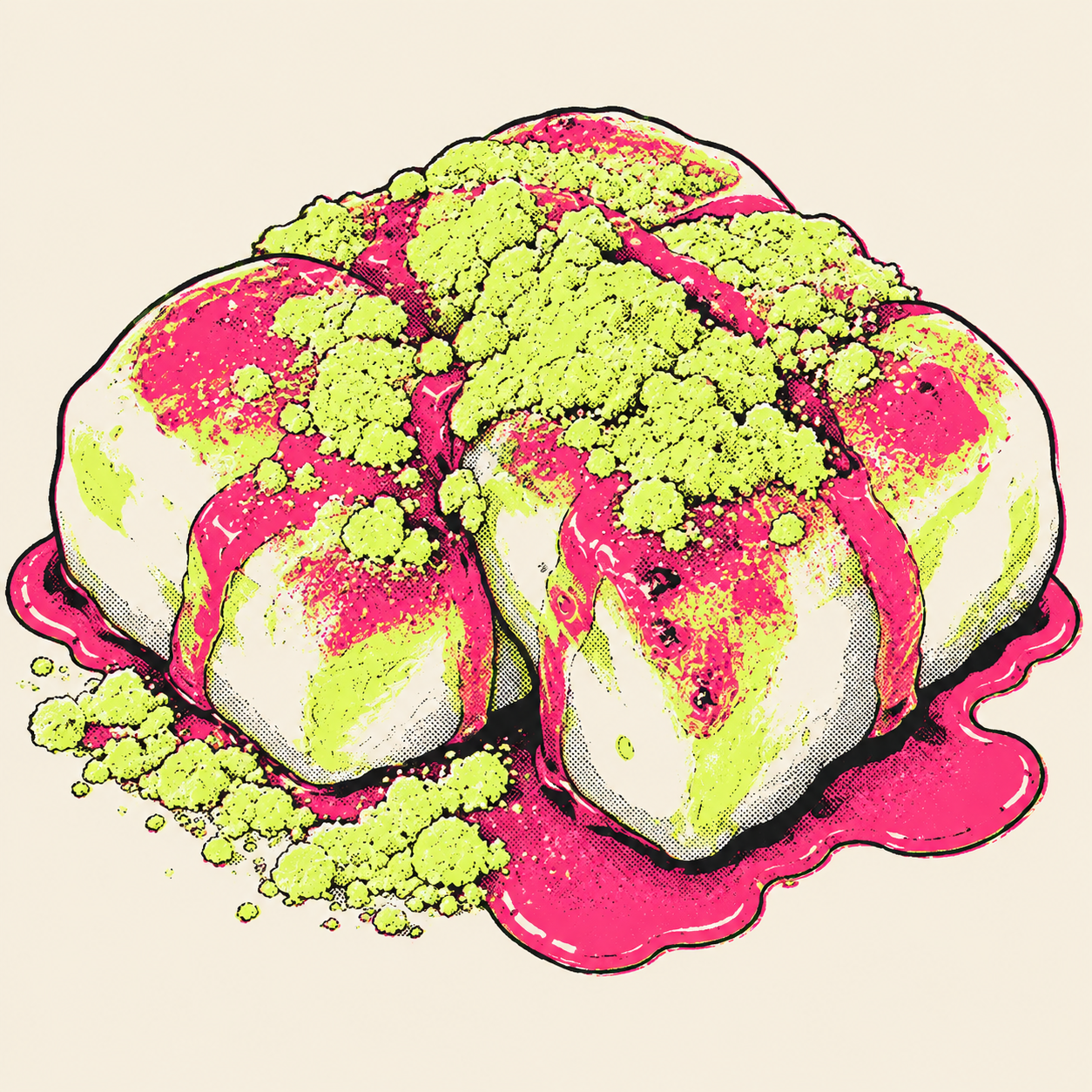
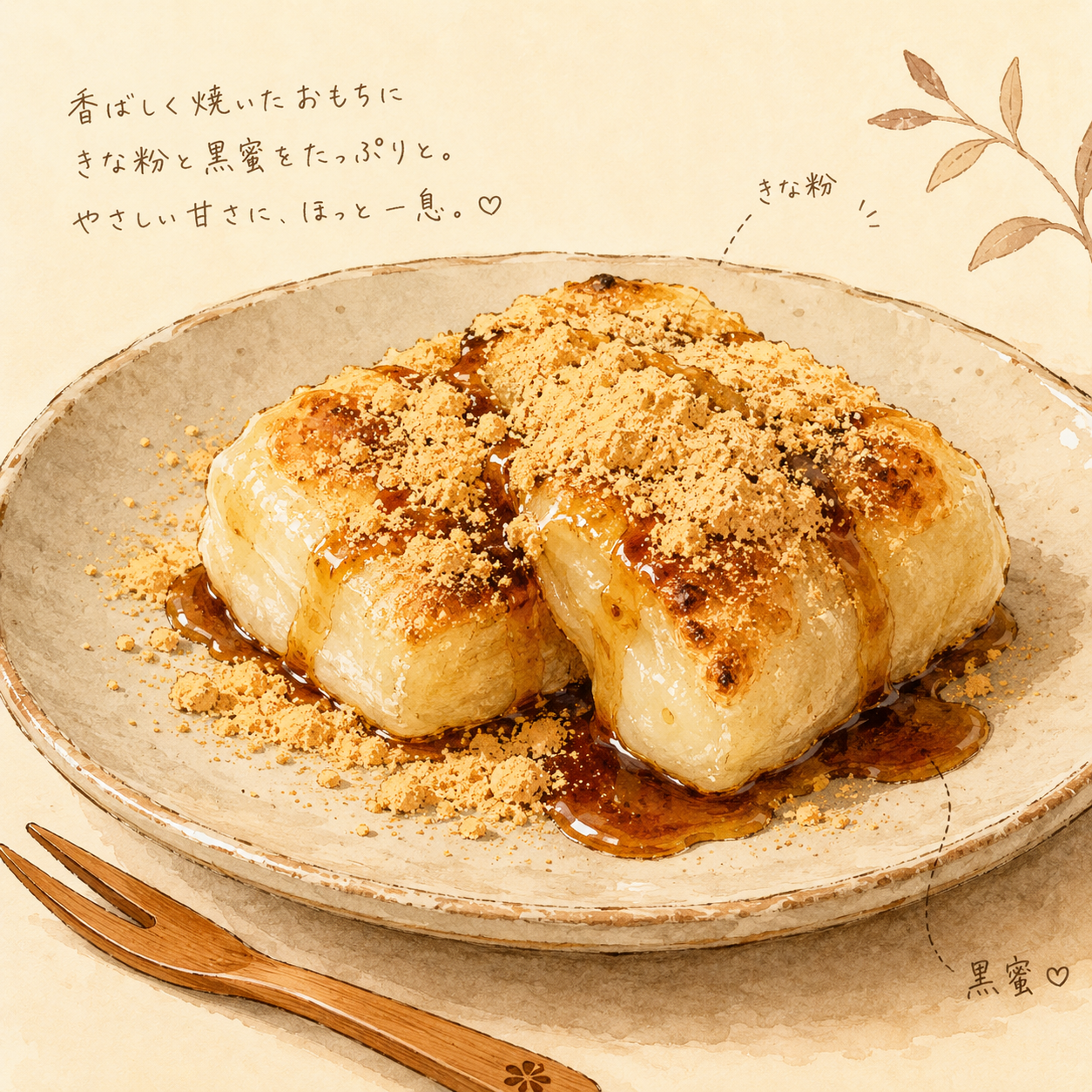
It is sweet only by accompaniment. Plain mochi is barely flavored — clean rice — but it is most often served with sweetened red-bean paste, sweetened soy flour (kinako with sugar), or a sweetened soy-sauce glaze. Modern industrial mochi for desserts often has sugar in the rice itself.
 Hover · tap
 Cultural context
The lunar new year ritual
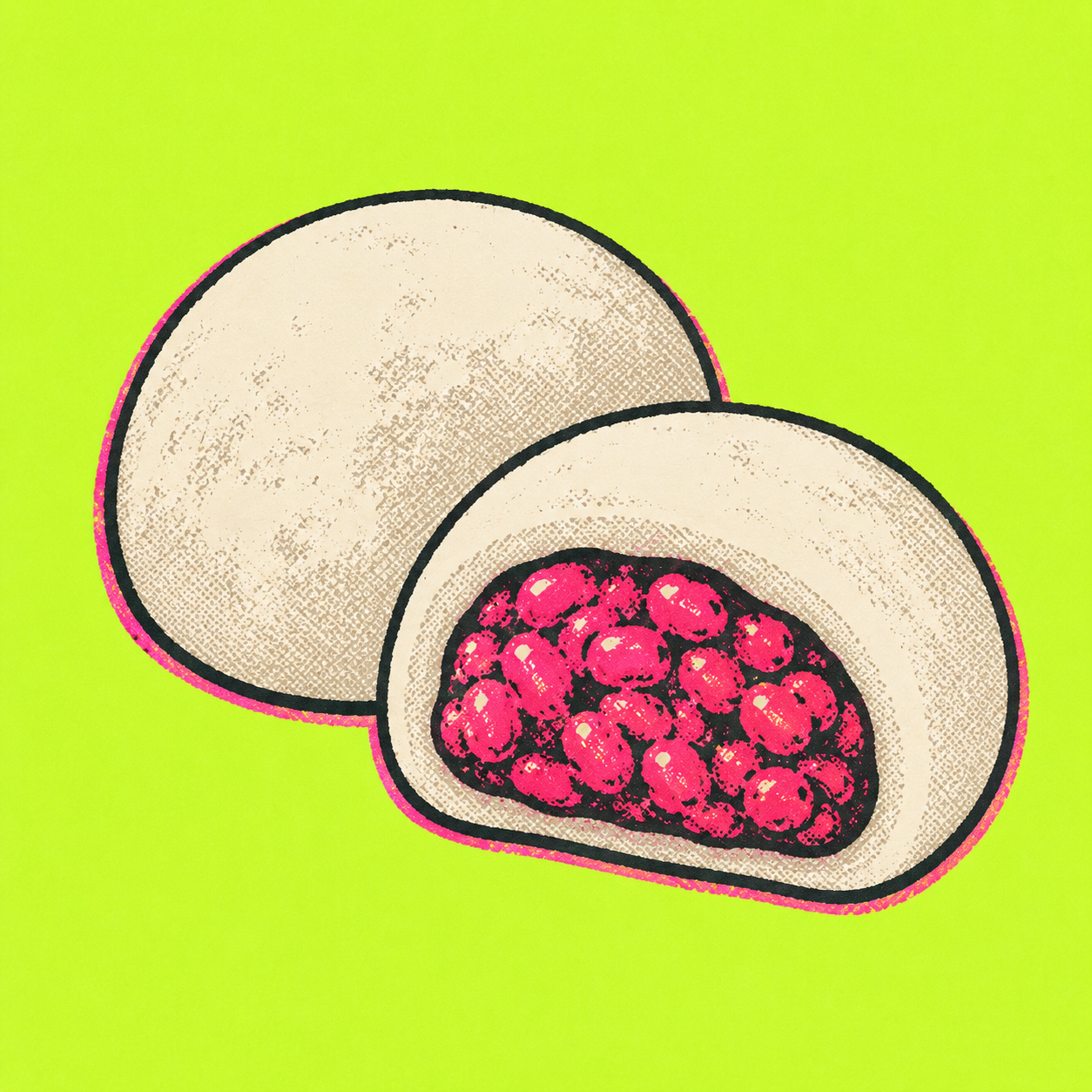
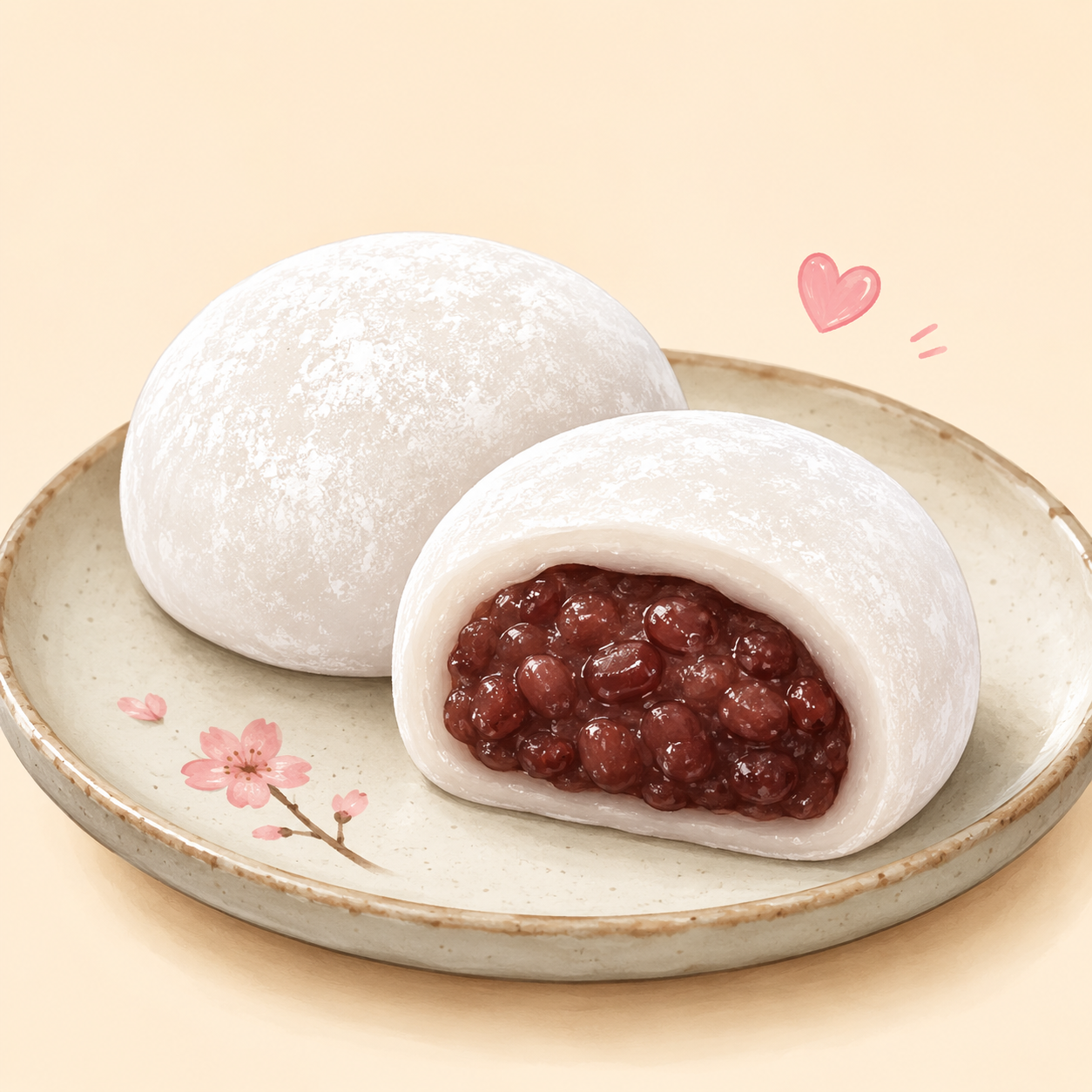
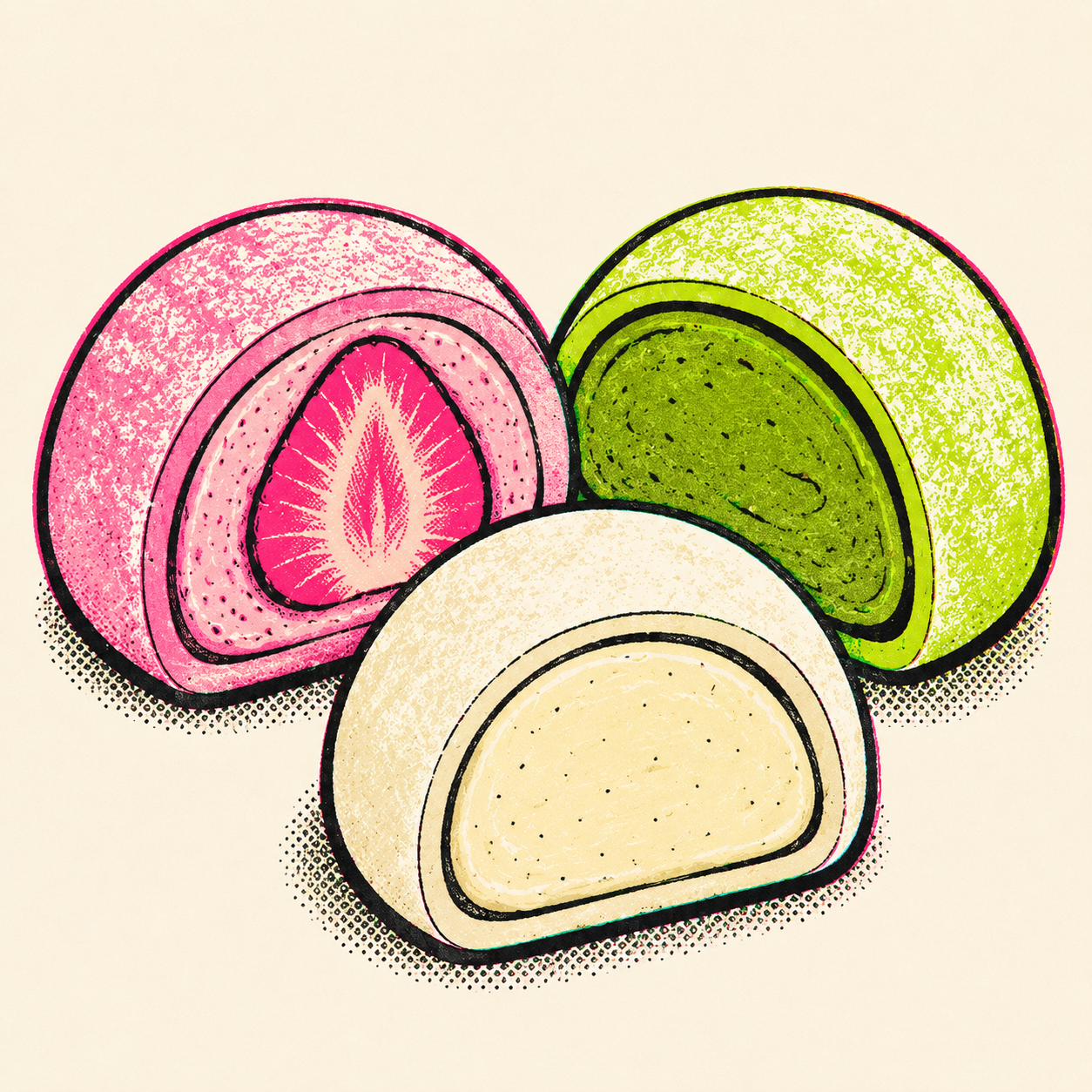
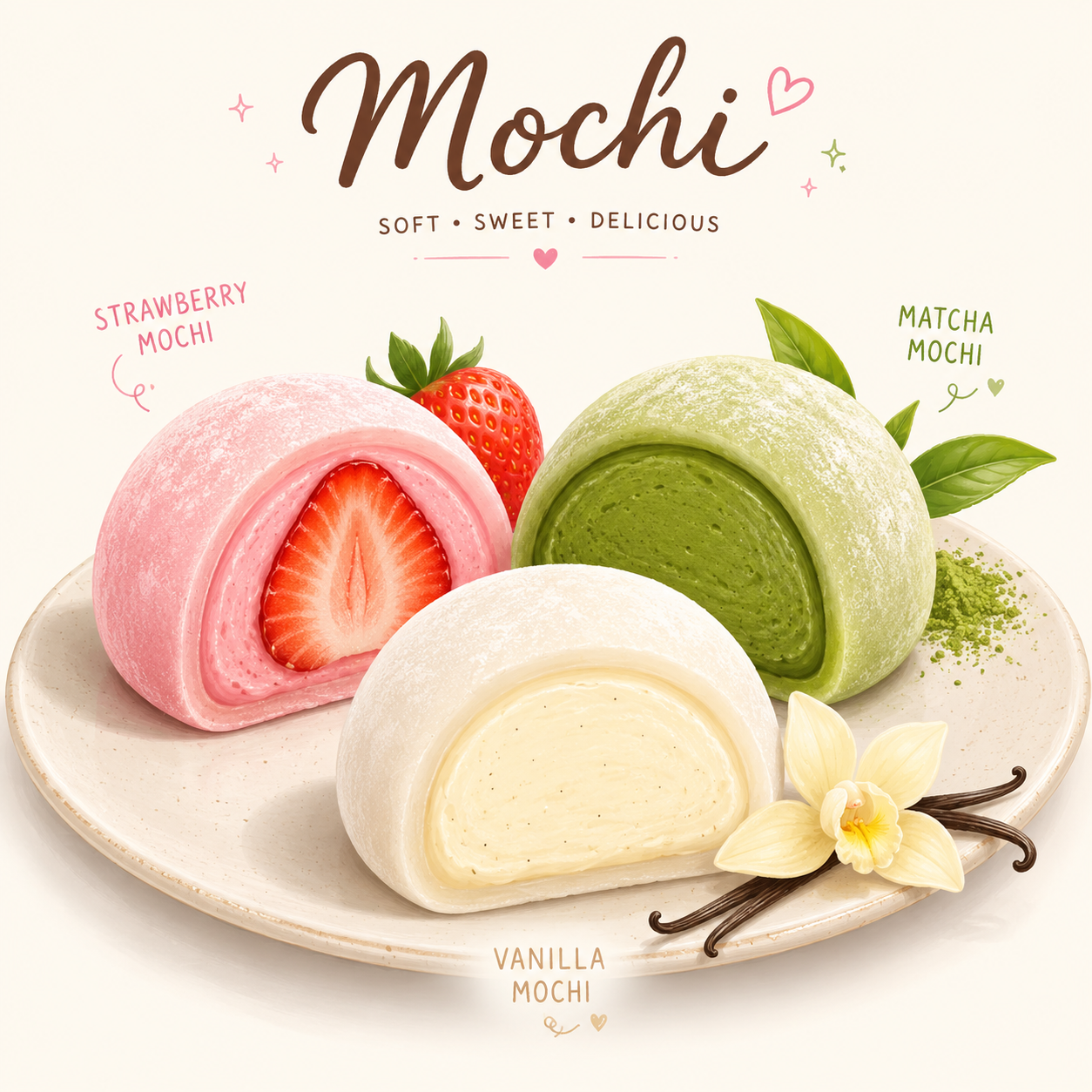
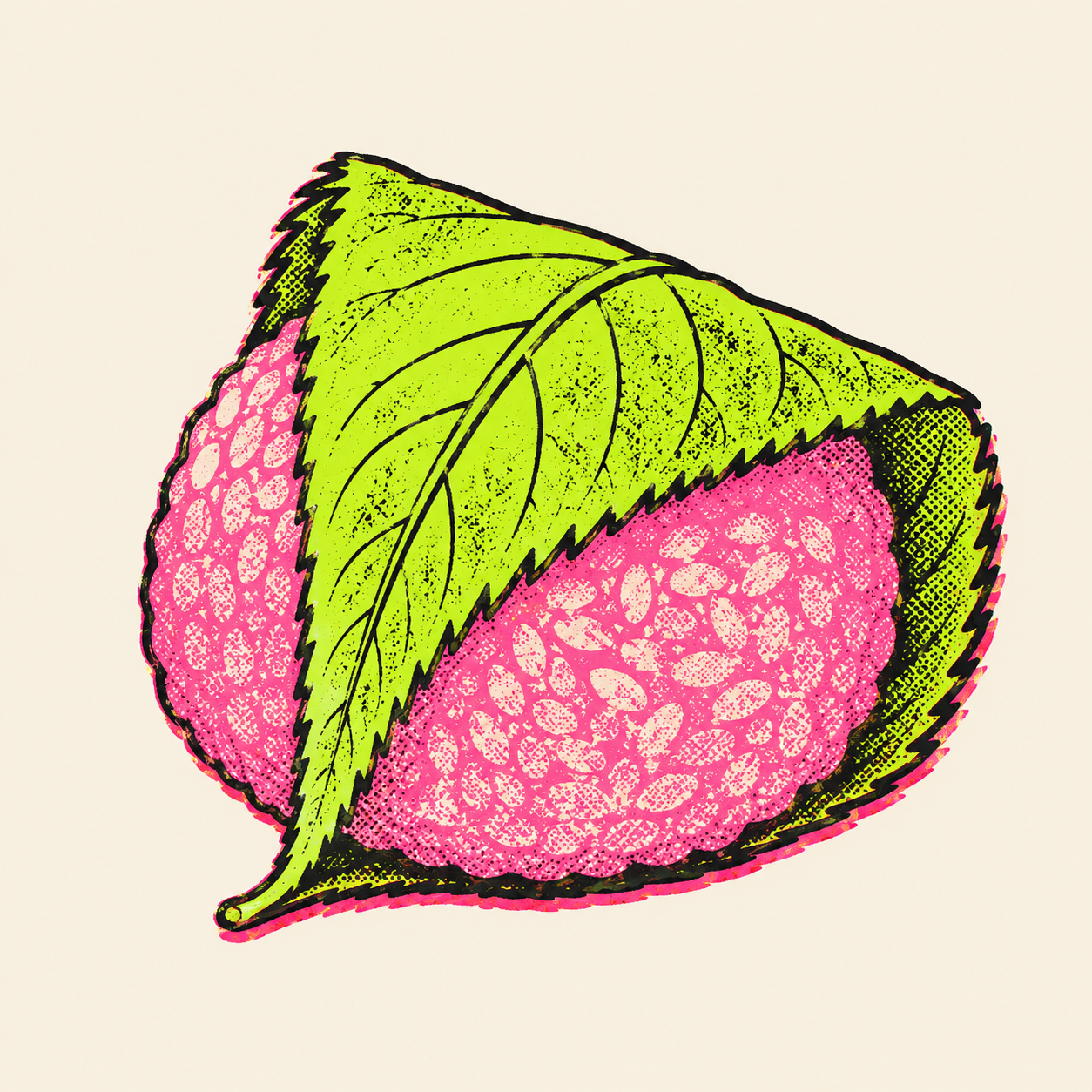
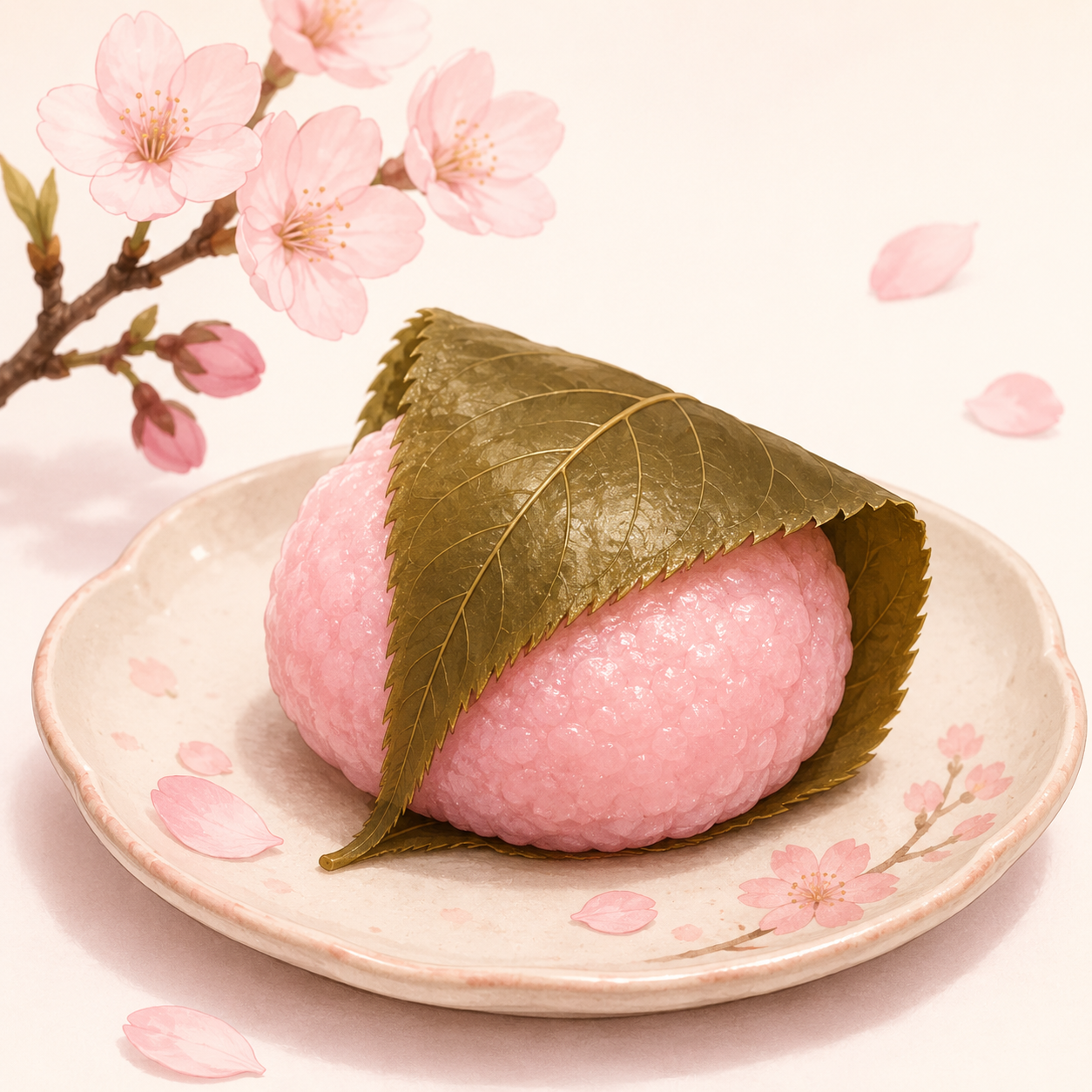
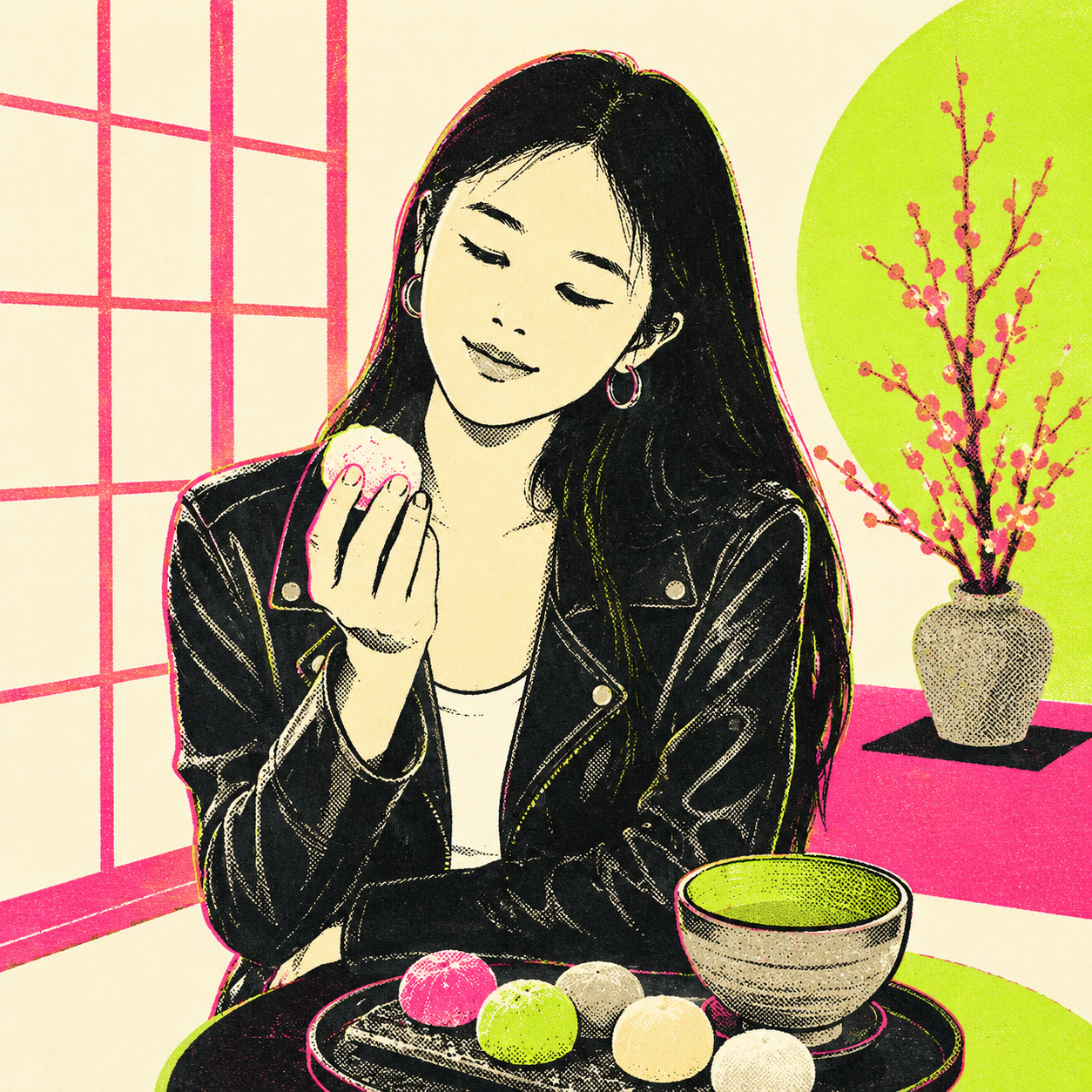
The everyday mochi has split into a wide family. Daifuku is mochi wrapped around sweet red-bean paste; ichigo daifuku (popularized in the 1980s) adds a whole strawberry to the bean paste; mochi ice cream —
 Hover · tap
 Variations
Korea’s tteok family overlaps significantly with mochi in technique and rice variety, though most tteok is made by steaming powdered rice rather than pounding cooked rice. China’s nian gao (年糕) shares the New Year ritual position but is firmer, often pan-fried, and takes both sweet and savory forms.
In Japan itself, regional mochi varies in shape and seasoning: kashiwa mochi (oak-leaf-wrapped, eaten on Children’s Day), yomogi mochi (mugwort-tinted, green and grassy), warabi mochi (made from bracken starch — technically not glutinous rice but commonly grouped under the mochi umbrella), and kuzu mochi (kudzu-starch, similar logic).
 Hover · tap
 How it’s made
Steam the mochigome until the grains are tender and translucent. Transfer to the usu and pound — traditionally with two people,
Industrial mochi today is made in machines that simulate the pounding action, but the texture purists still pound by hand. Once the mass is smooth, it is divided, shaped, and dusted with potato starch or katakuriko to prevent sticking.

 Hover · tap
 References
Japanese ritual use of mochi is documented in
Related
Where to eat it
Mochi on the globe
travel wishlist
my next bites · 0
view full page →Tap a marker, then + WISHLIST to add.