Desserts ·
Macaron
A
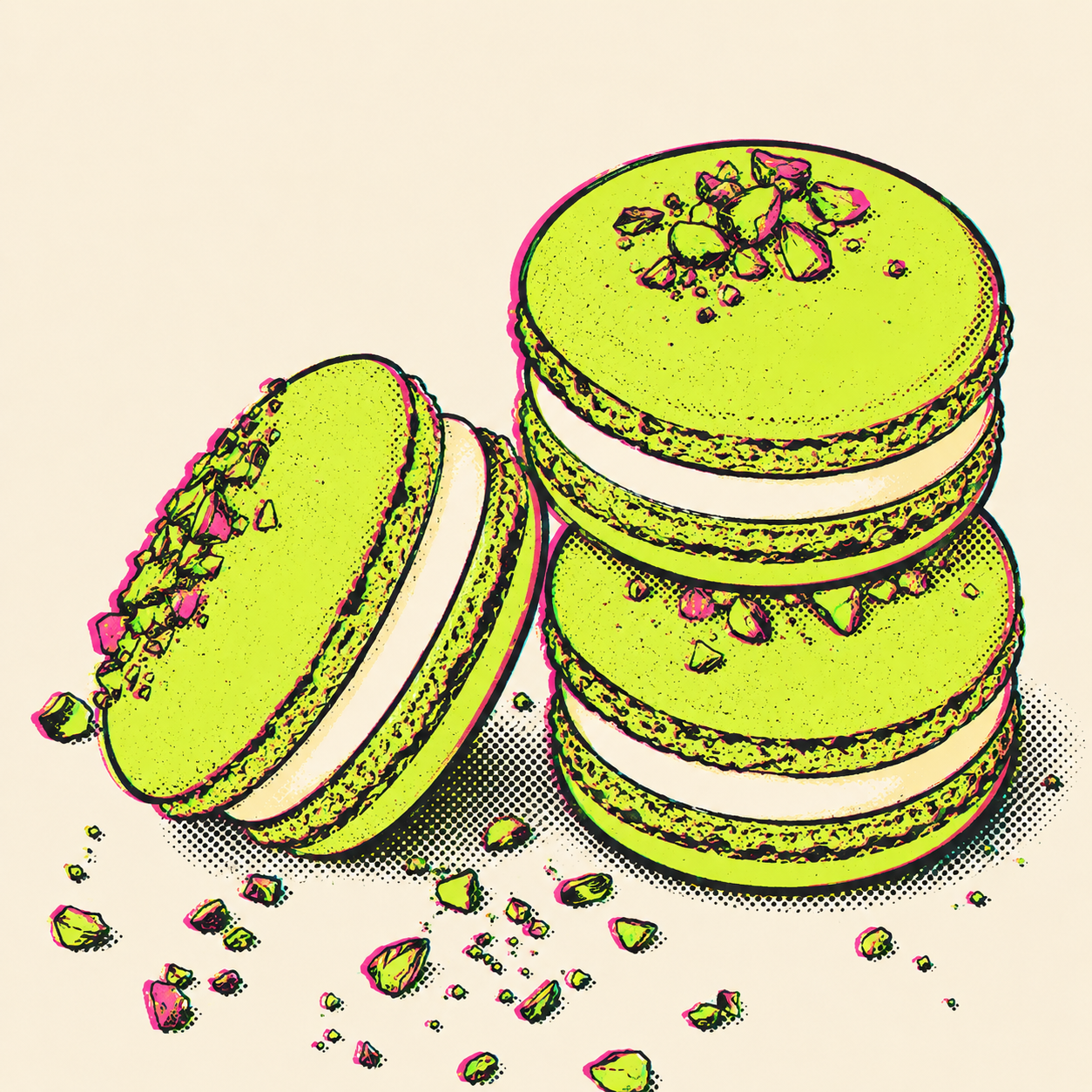
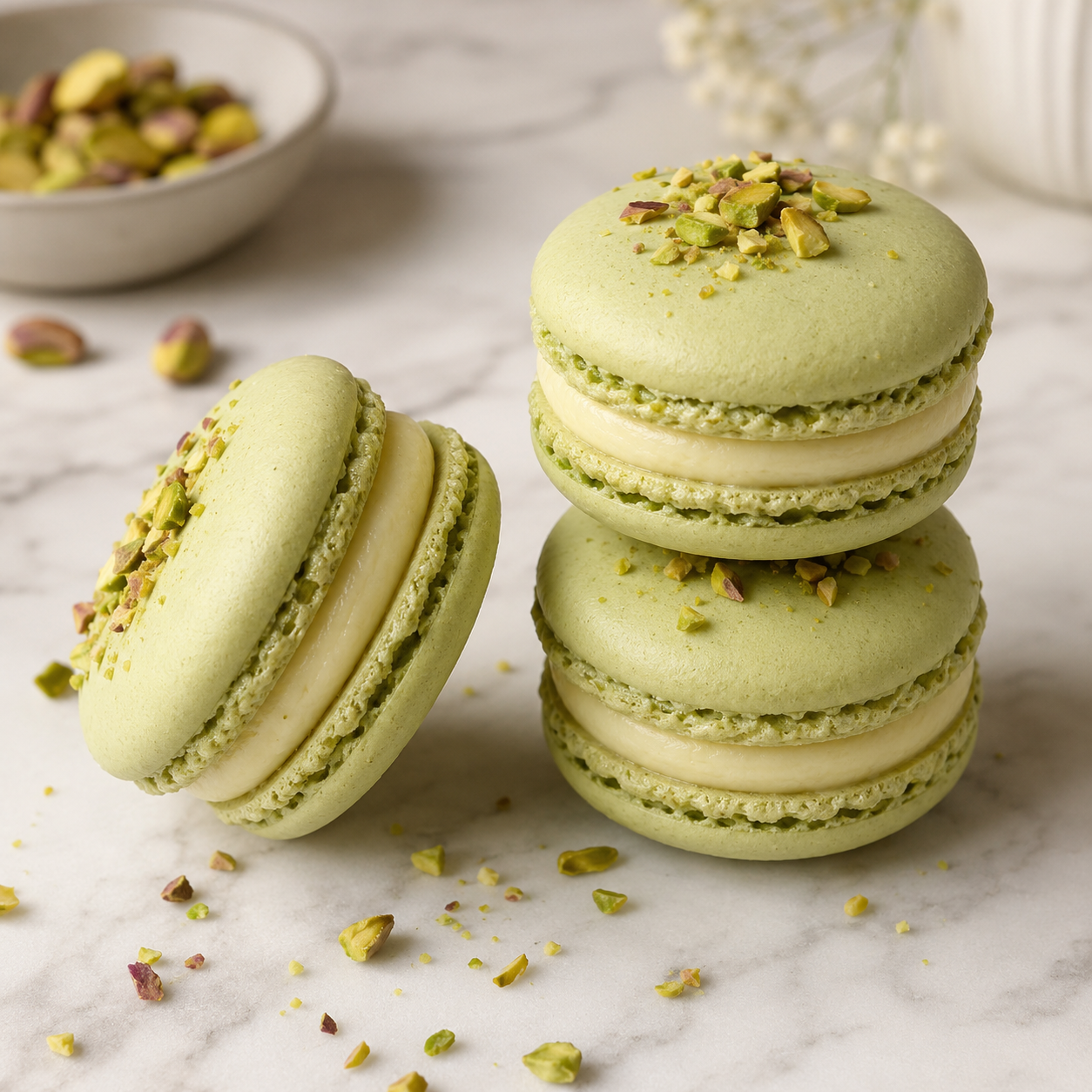 Hover · tap
- Sweet
- 5/5
- Spice
- 0/5
- Era
- 19th century
- Format
- Bite
The macaron arrived twice in— first to Nancy in the 18th century, then to Paris in the 1920s. France
Origin
The word macaron travels through Italian maccarone and Latin maccarus, both rooted in a verb meaning
For three centuries the macaron stayed single-shelled and chewy, a regional almond cookie rather than the colorful icon we recognize today. The decisive transformation happened in Paris.
 Hover · tap
 What it is
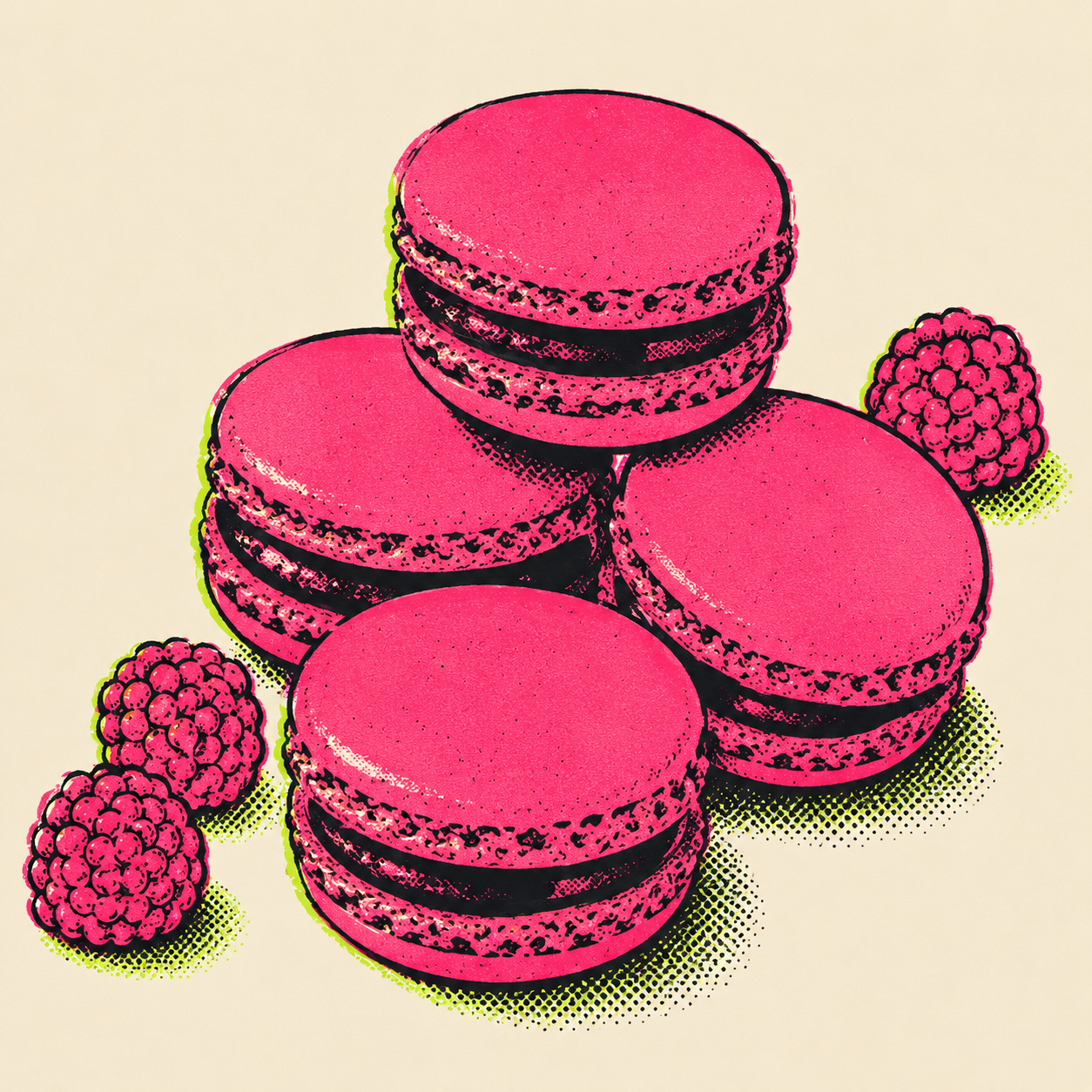
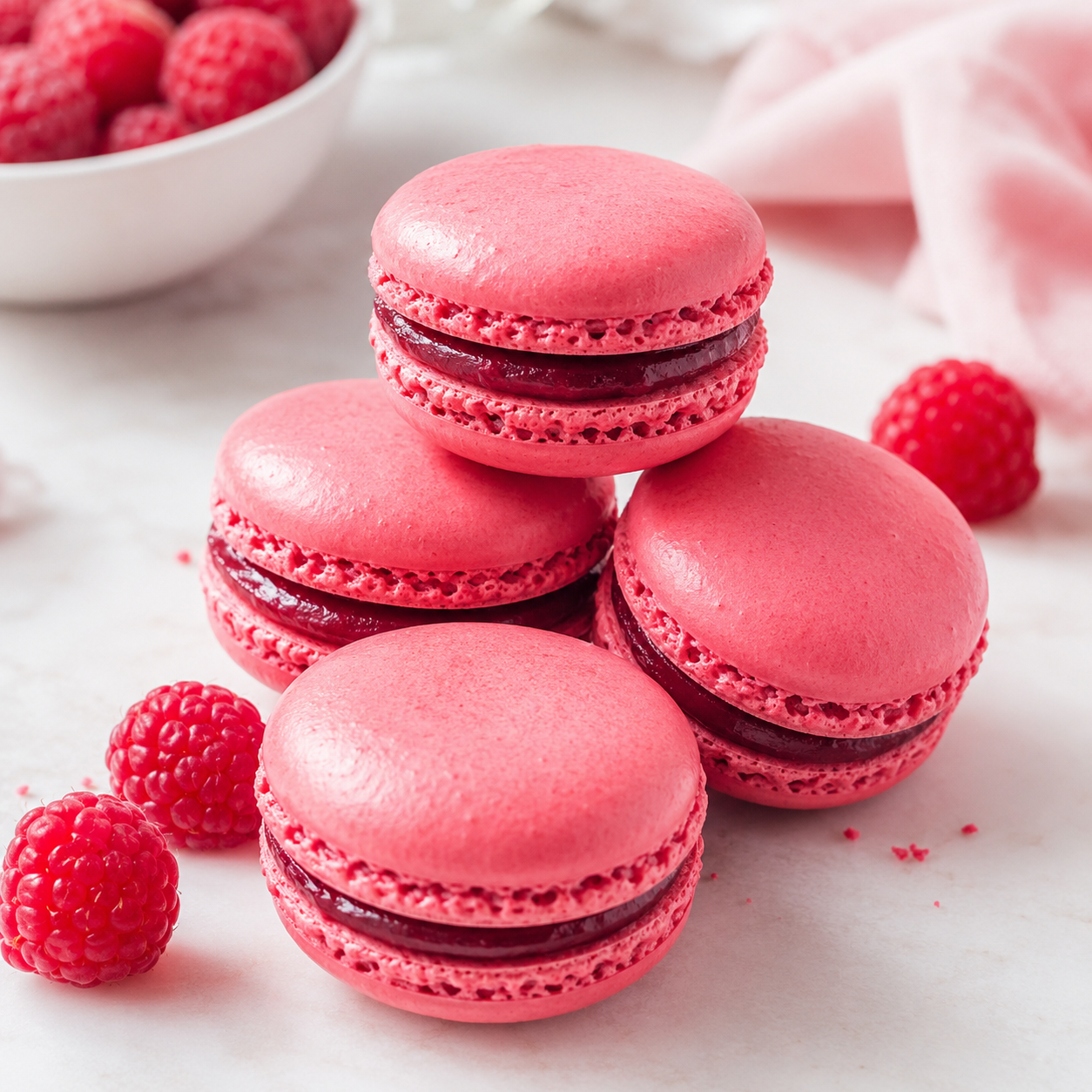
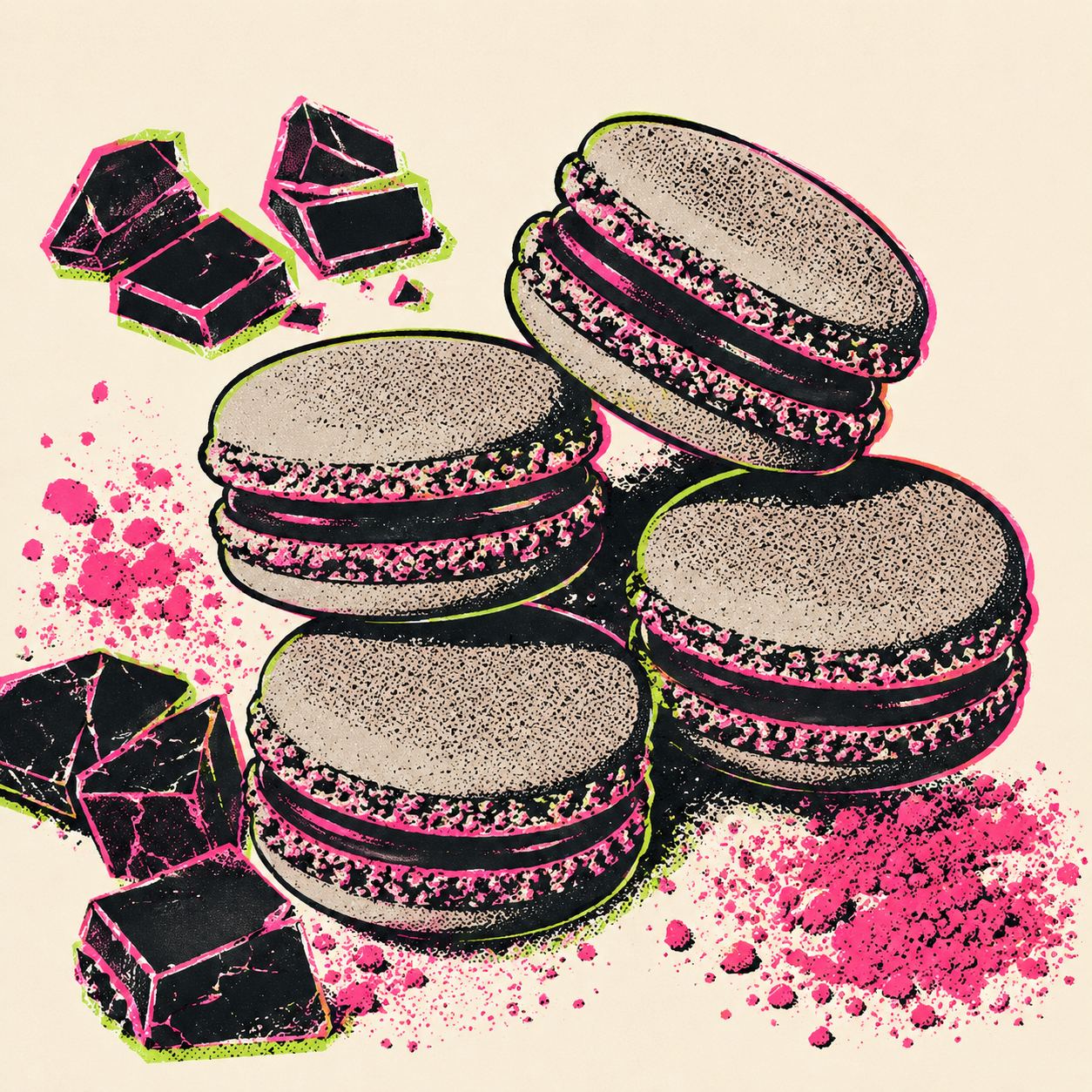
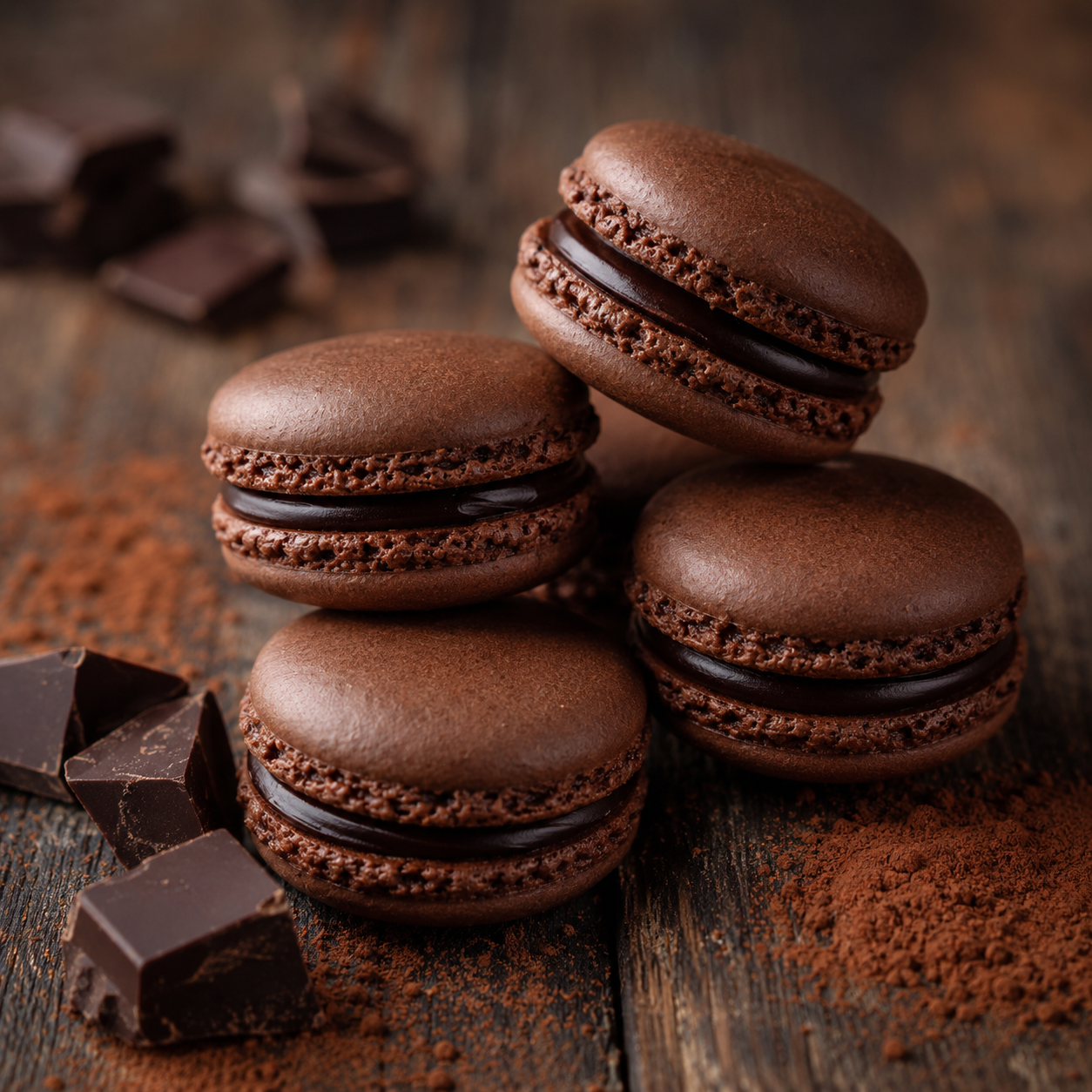
Two smooth disks of Italian-meringue-and-almond batter, baked until a
Color comes from food-grade powders or gels added to the meringue. Diameter sits around 4–5 cm, weight under 15 g — small enough to finish in two bites, sweet enough that one is usually plenty.
 Hover · tap
 Cultural context
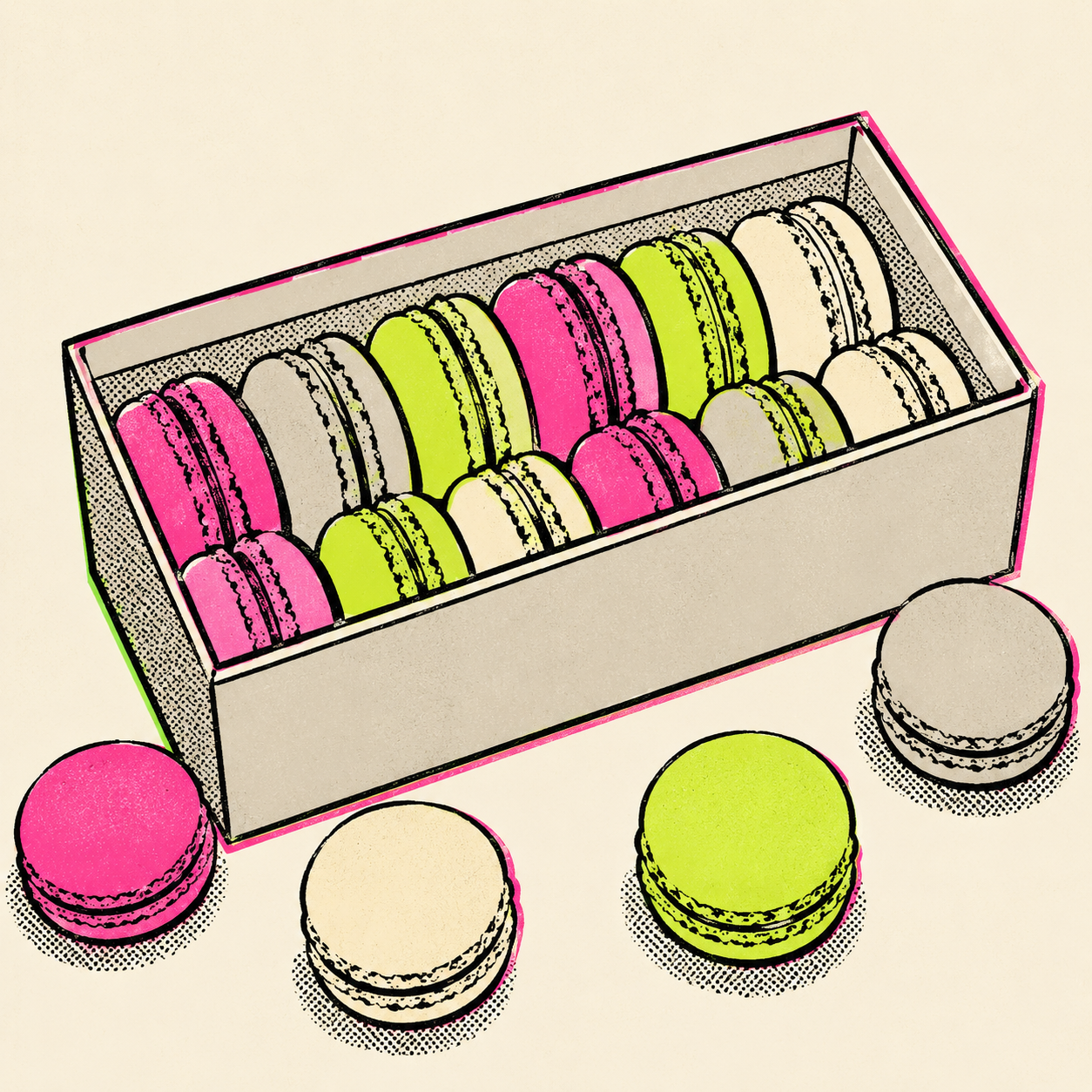
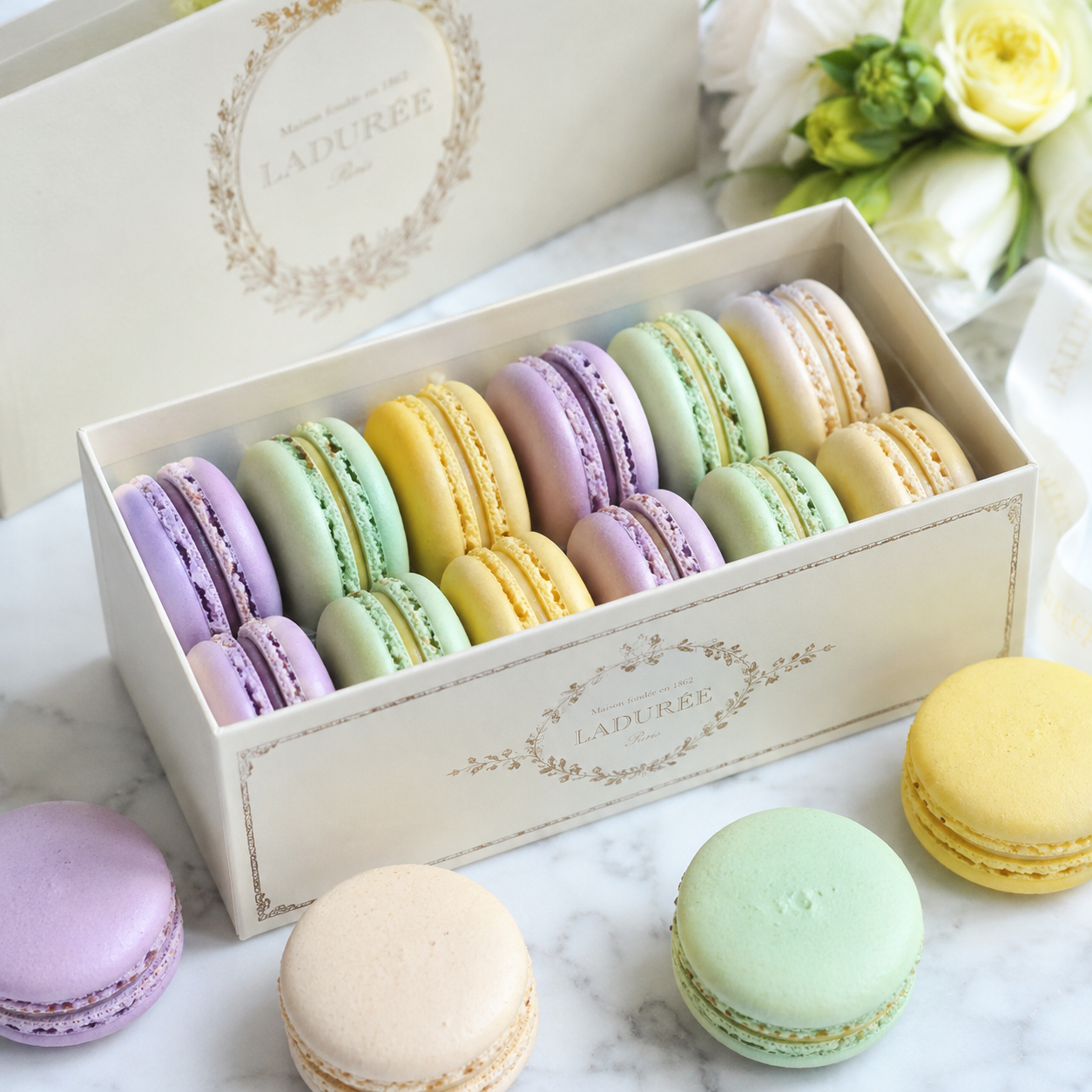
The Parisian double-shell macaron was popularized in the 1920s by
In Korea and Japan it has been adopted enthusiastically. Korea coined the larger
 Hover · tap
 Variations
Beyond Paris, macaron de Nancy and macaron d’Amiens survive as single-shell ancestors — denser, plainer, made by nuns. Korea’s ttungkaron is the most visible modern mutation, often filled with cream cheese, fruit jam, or matcha buttercream.
The Italian amaretti is a distant cousin, drier and unfilled, built on bitter almond. The American macaroon — coconut-based — shares only the name.

 Hover · tap
 How it’s made
The
The shells then rest

 Hover · tap
 References
The 1920s Ladurée moment is documented in Larousse Gastronomique and
Related
Where to eat it
Macaron on the globe
travel wishlist
my next bites · 0
view full page →Tap a marker, then + WISHLIST to add.