Three sheets of caramelized puff pastry, two layers of vanilla pastry cream, and 729 paper-thin layers of butter and dough fighting for room.
Hover · tap
ISSUE 01 · JANUARY 1waffle.wiki
Mille-feuille
FrancePastryVegetarian
Sweet
4/5
Spice
0/5
Era
Pre-modern
Format
Single serve
Mille-feuille means a thousand sheets — the math says 729, but no one is counting at the table.
Origin
The mille-feuille — literally “a thousand sheets” — descends from the French puff-pastry tradition, which itself crystallizes in the 17th century. The earliest written mention of a layered cream-and-pastry dessert in this exact form appears in François Pierre La Varenne ’s Le Cuisinier françois (1651), though the modern construction is most often credited to Marie-Antoine Carême, who codified it in the early 19th century.
Carême’s instinct was geometric: three sheets, two creams, one slice . The proportions stuck.
Hover · tap
FIG. 01
What it is
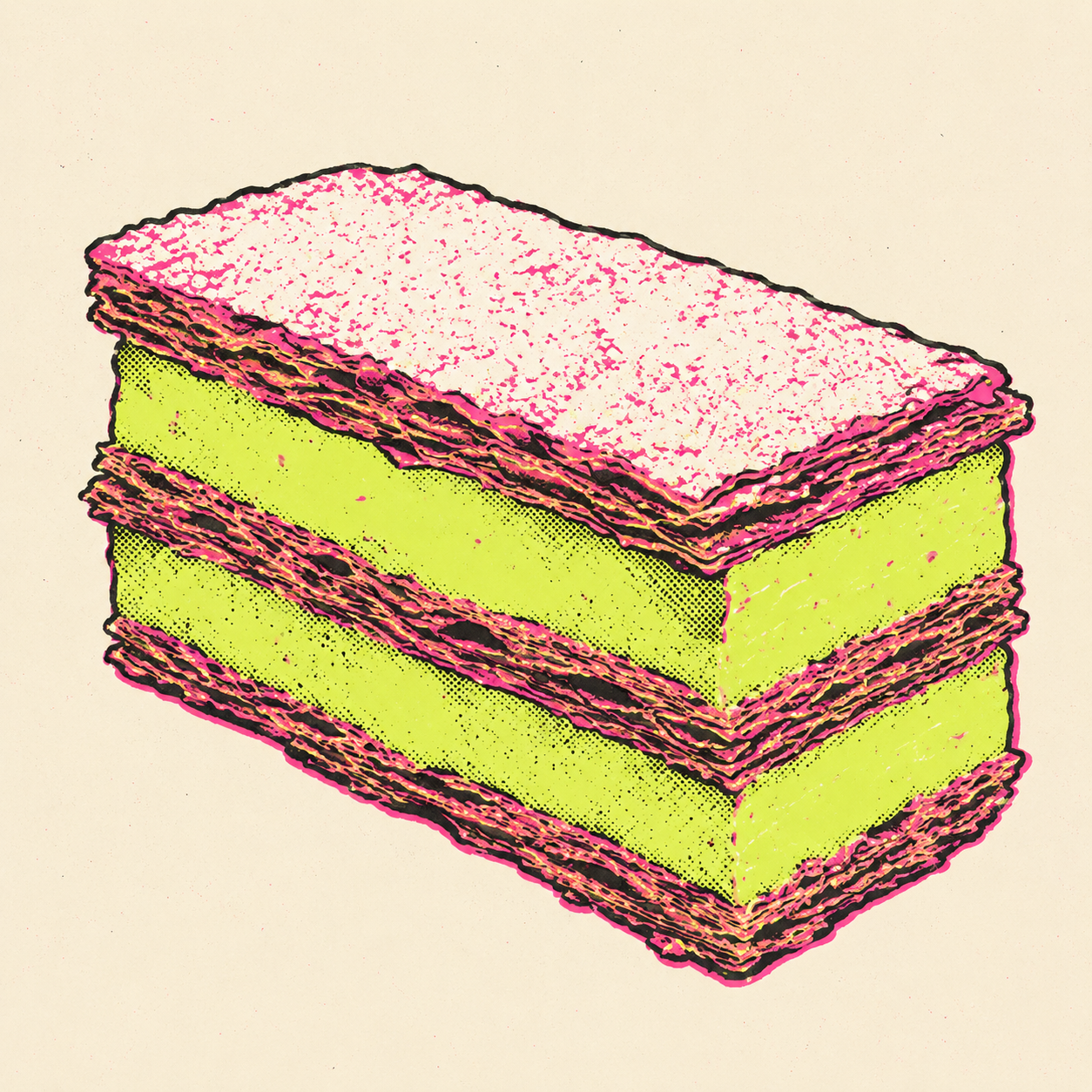
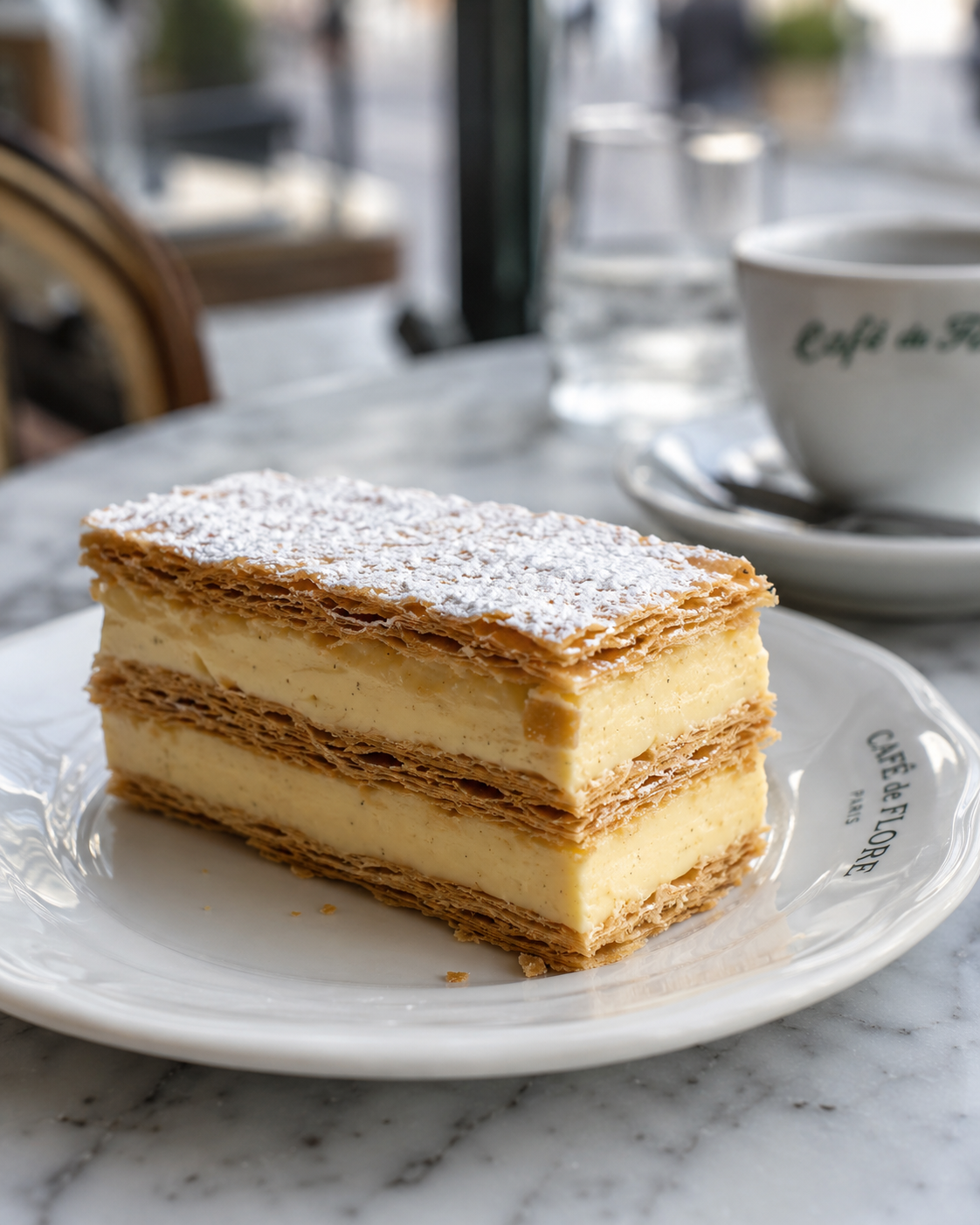
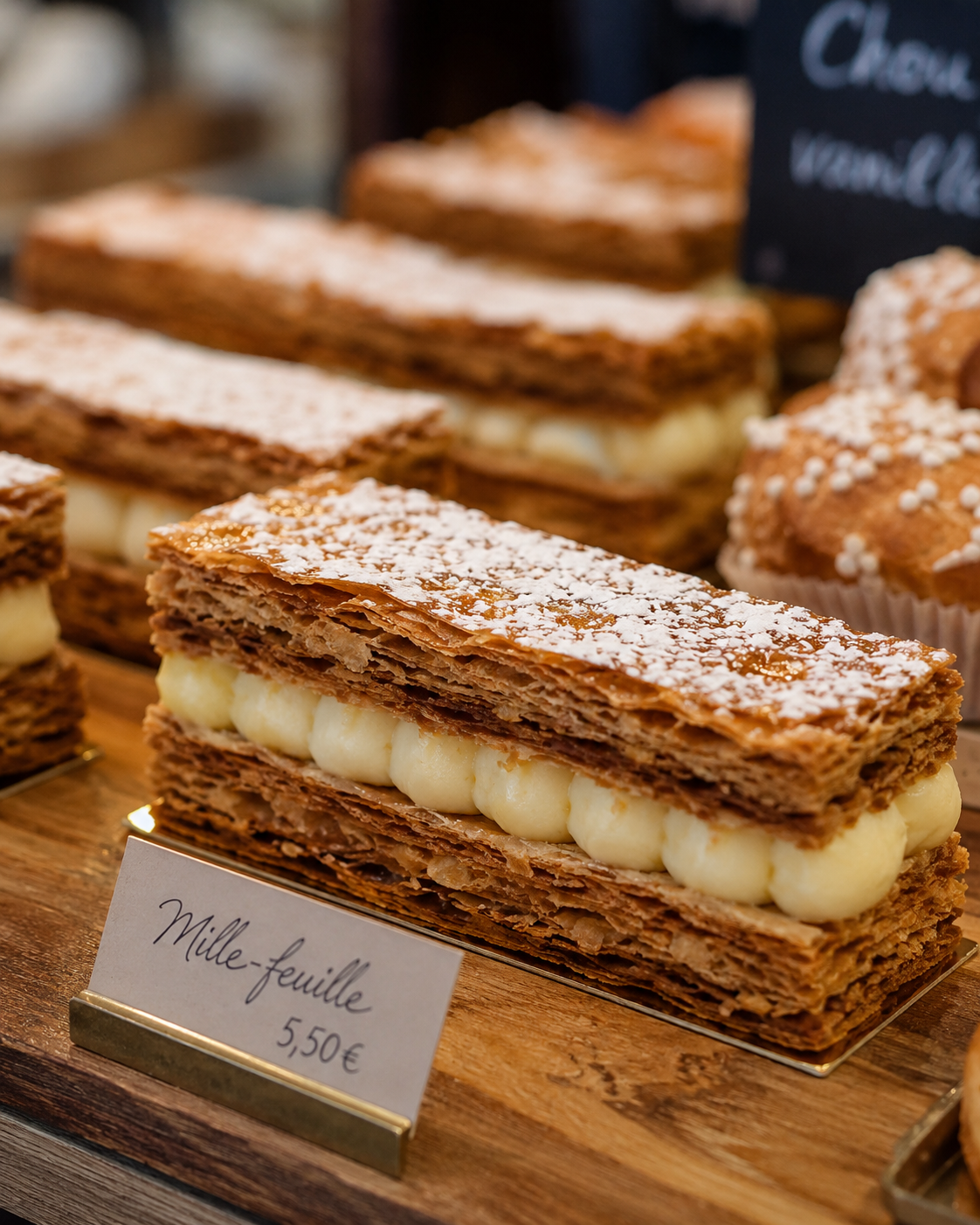
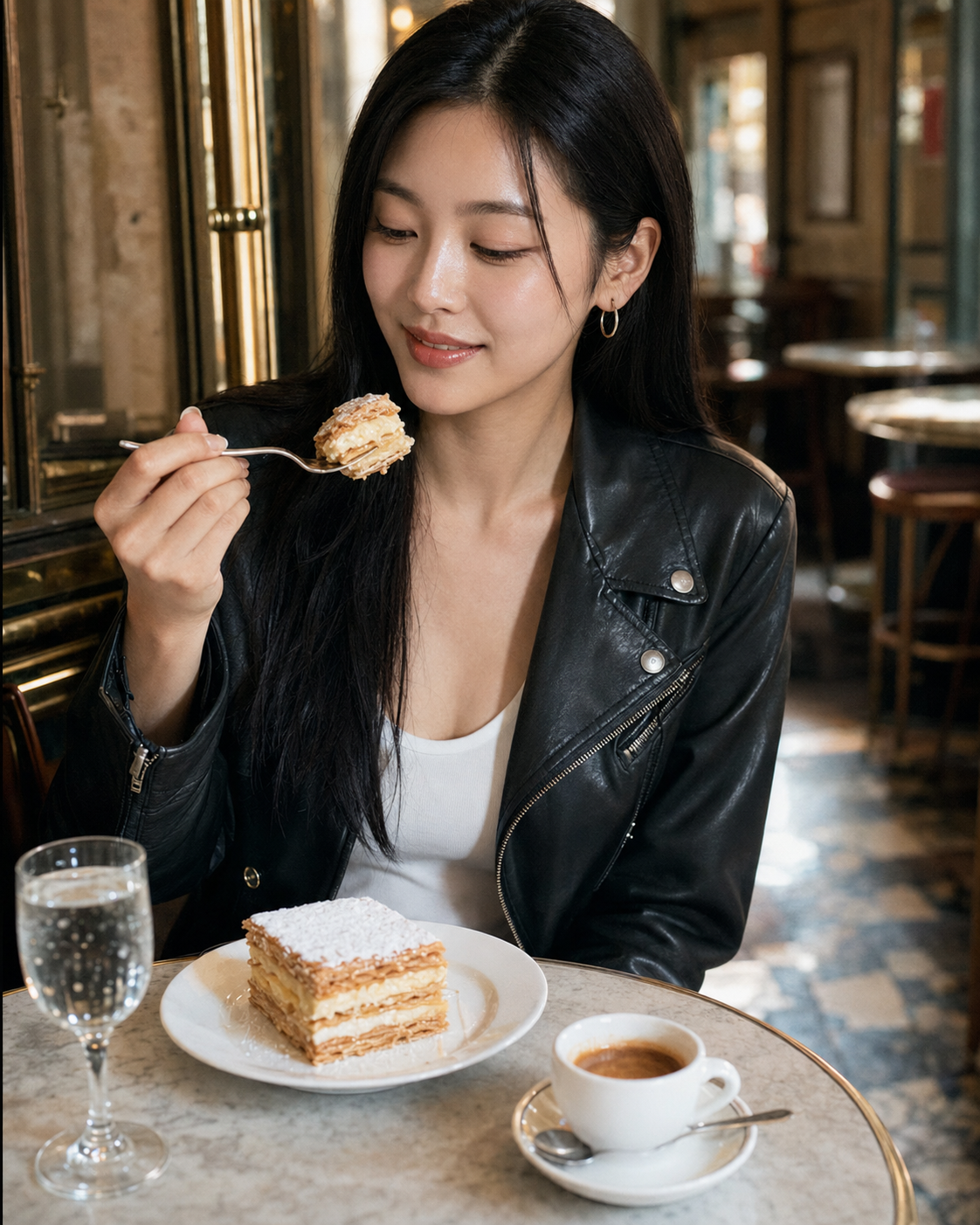
Three sheets of puff pastry, baked until the top is glassy and caramelized, sandwiched around two layers of vanilla pastry cream. The whole thing is finished with either a fondant glaze marbled with chocolate (the à la Napoléon finish) or a simple dusting of icing sugar.
The math of the layers is exact. Classic puff pastry uses a six-turn lamination — six folds of three layers each — producing 3⁶ = 729 layers of butter-and-dough alternation per pastry sheet. Three sheets per slice means just over 2,000 layers per dessert, all in a strip you can hold between two fingers.
Hover · tap
FIG. 02
Cultural context
In Japan the mille-feuille is widely called ナポレオン (Napoleon) , an importation that traces through Russian patisseries of the late 19th century, where the same construction was renamed in honor of the Emperor. The name traveled to East Asia faster than the word mille-feuille did.
In Britain and Australia the descendant is the vanilla slice or cream slice — same architecture, simpler glaze, often custardier filling. Sweden’s prinsesstårta picks up the cream layering instinct but trades pastry for sponge.
Hover · tap
FIG. 03
Variations
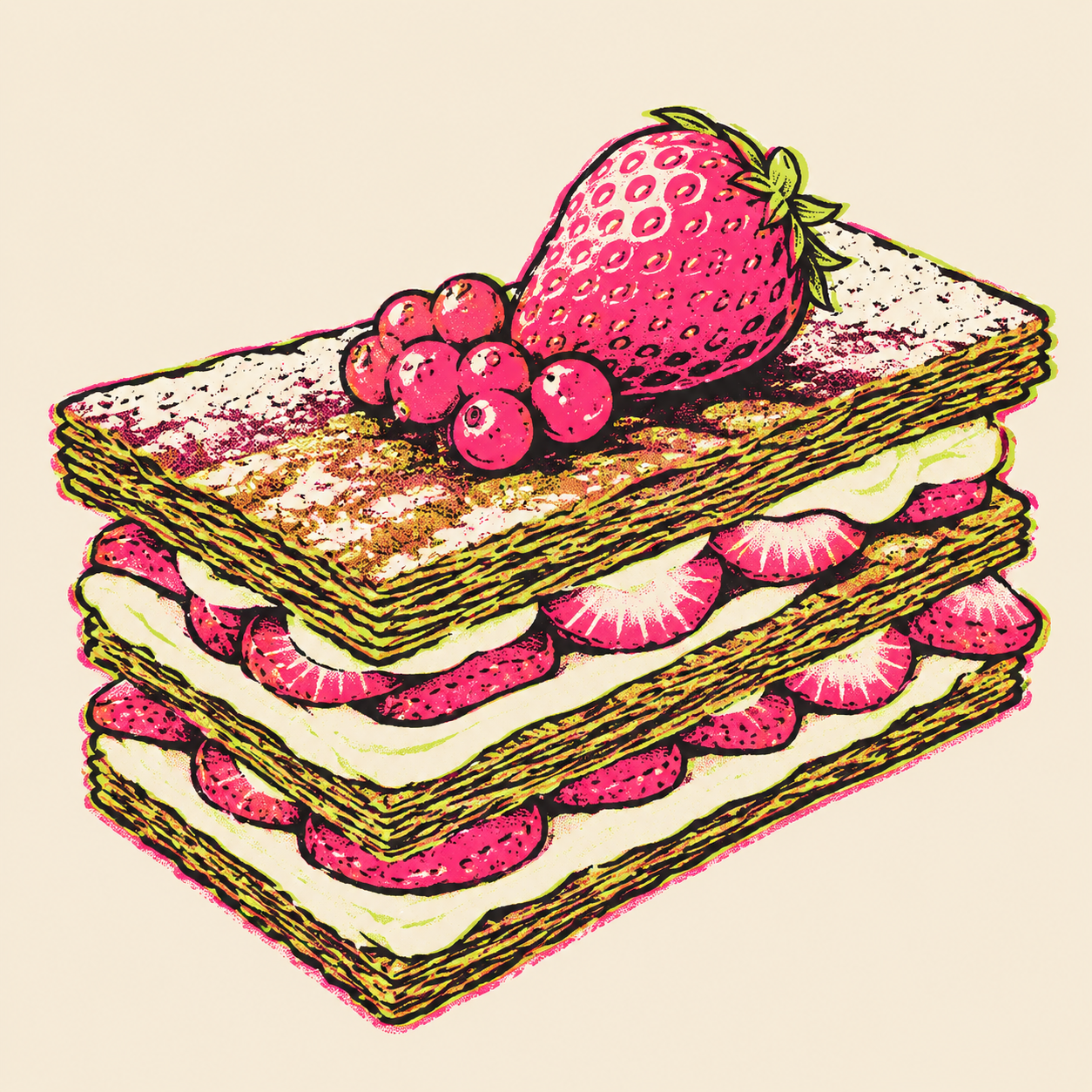
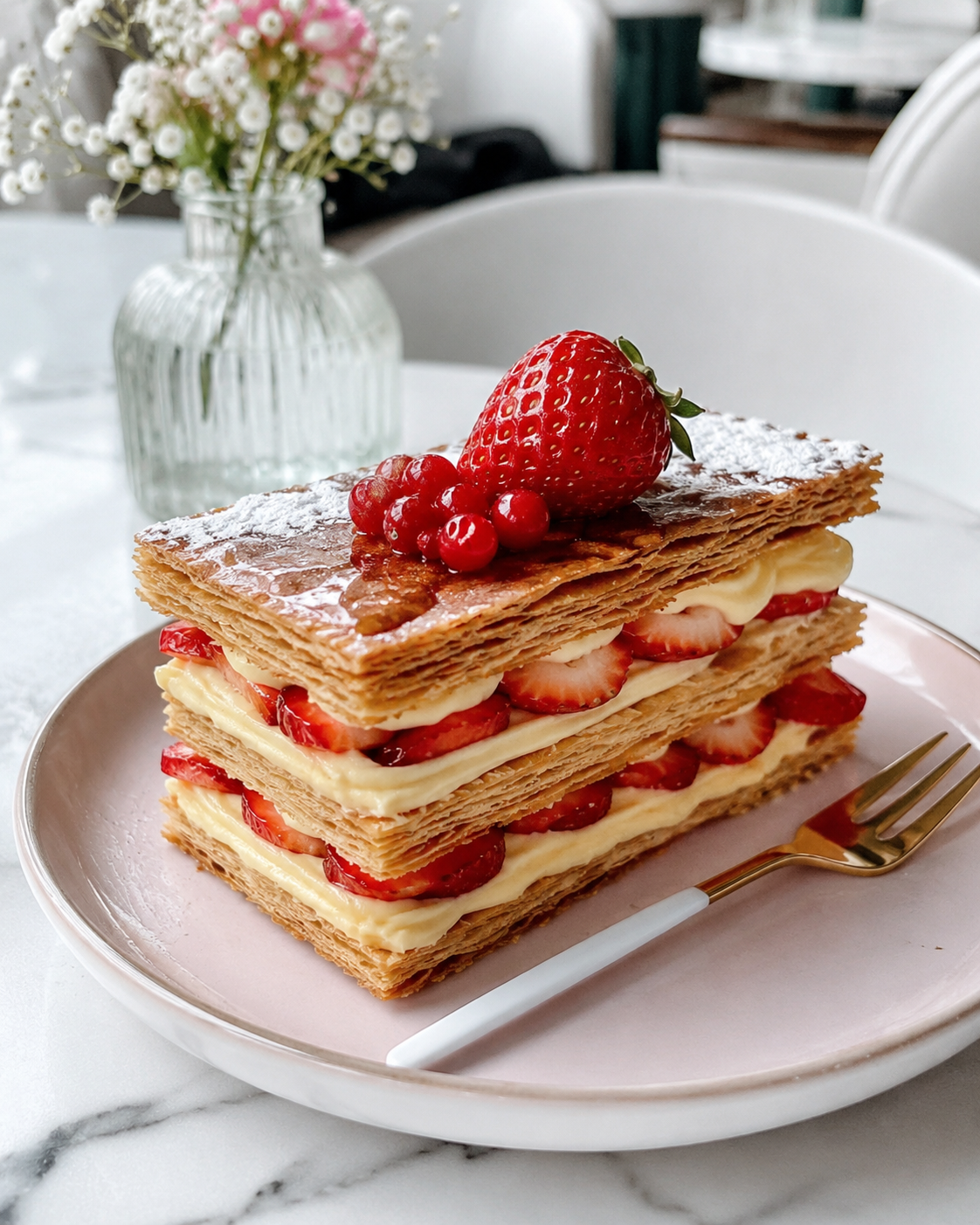
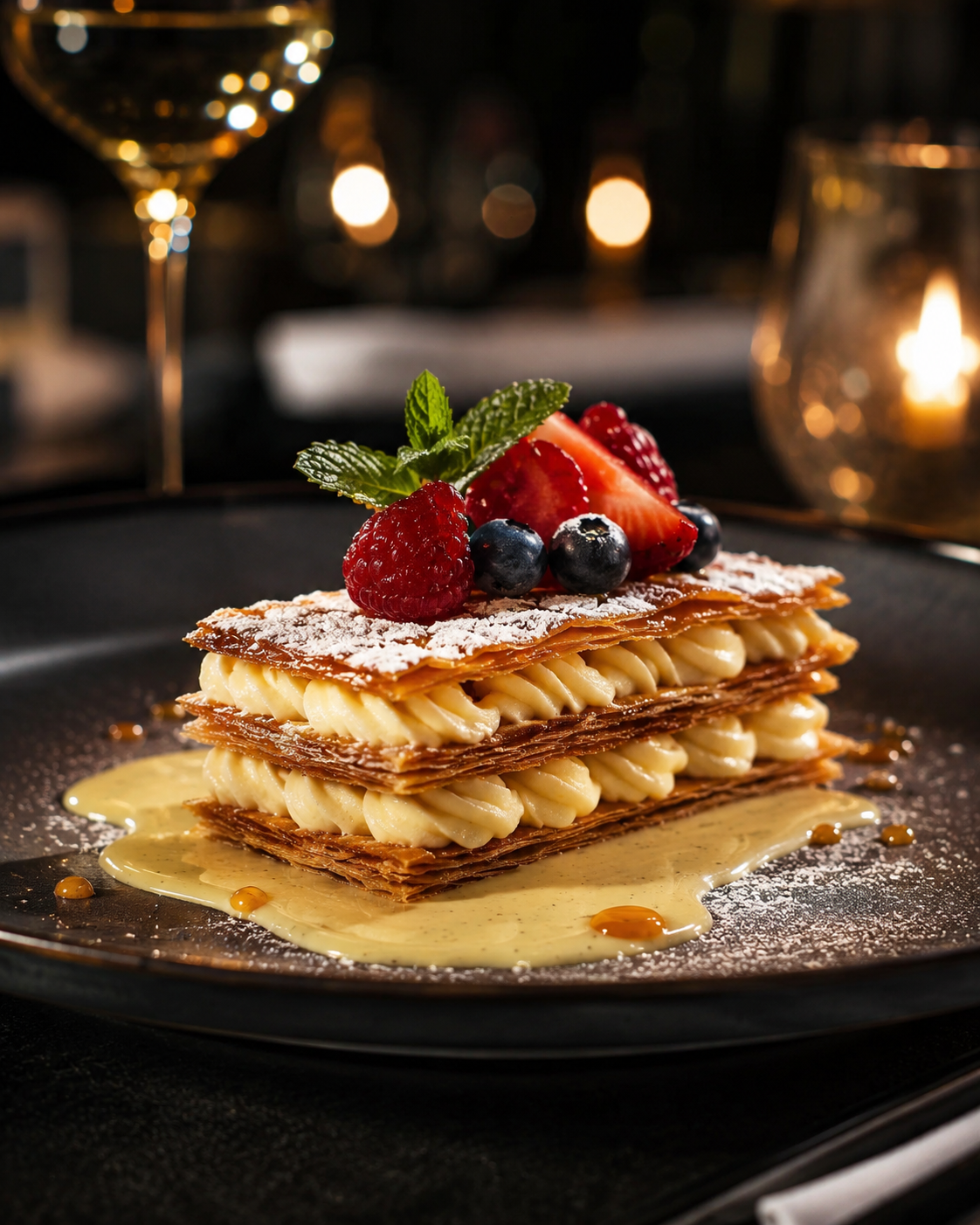
Modern Parisian patissiers — Pierre Hermé, Philippe Conticini, Cédric Grolet — have rebuilt the mille-feuille around new flavors: praline, salted caramel, raspberry-rose, infused vanilla from Tahiti or Madagascar. Conticini’s “vanilla mille-feuille” at La Pâtisserie des Rêves is widely cited as the modern reference.
The structural rebellion is to flip it on the side and serve the layers vertical, so the diner cuts through with a fork rather than wrestling with a knife. Fauchon and Lenôtre both serve this orientation now.
Hover · tap
FIG. 04
How it’s made
Lamination is the slow part. Butter is enclosed in a dough envelope, rolled out, folded into thirds, rested in the fridge, and rolled again — six times in classical practice. Each rest is critical: the butter must stay cold and continuous, never absorbing into the dough.
The bake is brutal — 200°C with a sheet weight on top of the pastry to prevent vertical puff, then a final pass with icing sugar at high heat to caramelize the surface to a glassy amber. Pastry cream goes in only once everything has cooled completely, otherwise the layers turn soggy within an hour.
Hover · tap
FIG. 05
References
Carême ’s role is documented in Le Pâtissier royal parisien (1815) and discussed at length in Michael Krondl ’s Sweet Invention: A History of Dessert (2011). The 729-layer math is standard in Le Cordon Bleu’s Patisserie (Grub Street, 2018 ).
 Hover · tap
 Hover · tap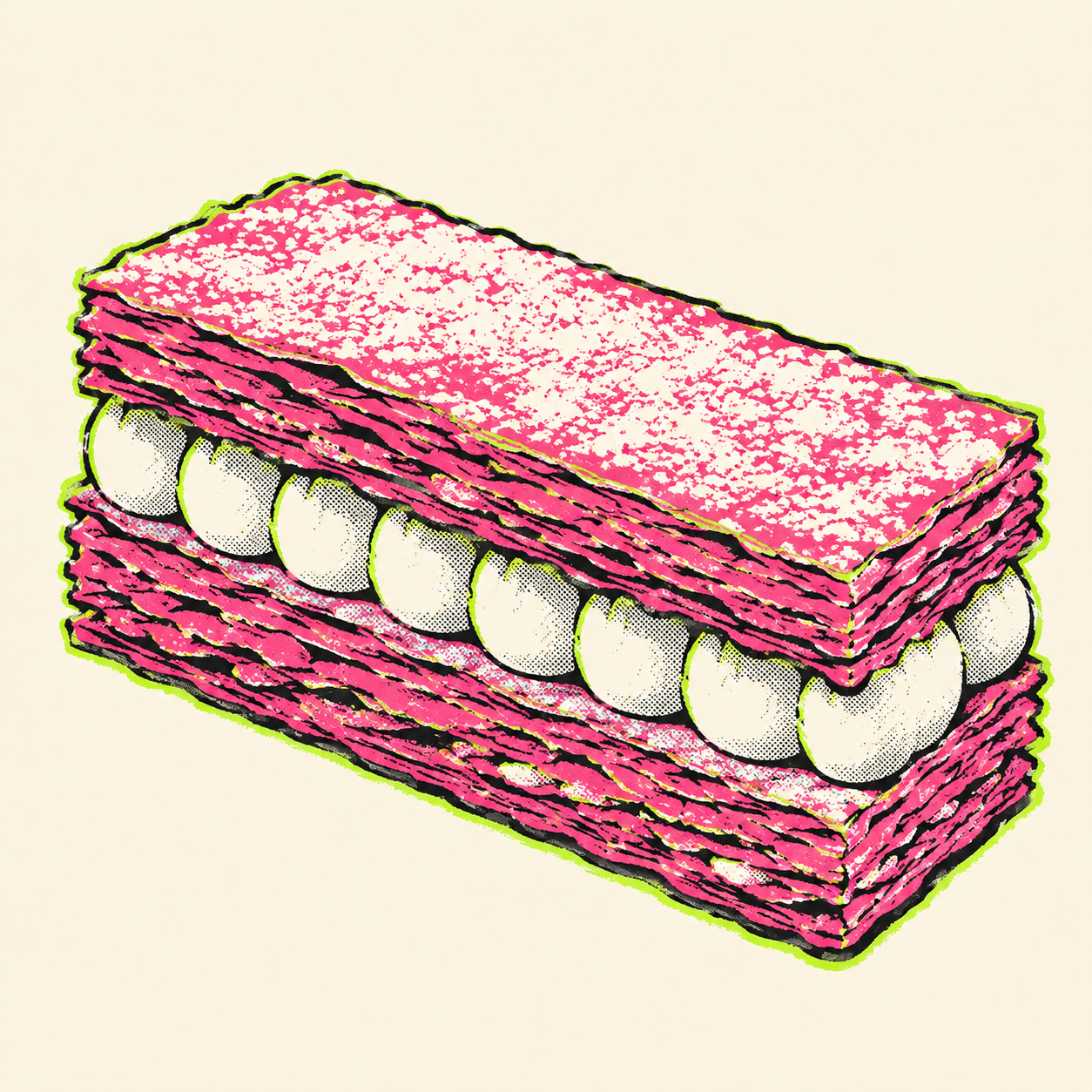
 Hover · tap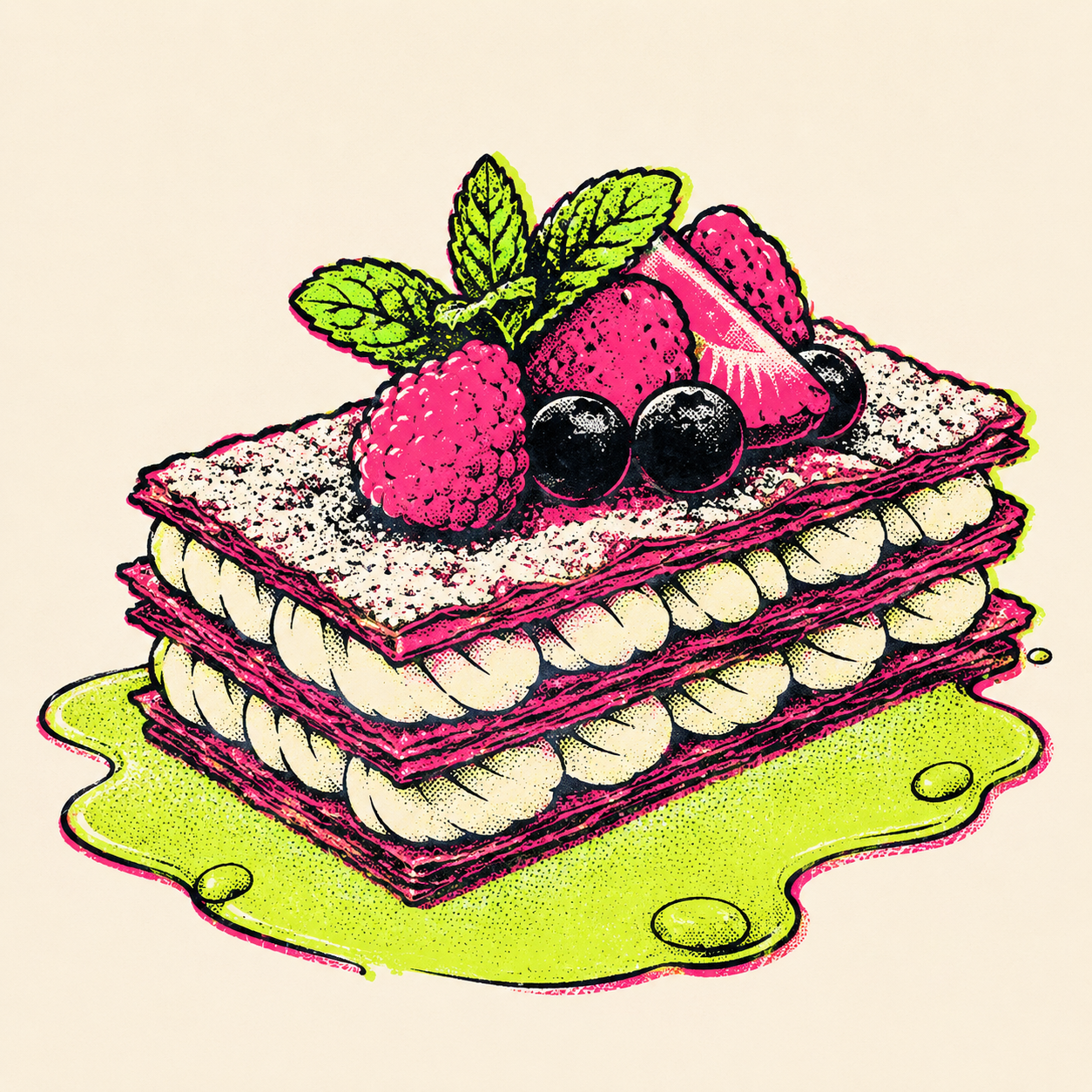
 Hover · tap
 Hover · tap
 Hover · tap