Desserts ·
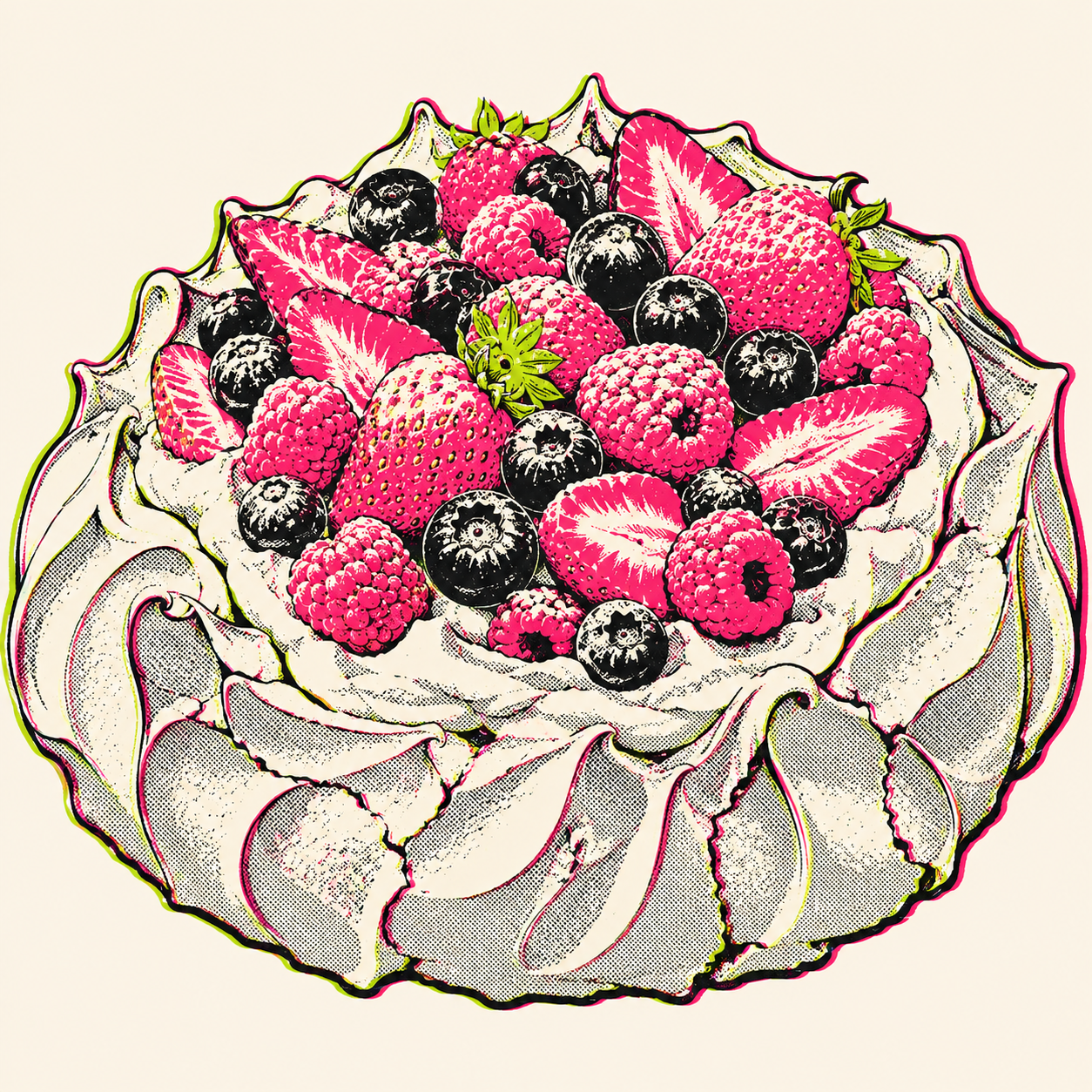
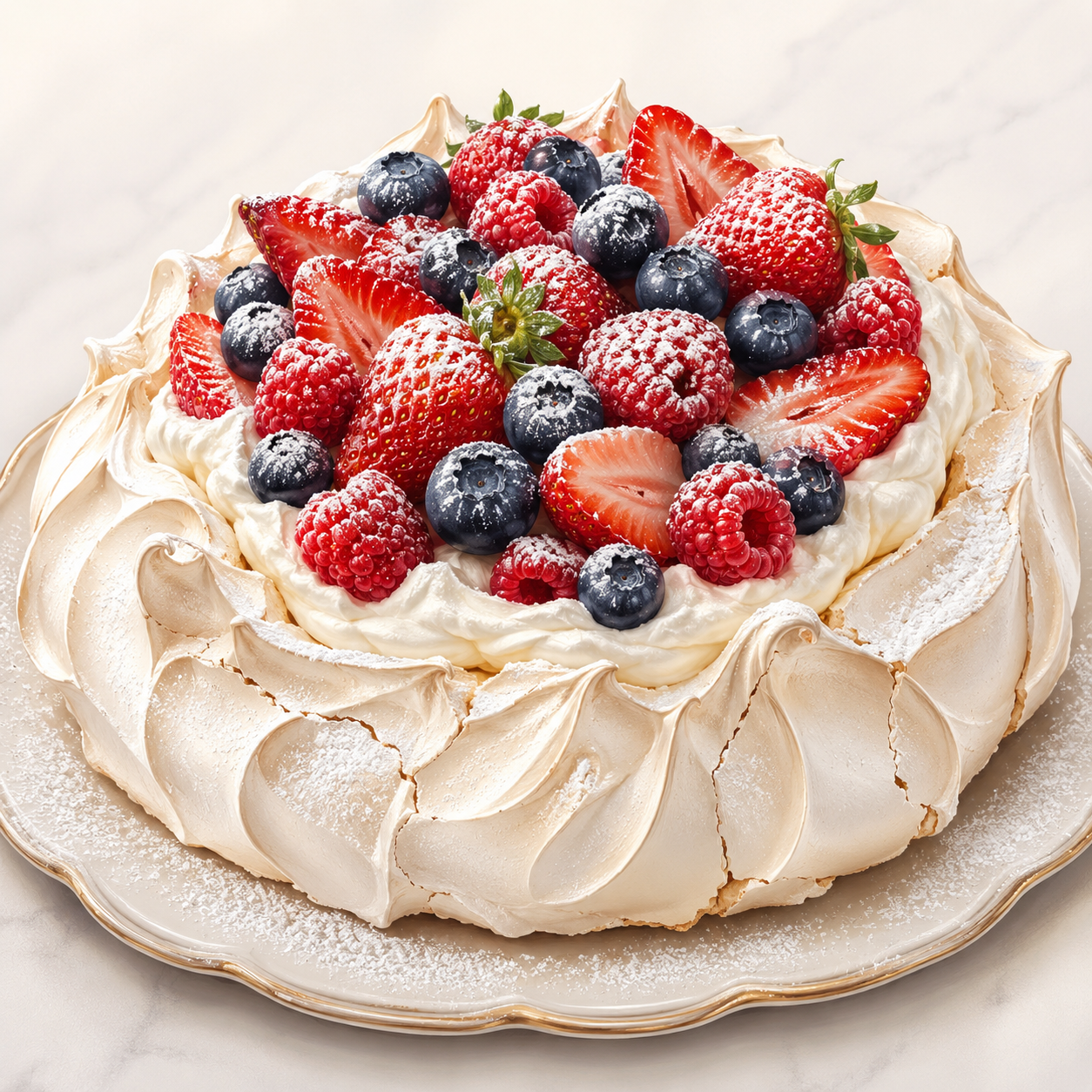
Pavlova
A
 Hover · tap
- Sweet
- 4/5
- Spice
- 0/5
- Era
- 20th century
- Format
- Shareable
Crisp on the outside, soft like marshmallow inside — and unresolved betweenand New Zealand for nearly a century. Australia
Origin
The pavlova is named after
The earliest fully-documented recipe with the modern marshmallow-interior meringue base is from
 Hover · tap
 What it is
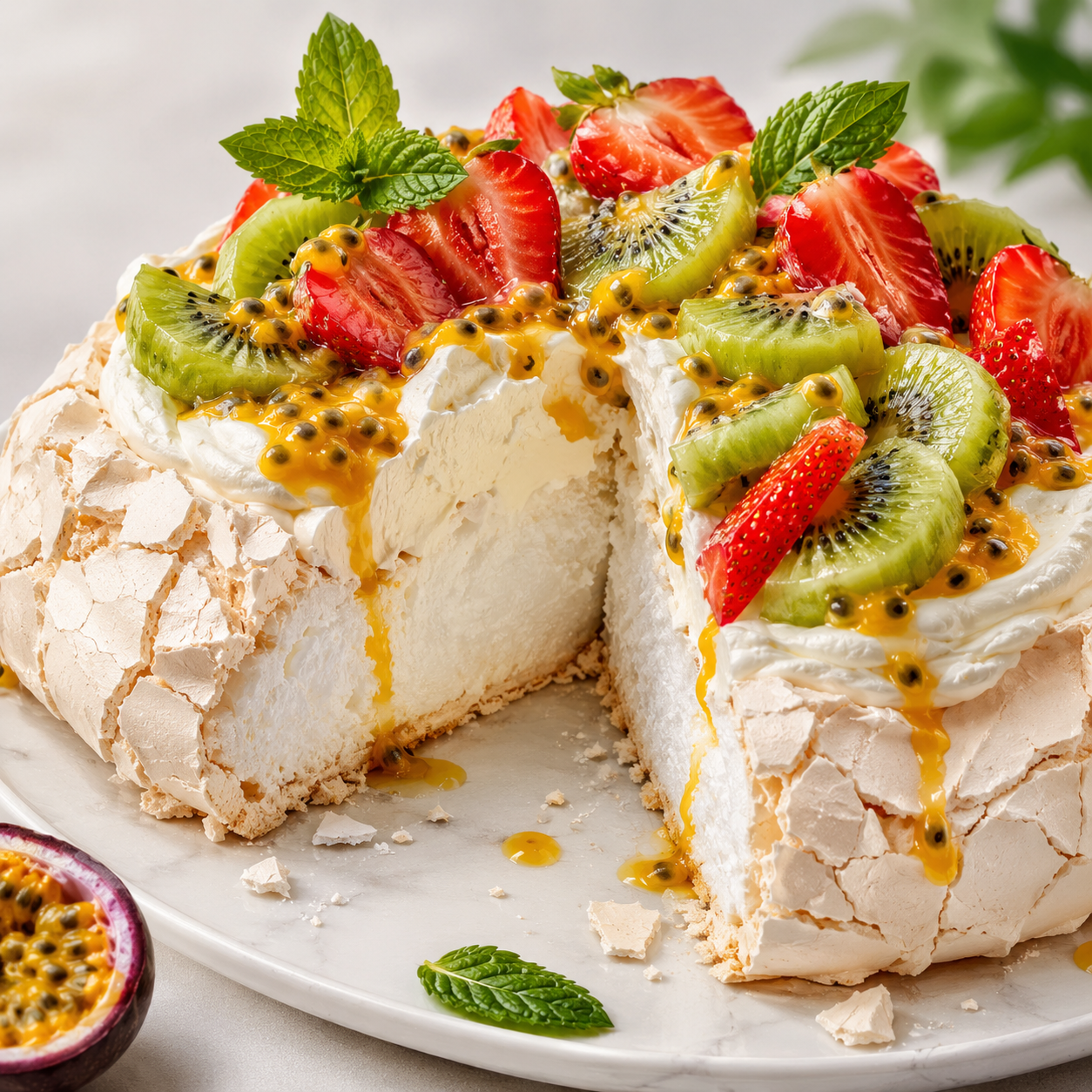
A French-meringue base — egg whites whipped with sugar to stiff peaks — stabilized by
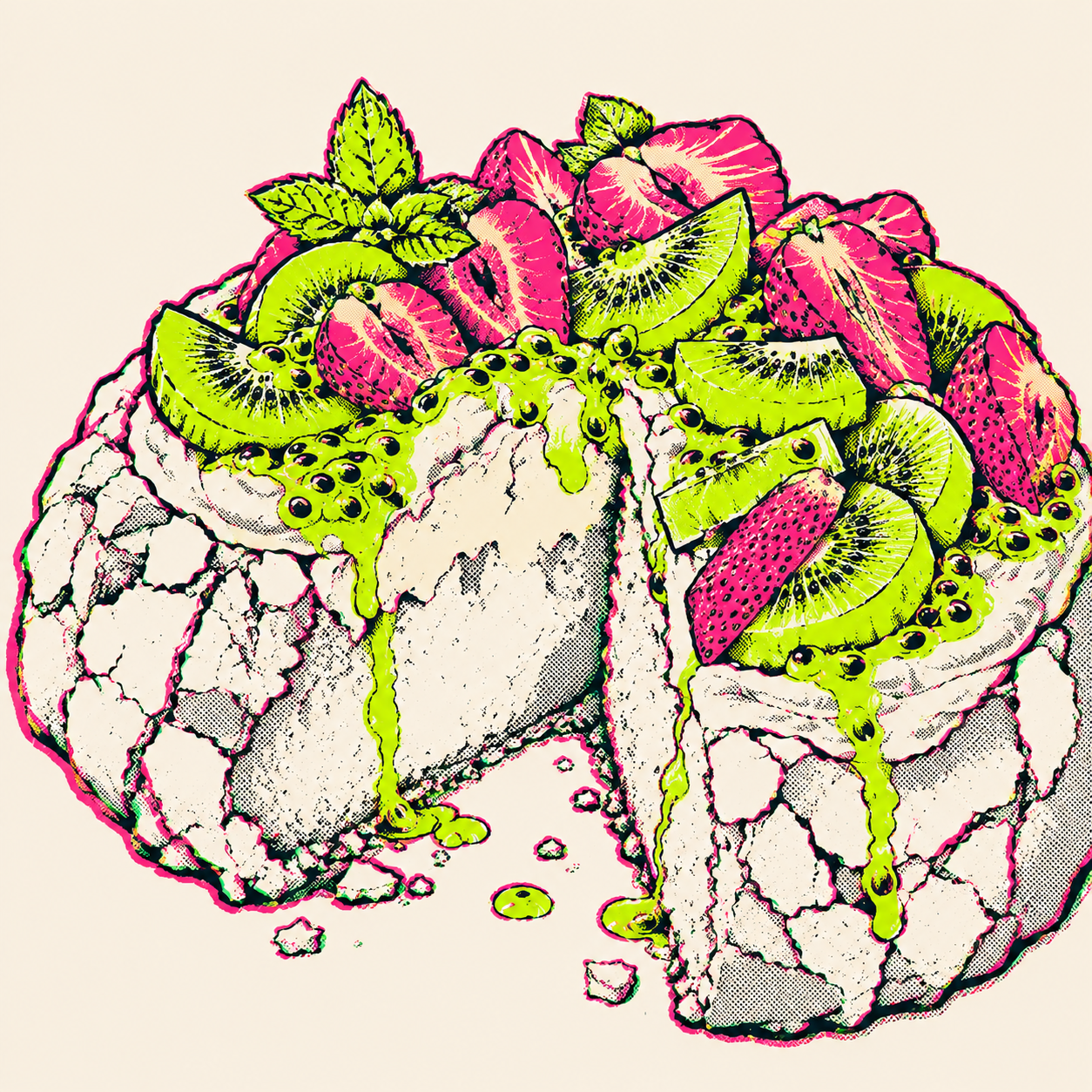
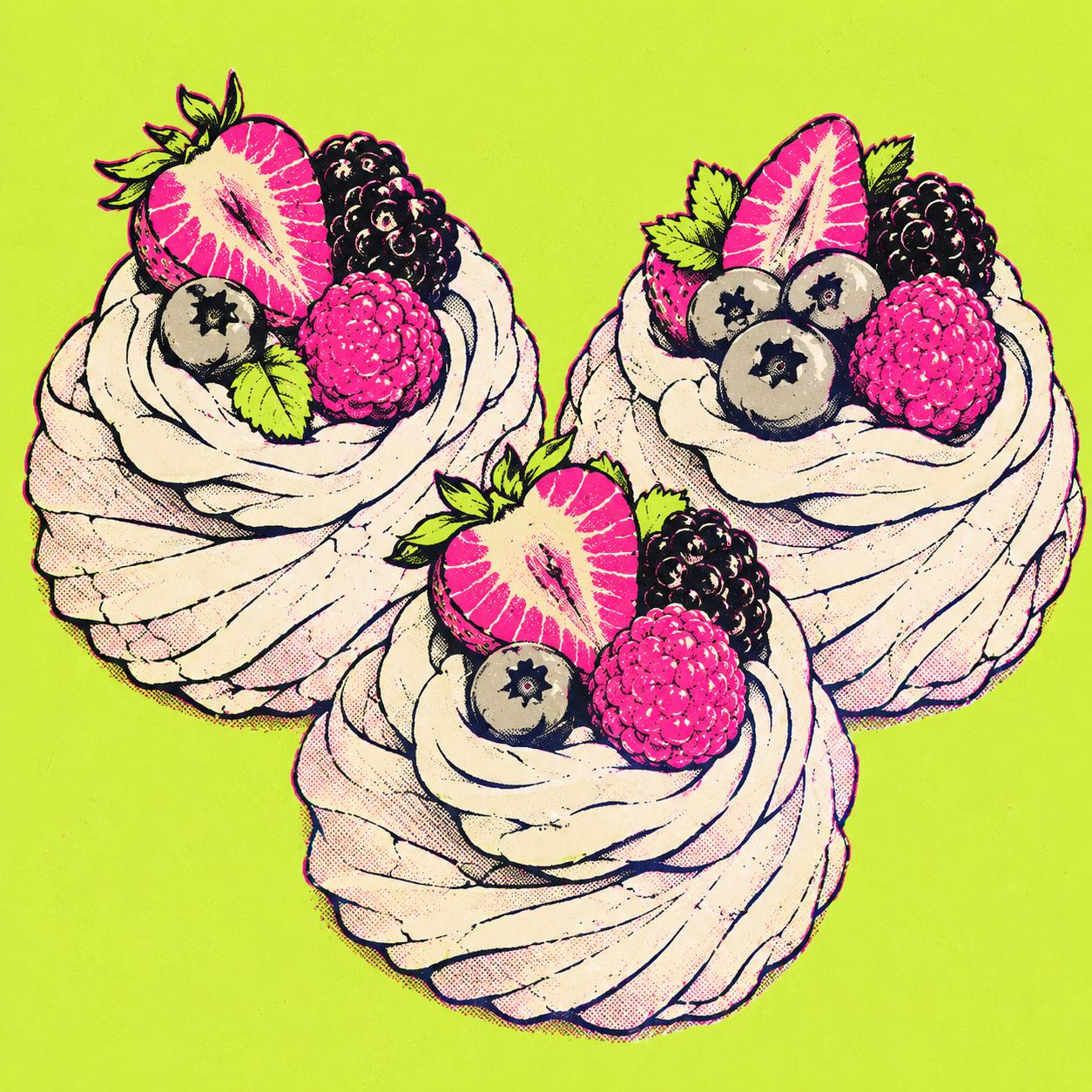
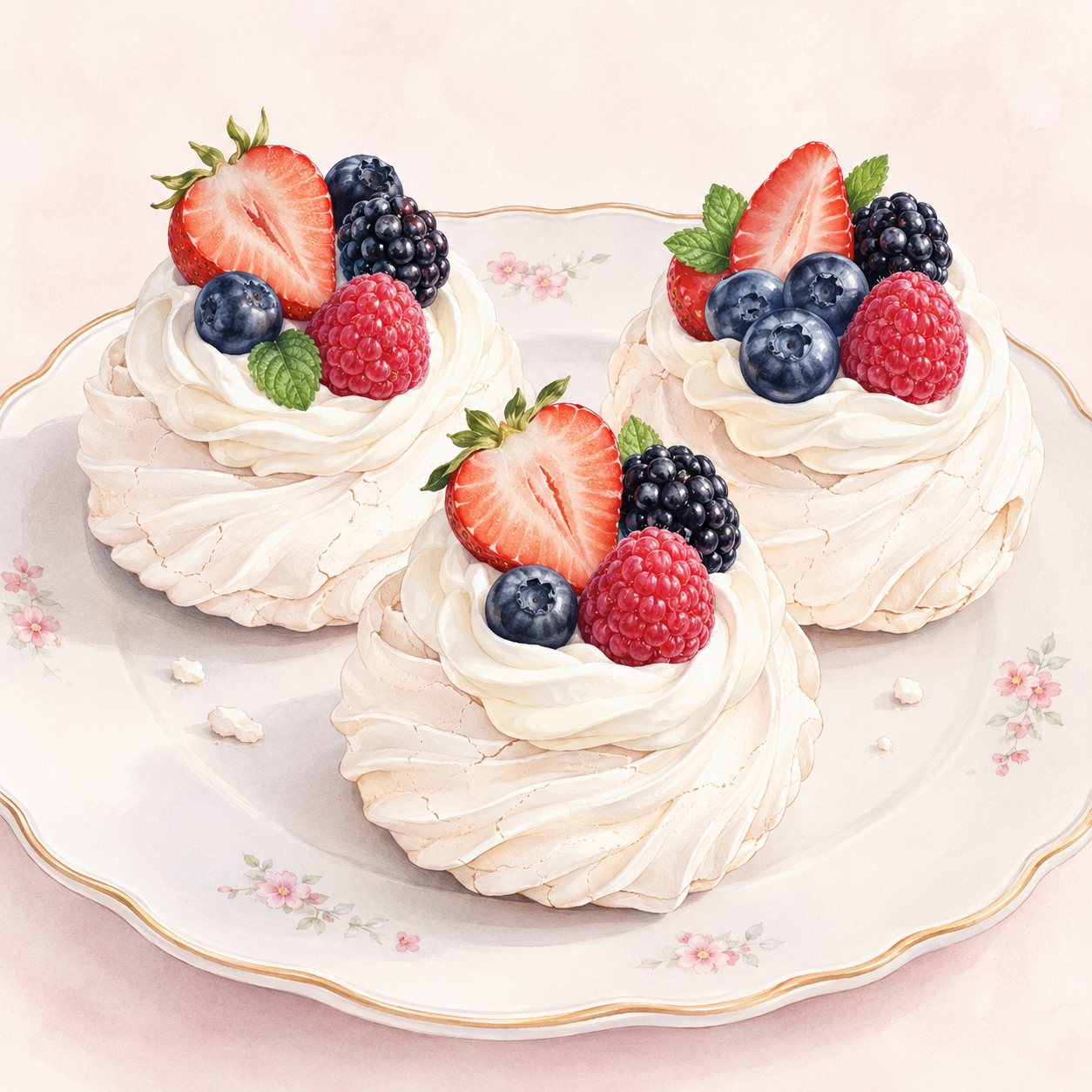
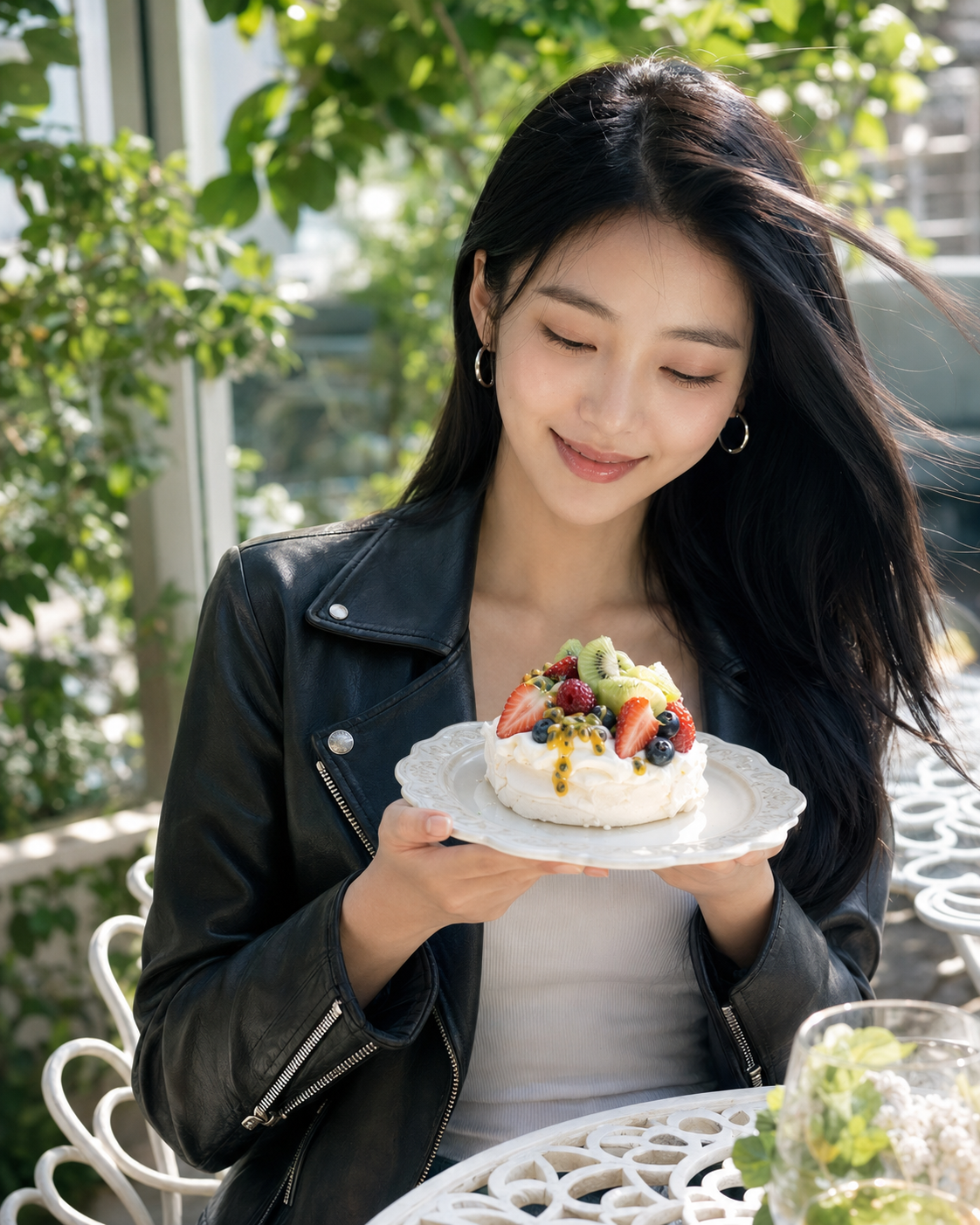
The shell is then crowned with whipped cream and topped with fruit. The classical Antipodean topping is
 Hover · tap
 Cultural context
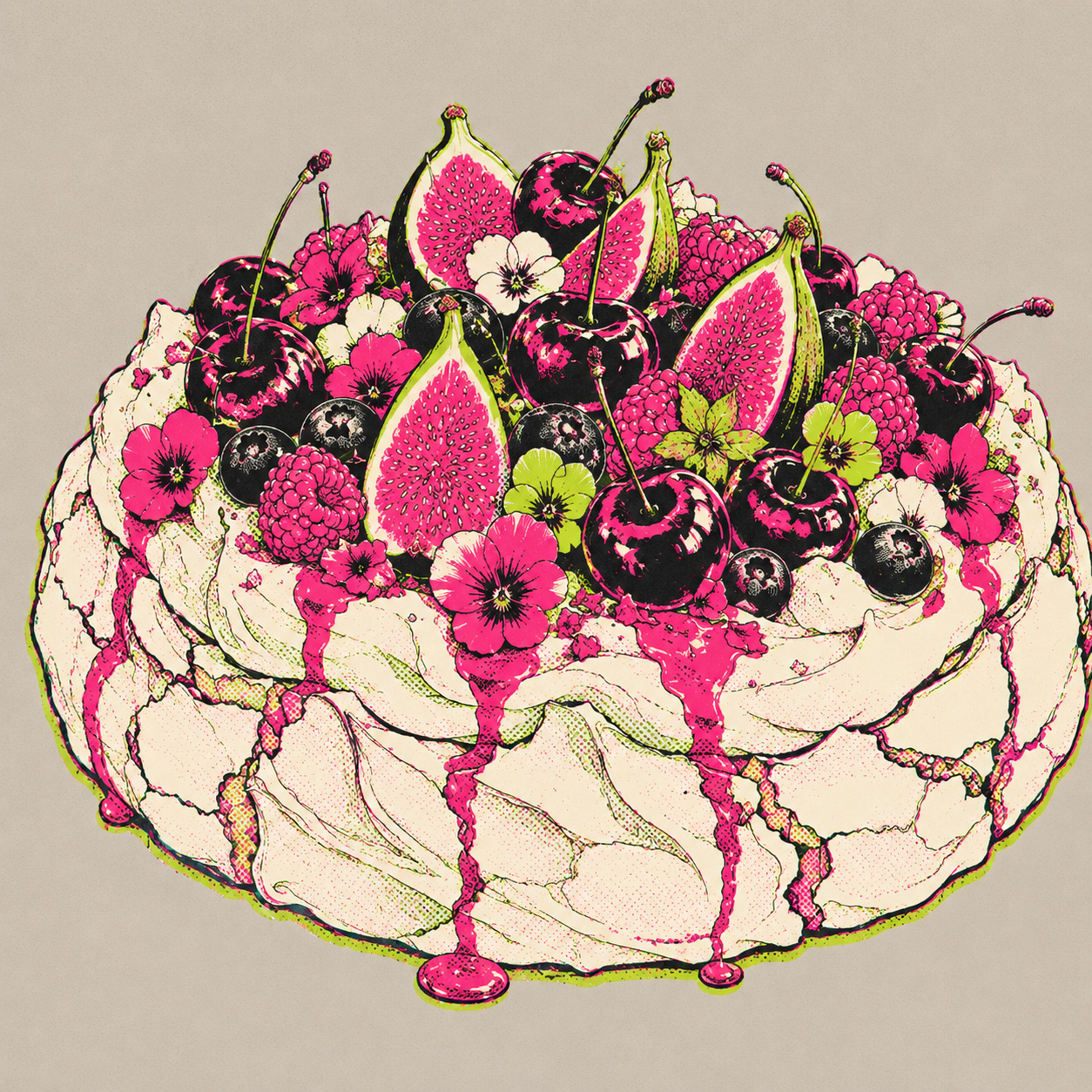
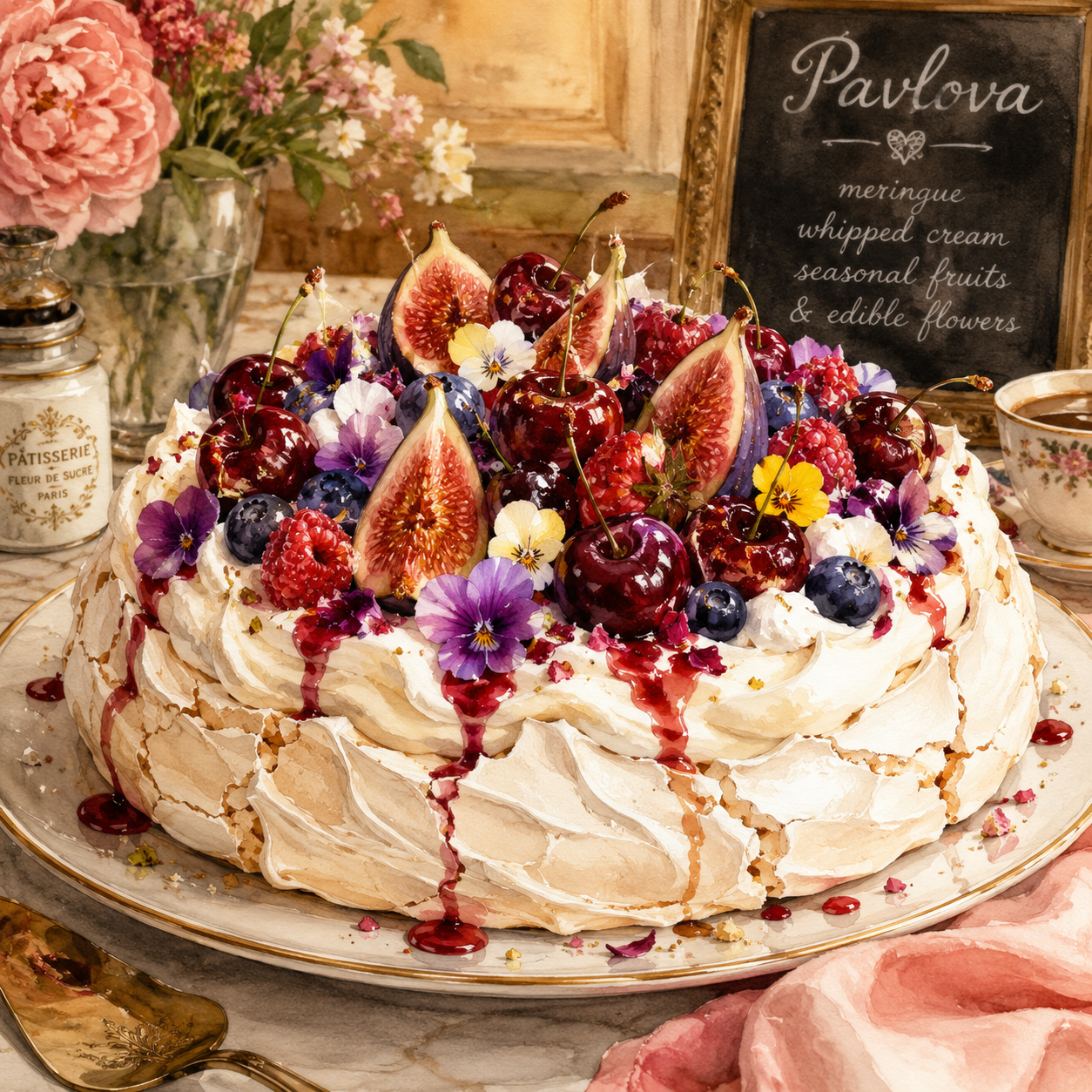
The pavlova is a centerpiece dessert in both countries — a fixture at Christmas dinners (where it doubles as a stand-in for English fruitcake in the southern-hemisphere summer), Australia Day and Waitangi Day spreads, and family birthdays. The size is shareable: a single pavlova feeds eight to twelve.
The diplomatic history is unsettled enough that the Oxford English Dictionary updated its pavlova entry in
 Hover · tap
 Variations
The single-serve version of the pavlova is Eton mess — broken meringue, cream, and strawberries served loose in a glass. The Italian meringata uses the same meringue logic but freezes the assembled dessert into a frozen cream cake. The American baked Alaska shares the meringue exterior but encloses ice cream rather than cream and fruit.
Modern restaurants have run with the pavlova as a deconstructed plate — quenelles of cream, broken meringue shards, and a wider fruit vocabulary including raspberry, mango, fig, and pomegranate. Yotam Ottolenghi’s pavlova at NOPI helped push the dessert out of its retro 1980s reputation.

 Hover · tap
 How it’s made
Egg whites are whipped to soft peaks before sugar is added gradually —
The bake is low and slow —
References
Related
Where to eat it
Pavlova on the globe
travel wishlist
my next bites · 0
view full page →Tap a marker, then + WISHLIST to add.