Glossary
Lamination
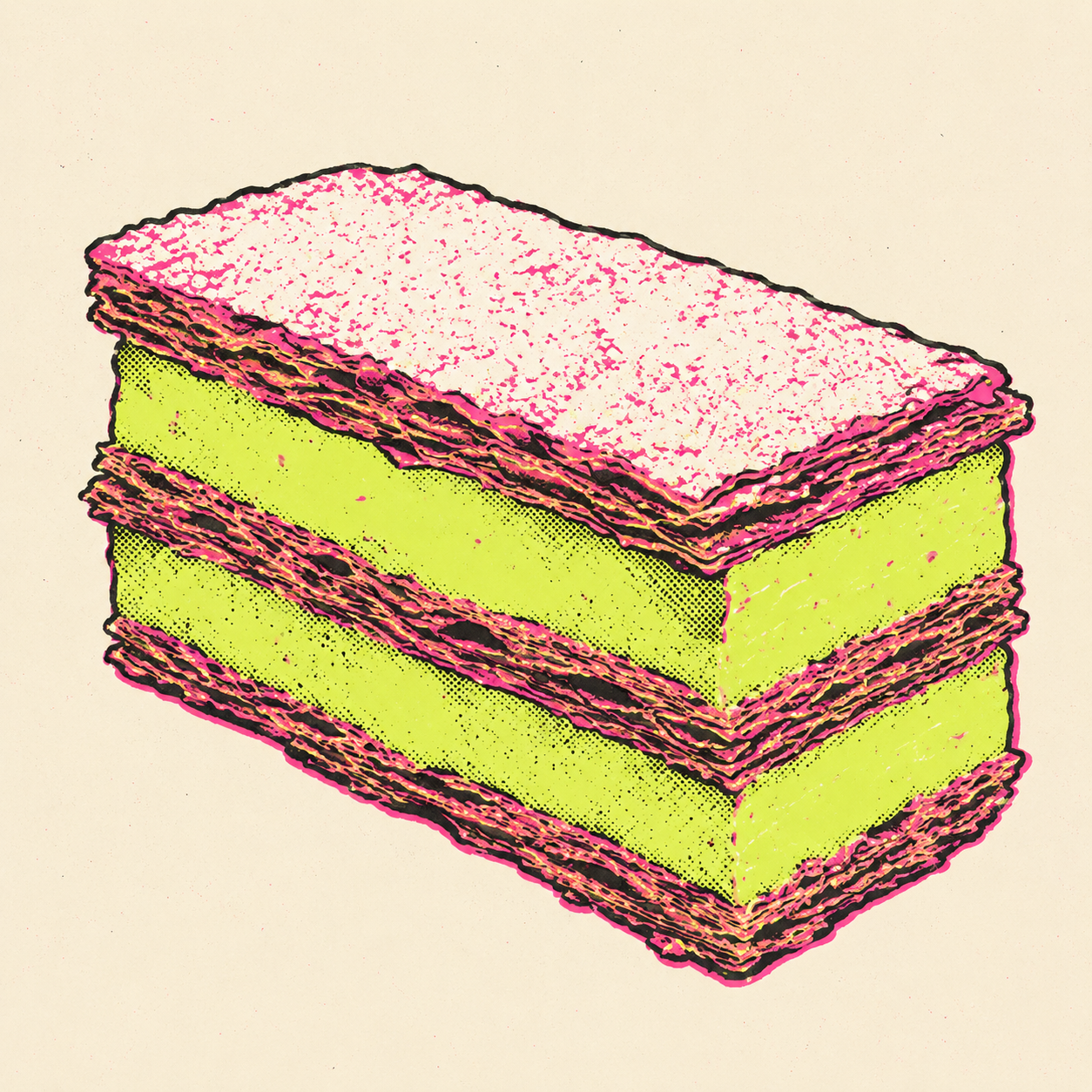
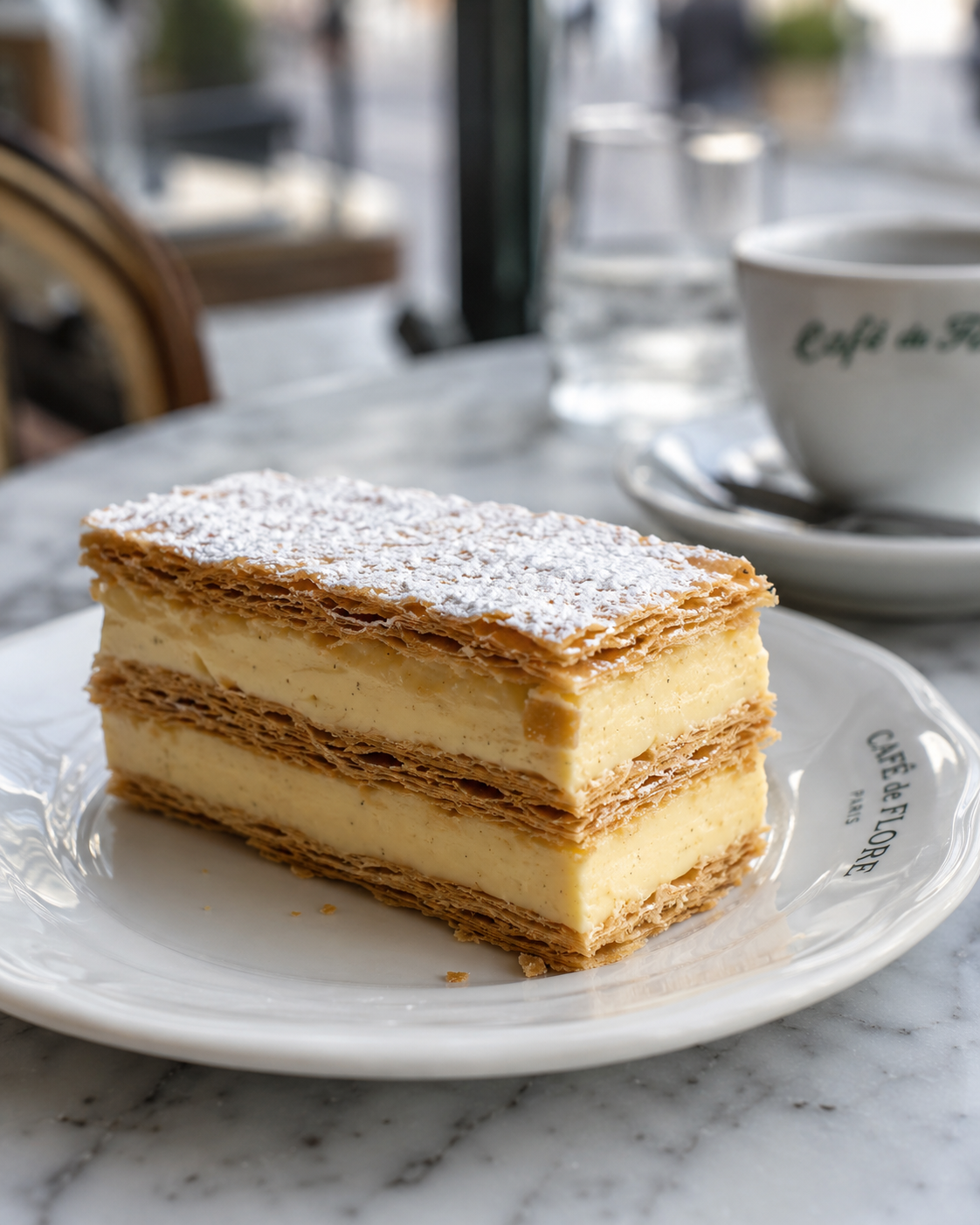
Lamination is a pastry technique of folding butter into dough across multiple turns, creating dozens of paper-thin alternating layers that puff in the oven. Croissants typically reach 27 layers; mille-feuille pushes 729.
The principle is steam. When laminated dough hits a hot oven, the water in the butter and the dough flashes to vapor; trapped between sheets, the vapor pries them apart faster than the gluten can collapse. The result is a structure of leaves rather than crumb.
Each “turn” is a fold — usually a single (three layers) or a double (four). Three single turns produce 27 layers, the standard count for croissants and most laminated breakfast pastries. Six single turns yield 729, the figure Marie-Antoine Carême fixed for classical mille-feuille. Beyond about ten turns the layers begin to collapse into each other and the trick stops paying off.
Temperature is the discipline. The butter must stay cold enough to remain a discrete sheet between dough layers; the dough must stay relaxed enough to roll without tearing. The narrow window between those two states — typically 13–18 °C — is the working temperature of every laminated pastry kitchen.