W
Issue 01 ·

Street Food · Colombia · Venezuela

Arepa

Arepa

A round disc of cornmeal older than Spanish — pre-Columbian on two coastlines, and now the daily bread of two countries that disagree about almost everything but this.

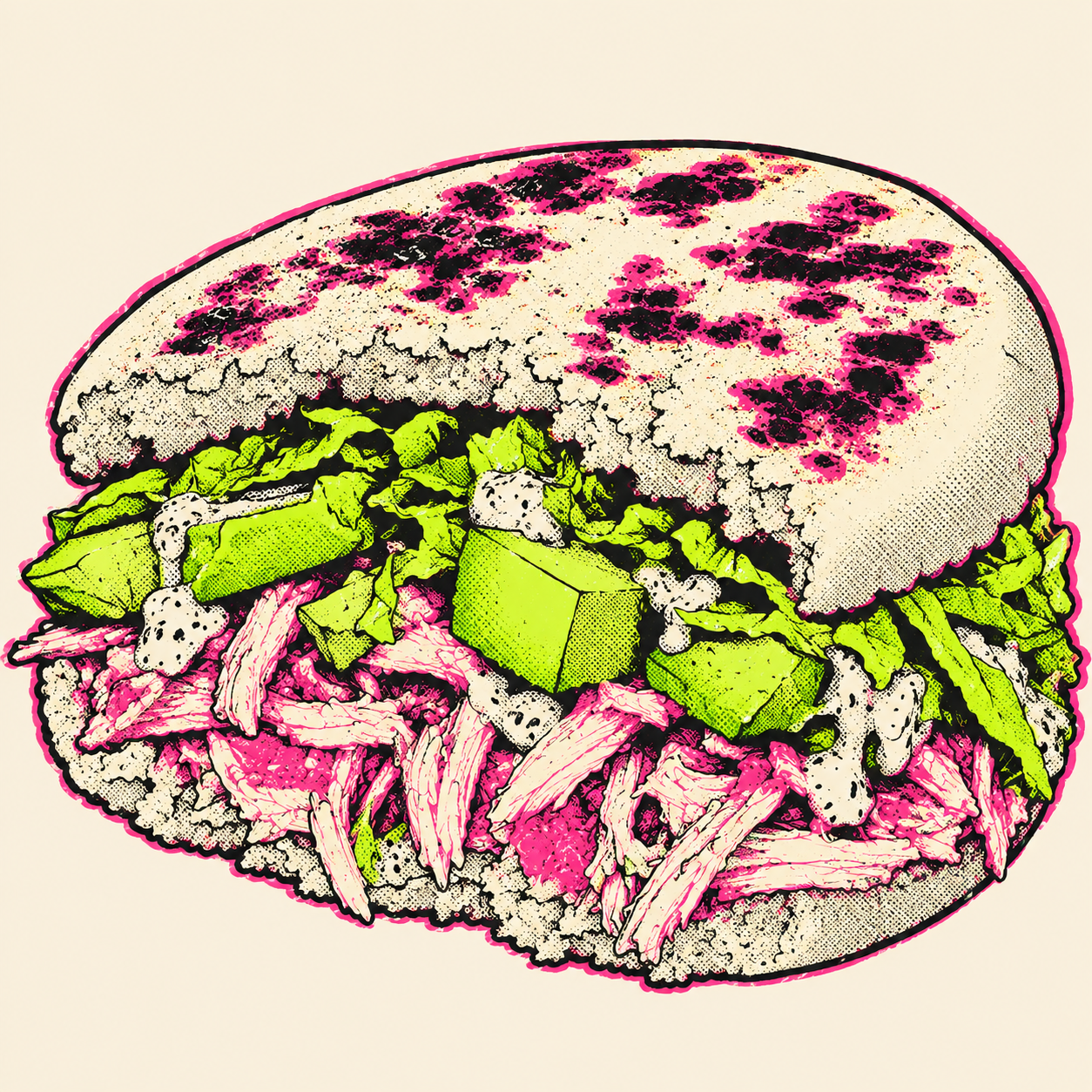
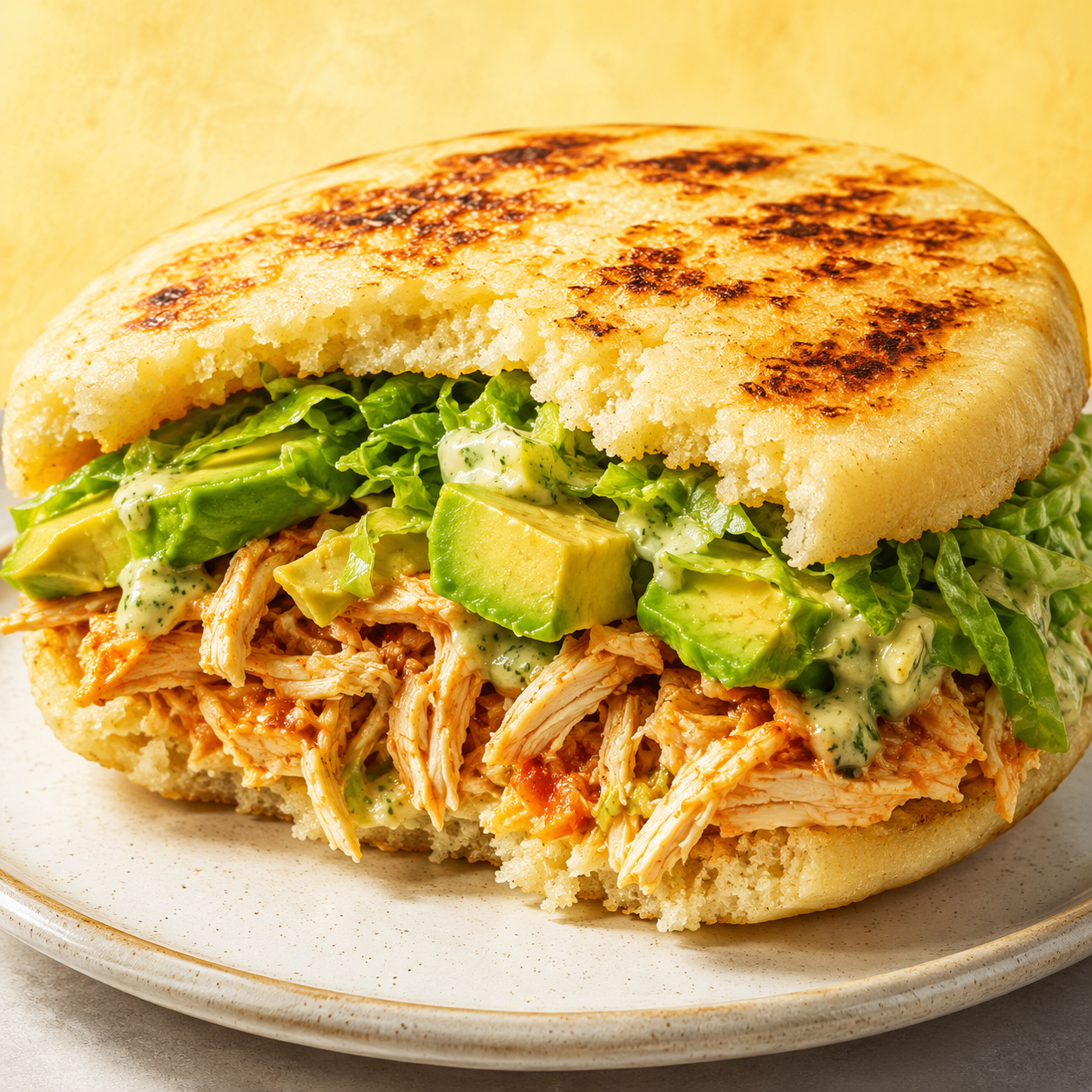
A split arepa filled with shredded chicken and avocado A split arepa filled with shredded chicken and avocado Hover · tap
ColombiaVenezuela Griddled VeganGluten-free
Sweet
0/5
Spice
0/5
Era
Pre-modern
Format
Single serve
Colombia eats the arepa whole. Venezuela splits it open and fills it. Both are right.

Origin

The arepa predates Spanish contact . Archaeological evidence — clay griddles called aripos — recovered from sites associated with the Timoto-Cuica, Caribe, and Cumanagoto peoples of present-day Venezuela and northern Colombia, places the arepa as a staple in the region for at least two thousand years before Columbus .

Spanish chroniclers — Juan de Castellanos in the late 16th century, Galeotto Cei in the 1540s — describe a corn disc cooked on a flat clay surface that maps directly onto the modern arepa. The pre-Columbian process was labor-intensive: dry corn was soaked, hand-ground on a stone metate into wet masa, formed into discs, and cooked on a clay or stone griddle over a wood fire.

The technological turning point came in 1960 , when Venezuelan engineer Luis Caballero Mejías patented a precooked corn flour, marketed by the Polar group as Harina P.A.N. — “Producto Alimenticio Nacional.” The flour reduced arepa preparation from an overnight project to a fifteen-minute one and made the dish into a true mass-market staple on both sides of the Colombo-Venezuelan border.
Hover · tap
FIG. 01

What it is

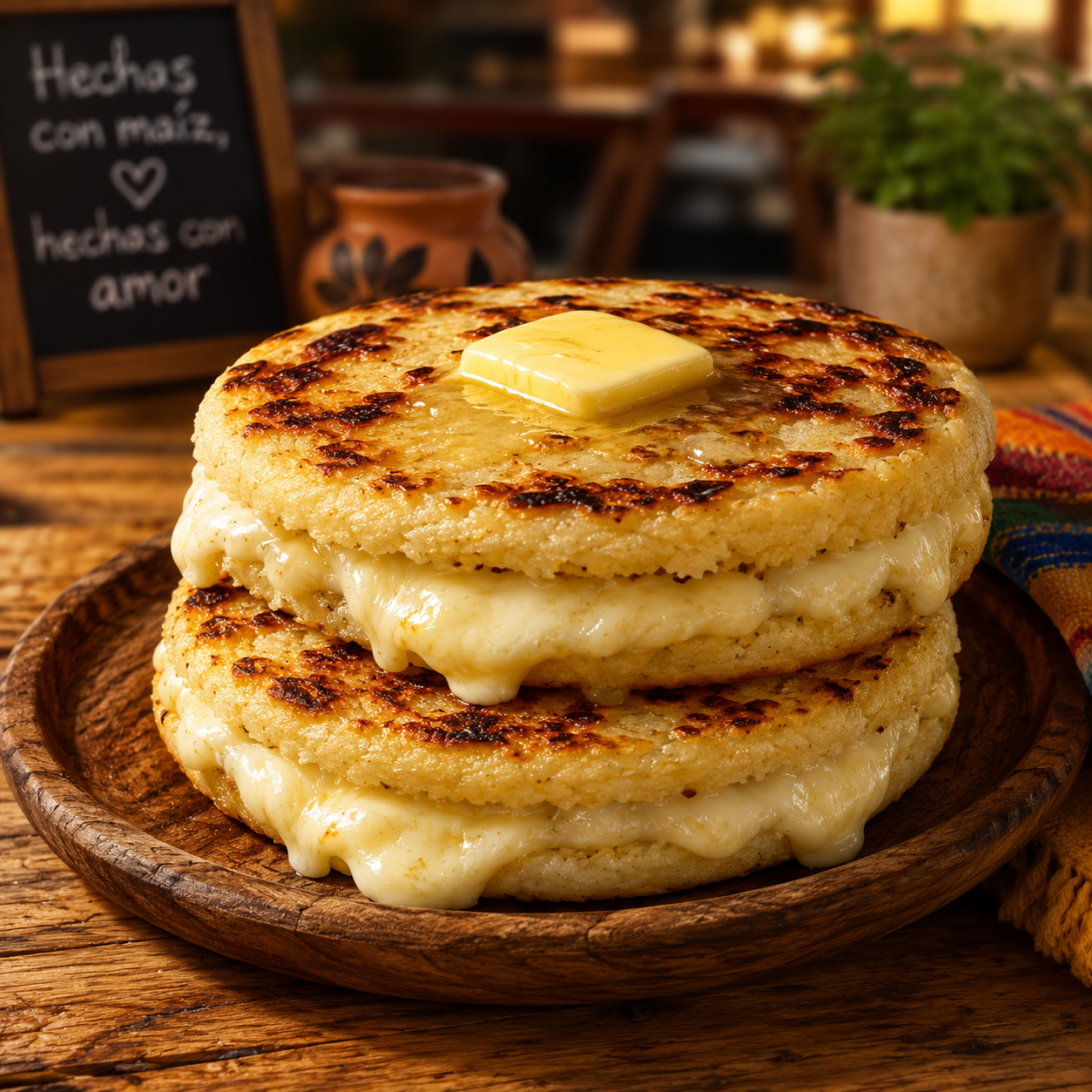
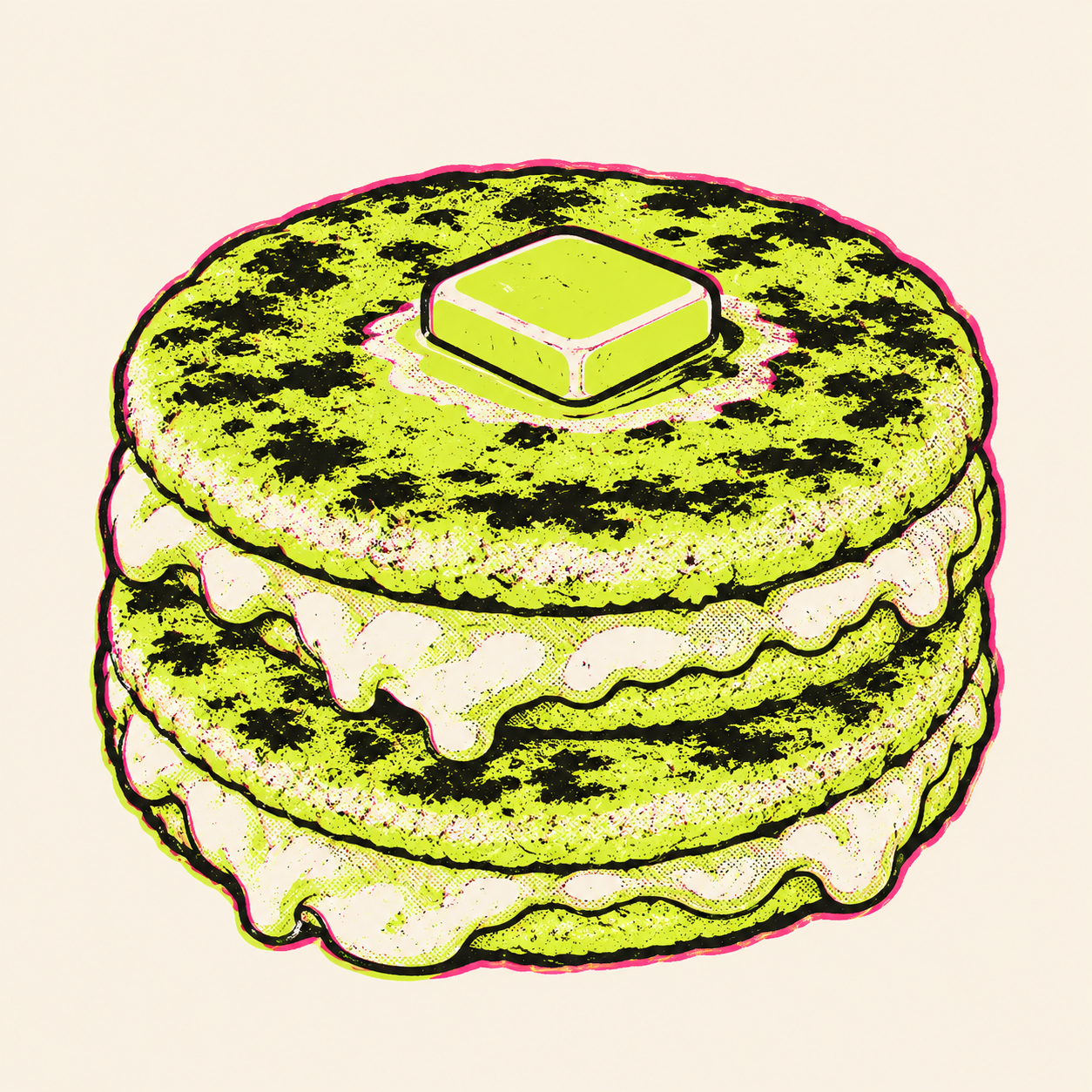
An arepa is a disc of masa — corn flour mixed with water and salt — cooked on a griddle until the outside crisps and the inside steams. The dough has no leavening and no fat; the corn is the dish. Diameter ranges from about 8 cm (a snack) to 20 cm (a meal), thickness from 1 cm (Venezuelan) to 2.5 cm (some Colombian regional styles).

Naturally vegan, naturally gluten-free, and structurally simple — the arepa’s variety is in its filling, glaze, or accompaniment, not its dough. Plain salt-and-water masa is the canonical version; some regional styles add queso blanco directly to the dough.
Hover · tap
FIG. 02

Cultural context

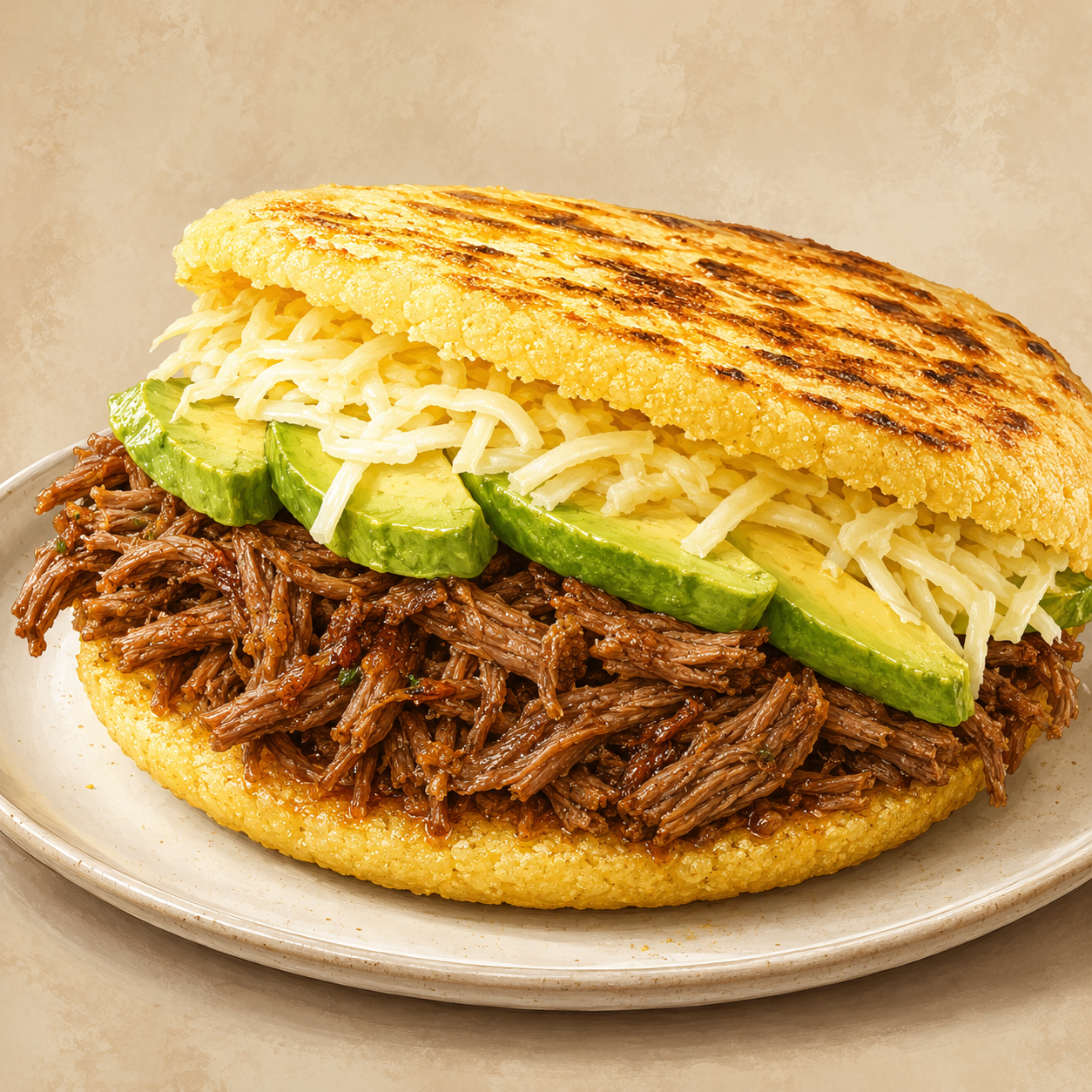
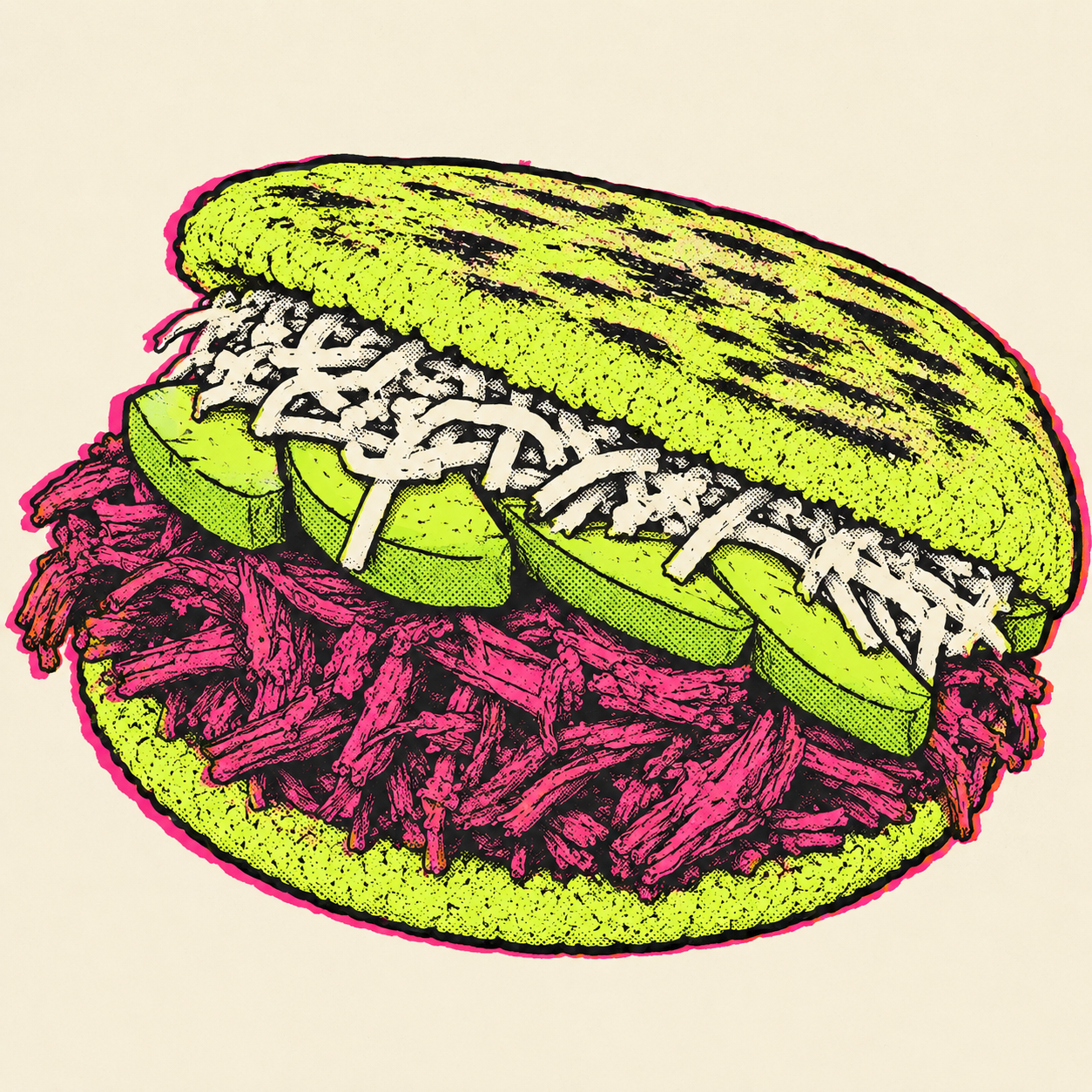
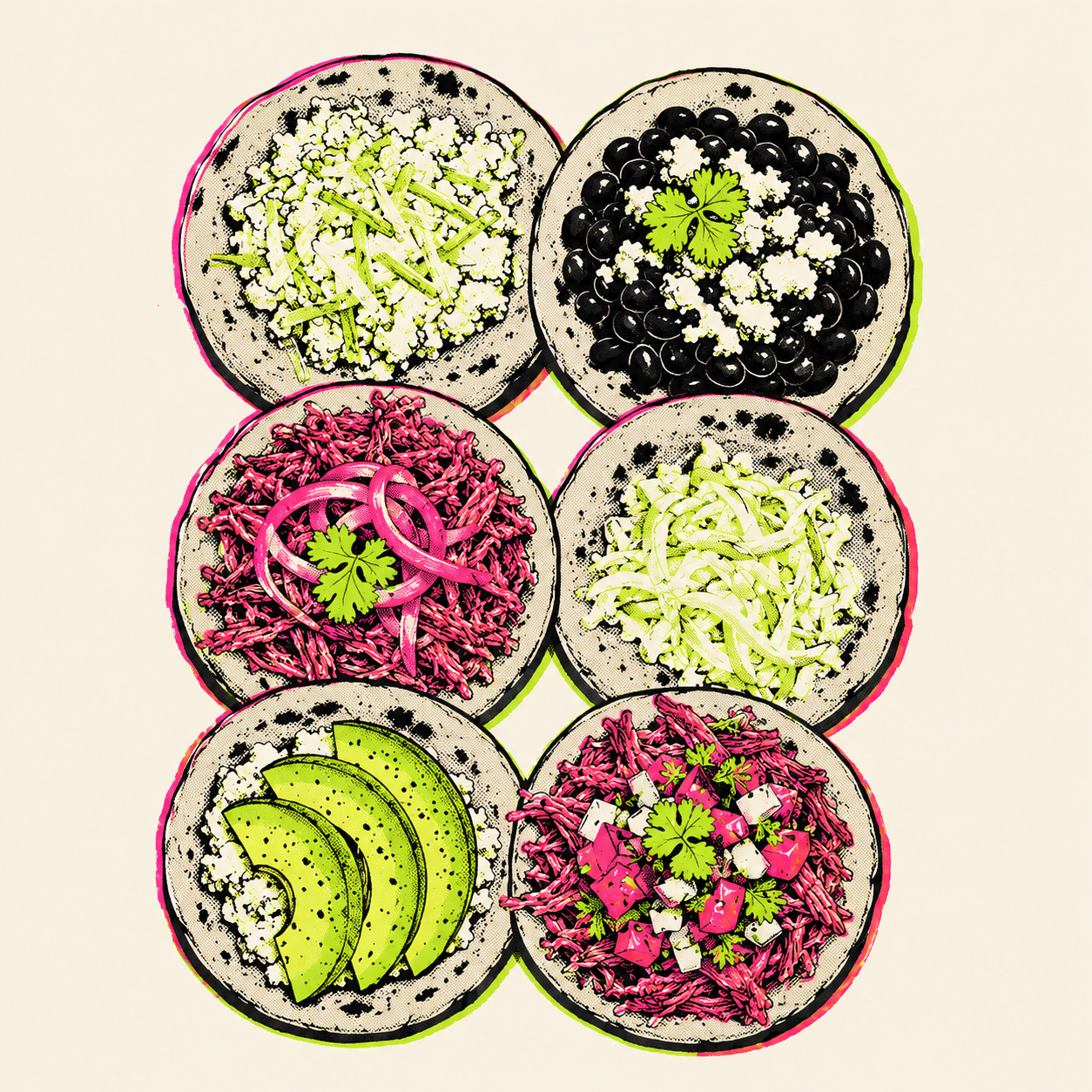
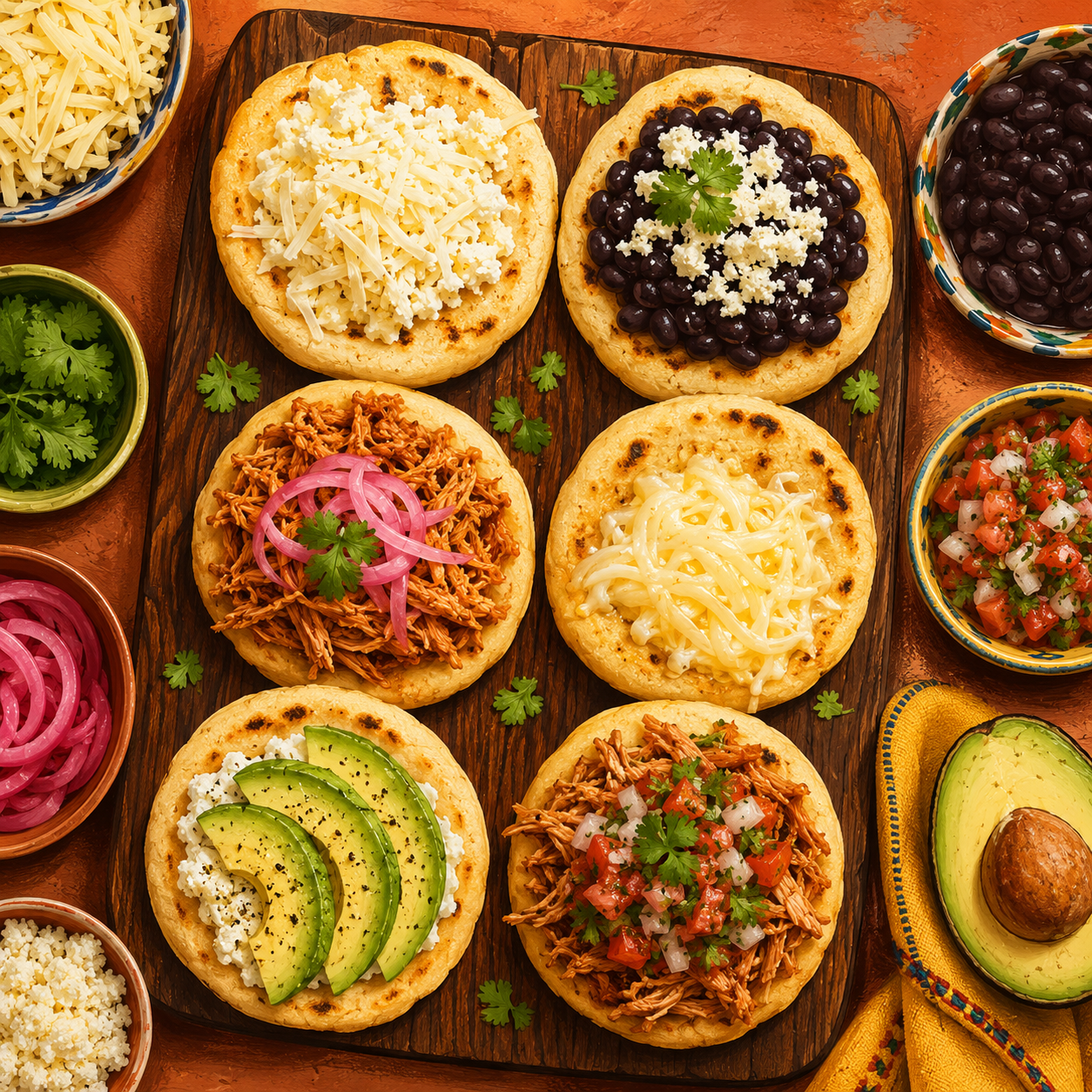
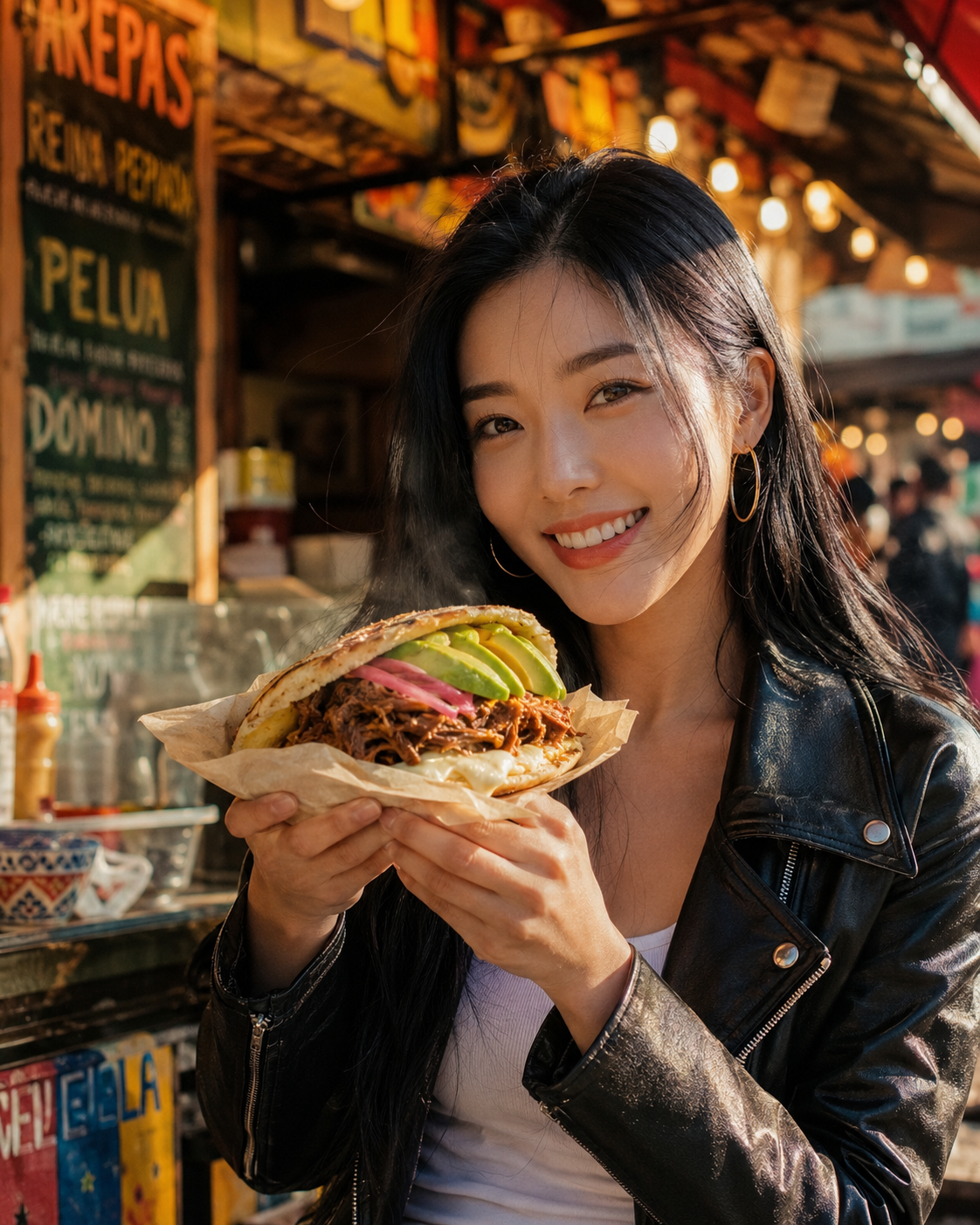
In Venezuela, arepas are everyday — eaten at breakfast, lunch, dinner, and after midnight . The split-and-fill format dominates: a Venezuelan arepera is a 24-hour shop selling arepas with named fillings — reina pepiada (chicken-avocado salad, named for Susana Duijm, the 1955 Miss World), pelúa (shredded beef and yellow cheese), dominó (black beans and white cheese). Caracas, Maracaibo, and Mérida each have their preferred fillings and bread thicknesses.

In Colombia, arepas are a side carbohydrate more than a vehicle. Arepa paisa from Antioquia is thin, plain, and served alongside the bandeja paisa meat platter; arepa de huevo from the Caribbean coast is fried with a whole egg cracked into the centre; arepa boyacense from Boyacá is sweet, made with wheat flour blended into the corn. Splitting and filling is more associated with Venezuelan exiles’ areperas in cities like Bogotá and Medellín, which proliferated after 2015 with the migration wave.
Hover · tap
FIG. 03

Variations

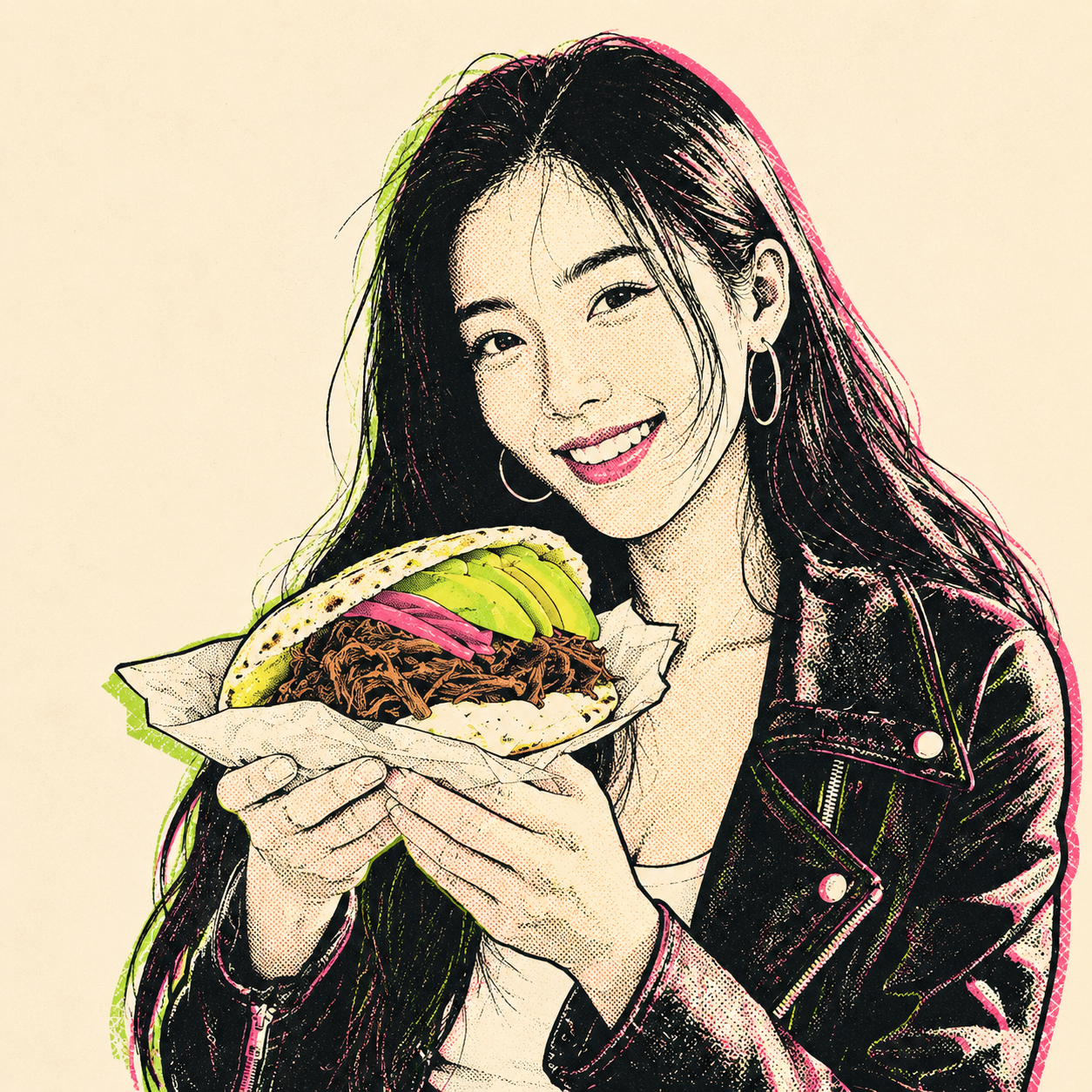
The Venezuelan-vs-Colombian binary is the headline, but the arepa family is wider. Arepa de chocolo is a sweeter version made with fresh corn rather than dried masa. Arepa frita (Colombian Caribbean) is deep-fried for a puffed, lighter eat. Arepa rellena (Venezuelan) is the split-and-stuffed standard. Arepa asada is grilled directly over coals — a country-cooking style that survives in rural Boyacá and the Andes. Arepa de queso mixes queso fresco into the dough; arepa con yuca substitutes cassava for some of the corn.

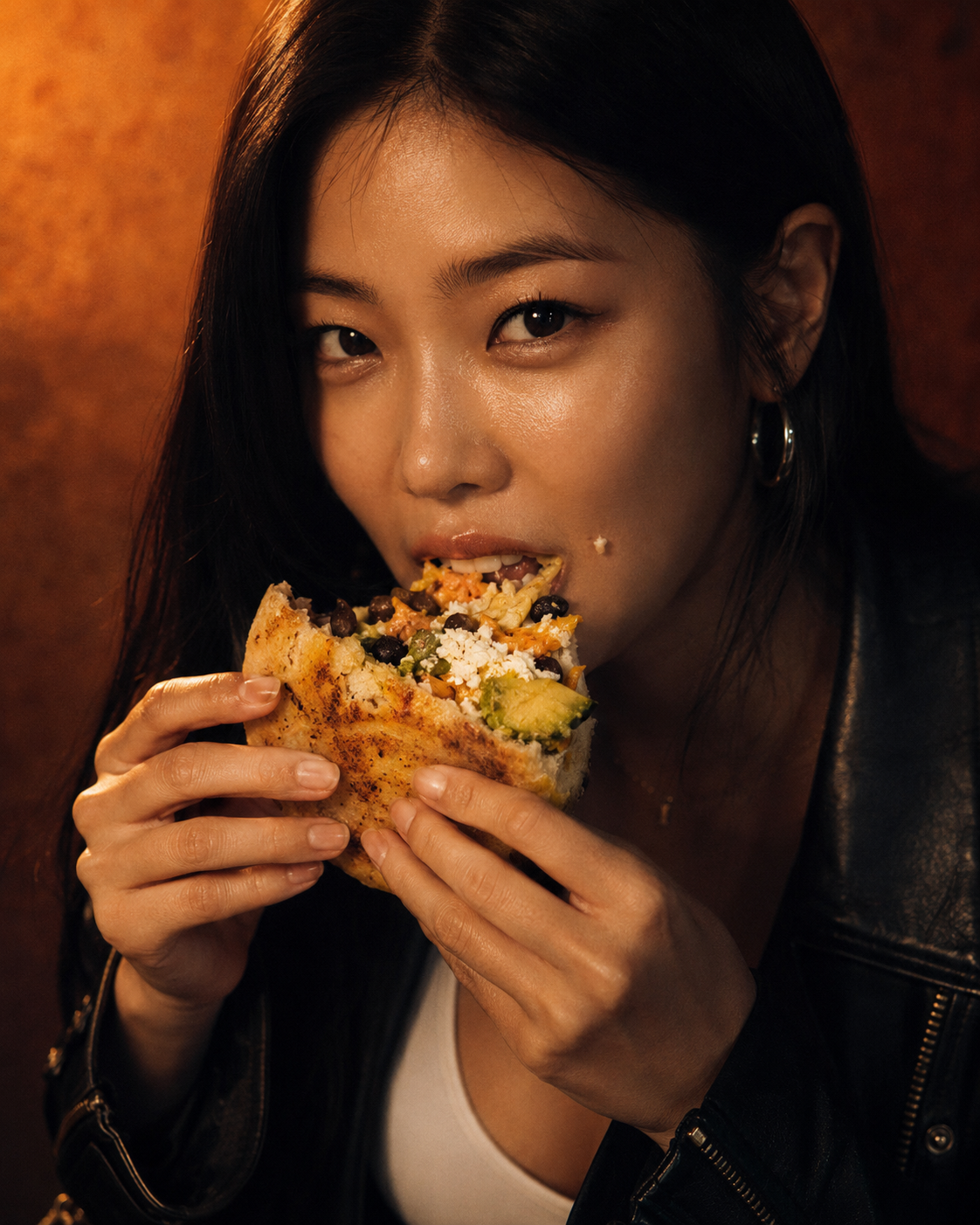
Outside the two source countries, the arepa has become a marker of the post-2014 Venezuelan diaspora — there are Venezuelan-run areperas now in Madrid, Buenos Aires, Miami, and Toronto, almost all serving the reina pepiada and pelúa and treating the dough as the centre of identity.
Hover · tap
FIG. 04

How it’s made

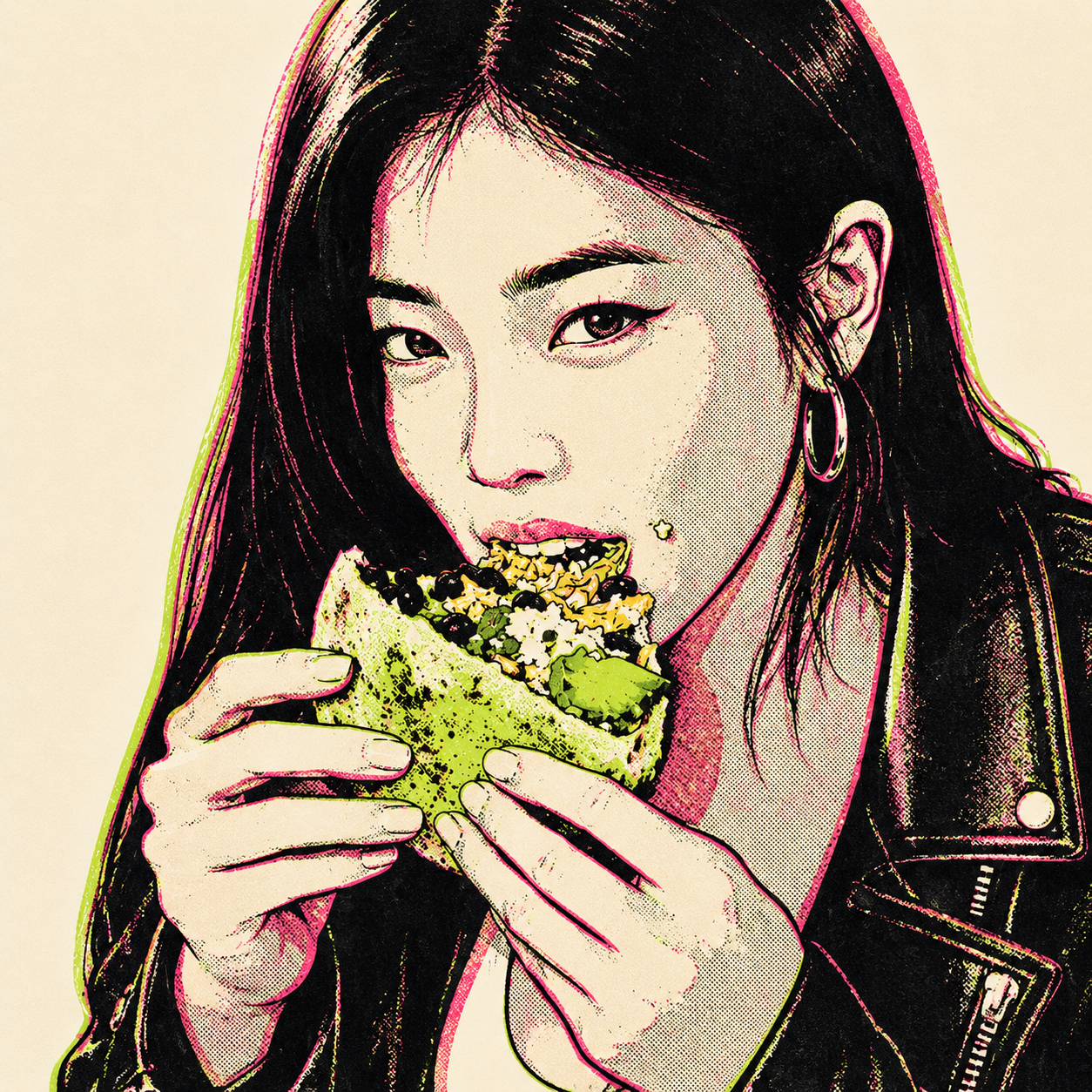
A working arepera: a 25 kg sack of Harina P.A.N. on the prep counter, a long electric budare (flat griddle) at 200°C , a tray of fillings already cooked and held warm in metal bins. The cook scoops masa and water into a bowl in a fixed ratio (roughly 1 part flour to 1.2 parts water), kneads briefly, and rests it for two or three minutes — long enough for the precooked corn to fully hydrate.

Discs are formed by hand or pressed between two flat plates, slapped onto the budare, and turned twice. A finished arepa drums hollow when tapped — that is the test. Venezuelan style: split with a knife along the equator, leaving a hinge; spoon in filling; serve open or hinged. Colombian style: leave it whole, let it rest under a cotton cloth, and place it next to the meat.
Hover · tap
FIG. 05

References

The pre-Columbian archaeological record of arepa-like foods is summarised in José Rafael Lovera ’s Food Culture in South America (Greenwood, 2005). The Caballero Mejías precooked-flour patent ( Venezuelan patent #5176, 1960 ) is reproduced in Rafael Cartay ’s Diccionario de cocina venezolana (Alfa, 2005). The reina pepiada origin is documented by Caracas’s El Nacional archive (1955). The post-2015 diasporic arepera boom is covered in Bon Appétit (May 2019).

Related

Where to eat it

Arepa on the globe

travel wishlist

my next bites · 0

view full page →

Tap a marker, then + WISHLIST to add.